AI Driveway Landscaping Ideas to Upgrade Curb Appeal
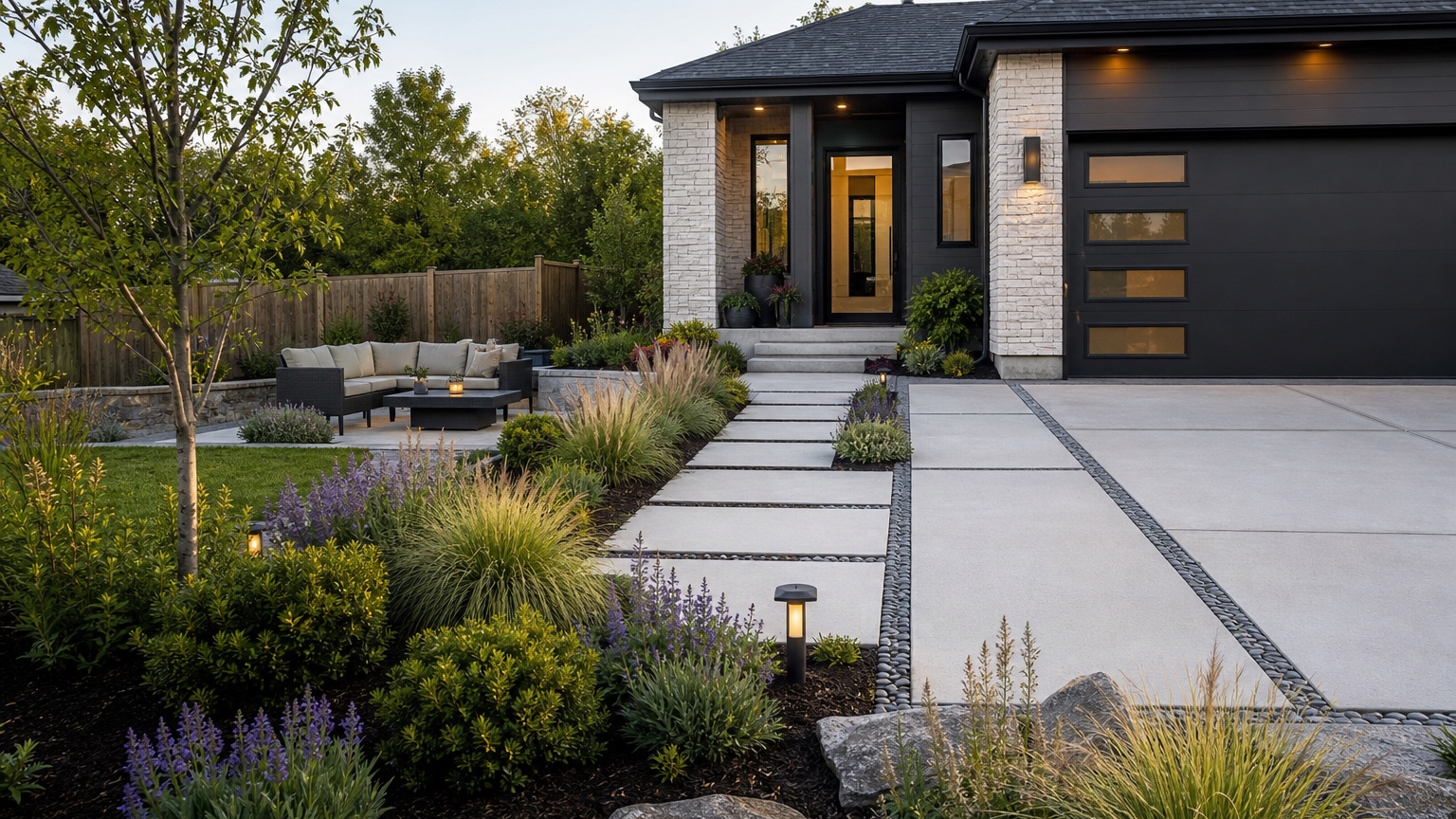
AI driveway landscaping is useful when the driveway technically works but the arrival experience feels unfinished. The concrete or asphalt may be fine, yet the edges look bare, the entry walk is unclear, the lawn is patchy near car doors, and the front door does not feel connected to the street. Homeowners and landscapers need a way to test those curb appeal choices before buying plants, cutting new beds, adding lighting, or quoting hardscape.
A photo-based preview helps because driveway landscaping is not only about decoration. It has to respect tire movement, guest parking, drainage, snow storage, trash-bin routes, sight lines, door swing, steps, slope, irrigation, and maintenance. A pretty border that blocks a car door is a bad design. A lush planting concept that covers a drainage swale can create real problems. A useful AI driveway landscaping result keeps the real property recognizable while making the entry area easier to judge.
RedesAIgn can help with this early planning stage. Upload a clear exterior or yard photo, use the landscape-focused workflow, and compare controlled prompts, remix images, reference images, saved prompts, and history. For a first driveway-landscaping pass, you can try RedesAIgn free with 5 included AI credits and no credit card requirement. If you need more rounds for a client or larger property, one-time credit packs are available.
AI Driveway Landscaping: the real decision this article should help with
The real decision is how the driveway should support curb appeal without making daily use harder. For a homeowner, that may mean softening a long strip of pavement, making the front door more visible, replacing awkward lawn edges with planting beds, or choosing whether a gravel apron, paver border, or low wall is worth pricing. For a landscaper, the decision may be how to present a clear improvement that still leaves enough room for vehicles, deliveries, and maintenance.
A good AI driveway landscaping preview should reduce uncertainty around an outdoor upgrade plan. It should help you see where the eye travels when someone arrives, where a bed line should start, whether the driveway edge needs structure, and whether lighting belongs along the drive, at the entry walk, or near a planting feature. It should also reveal when a concept is too crowded for the available space.
For driveway edges, the useful answer is a next measurement, material choice, or contractor question rather than a prettier picture alone. After reviewing the image, you should know whether to measure a bed, ask for a paver border quote, price low-voltage lighting, simplify the planting palette, fix drainage first, or compare the driveway plan with the broader AI front yard landscaping direction.
AI Driveway Landscaping input checklist for a believable result
Start with wide daylight photos that show the driveway and its context. Capture the garage, street edge, front walk, house facade, lawn, planting beds, fences, slopes, retaining walls, trees, utility covers, gutters, downspouts, and any fixed paths. If the driveway curves or rises, take photos from both the street and the house so the visual plan does not flatten the site.
Sun and shade matter. A driveway border beside hot pavement may need tough plants, mulch depth, and irrigation planning. A shaded drive under mature trees may need root-sensitive planting and permeable surfaces instead of heavy excavation. Include the areas where water collects after rain, where snow piles in winter, and where people actually step out of cars.
Decide what must stay recognizable. The driveway width, garage doors, curb cut, walkway, steps, porch, large trees, drainage channel, mailbox, fence, and property line may be fixed. Say that directly in the prompt. If the AI narrows the drive, moves the garage, deletes the slope, or covers a utility lid with shrubs, the image may look polished but fail as a planning reference.
Use reference images only when they clarify driveway landscaping style, material, color, or mood. A modern paver border reference can guide hardscape. A low-water planting reference can guide plant density. A traditional entry-garden reference can guide symmetry. Do not let a reference from another climate override the actual driveway, sun exposure, and maintenance needs in your photo.
AI Driveway Landscaping: outdoor layout and maintenance tradeoffs
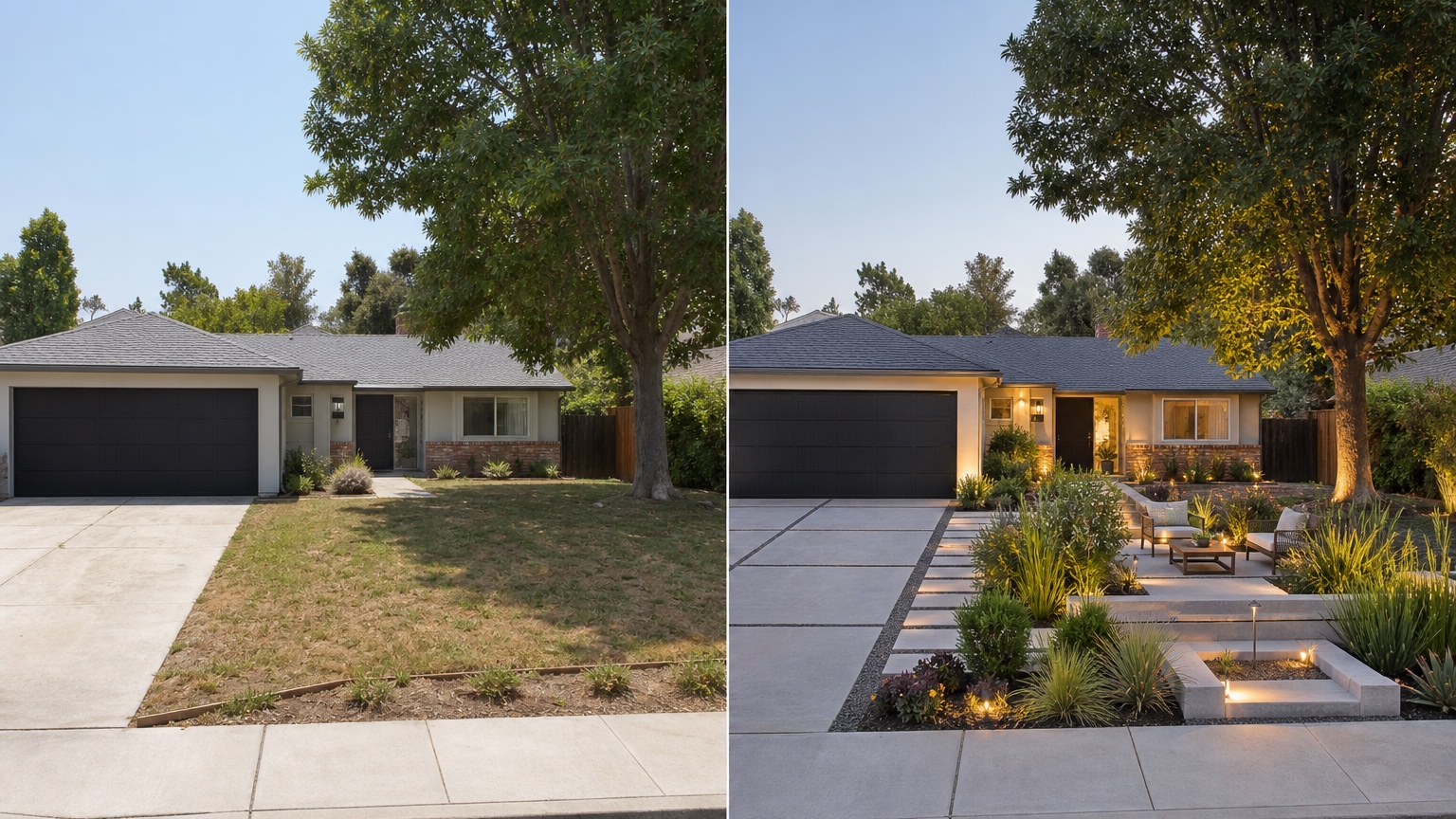
Driveway landscaping is a circulation problem first. Cars need turning room. Guests need a safe path to the front door. Delivery drivers need an obvious route. Trash and recycling bins need a practical path. A landscaper may also need access for mowers, snow equipment, irrigation repair, and plant replacement. If the concept improves curb appeal but blocks normal movement, revise it.
Traffic paths, seating zones, shade, privacy, and upkeep all affect the plan. In a front yard, seating may be less important than a clear entry sequence: street, driveway, walk, porch, door. In a side driveway, privacy planting may matter more because the drive passes windows or outdoor living areas. In a rural or long driveway, trees, lighting rhythm, and mown edges may define arrival better than dense planting.
Plants and hardscape choices affect budget and seasons. A paver border can sharpen a plain asphalt drive, but it adds labor and edge stability questions. Gravel strips can improve texture, but loose stone near tires and snow removal may be annoying. Low shrubs can frame the drive, but they need mature spacing so they do not scratch cars. Ornamental grasses can soften pavement, but in winter they may collapse into the edge if not maintained.
Drainage deserves special review. Driveways collect and move water. Do not trust a visual concept that hides runoff behind planting. Watch for low points, downspouts, slopes toward the garage, erosion at the curb, and soil compaction along the edge. If the AI concept suggests a rain garden, permeable pavers, swale planting, or gravel infiltration strip, treat that as a design direction that still needs site measurements and local review.
AI Driveway Landscaping prompt brief for stronger driveway landscaping results
Start the prompt with the outcome: “Create a realistic driveway landscaping concept from this property photo.” Then define what stays, what can change, and what the image should help decide. The more specific the scope, the more useful the result.
For a curb appeal upgrade, try: “Use this photo to preview realistic driveway landscaping. Preserve the driveway width, garage doors, curb cut, front walk, porch, large tree, and house facade. Add tidy planting beds along the driveway edges, low-maintenance shrubs, seasonal color near the entry, simple edging, subtle path lighting, and a clear connection from driveway to front door. Keep the design feasible for a homeowner and landscaper to price.”
For hardscape comparison, try: “Generate controlled driveway landscaping variations on the same photo: one with a paver border and simple shrubs, one with gravel edging and drought-tolerant planting, and one with a softer lawn-to-bed transition. Do not change the driveway shape, garage, porch, property slope, or existing mature trees.”
Name constraints such as climate, water, drainage, maintenance, and contractor feasibility. If you need low-water planting, say so. If snow removal matters, say so. If the driveway edge must survive kids, dogs, deliveries, and car doors, say so. Generate controlled driveway landscaping variations instead of one overloaded prompt that adds lighting, walls, trees, a new walkway, a fountain, and a full facade remodel at once.
AI Driveway Landscaping output review before anyone trusts the image
Check scale first. The driveway should still look wide enough for the vehicles that use it. Planting beds should not pinch the parking area. Shrubs should have realistic mature spacing. Trees should not appear under power lines, against foundations, or where roots would damage pavement. Lighting fixtures should be placed where wiring and maintenance are plausible.
Check edges, lighting, and consistency with the original image. Bed lines should follow the site perspective. Paver borders should meet the driveway cleanly. Mulch, gravel, and planting should not bleed into pavement. Shadows should match the original photo. If the AI changes the slope, moves the walkway, replaces the garage, or invents a new curb cut, treat the result as inspiration and generate again.
Check each driveway concept against runoff, snow or heat exposure, car-door clearance, plant maturity, and the work a landscaper would actually quote. A landscaper still needs measurements, soil conditions, utility locations, drainage grading, plant availability, local codes, and installation details. Save the strongest driveway landscaping version as a zone plan, planting and hardscape comparison, and maintenance note set. Mark what stays unchanged and what needs confirmation before anyone digs.
AI Driveway Landscaping mistakes that make results look generic
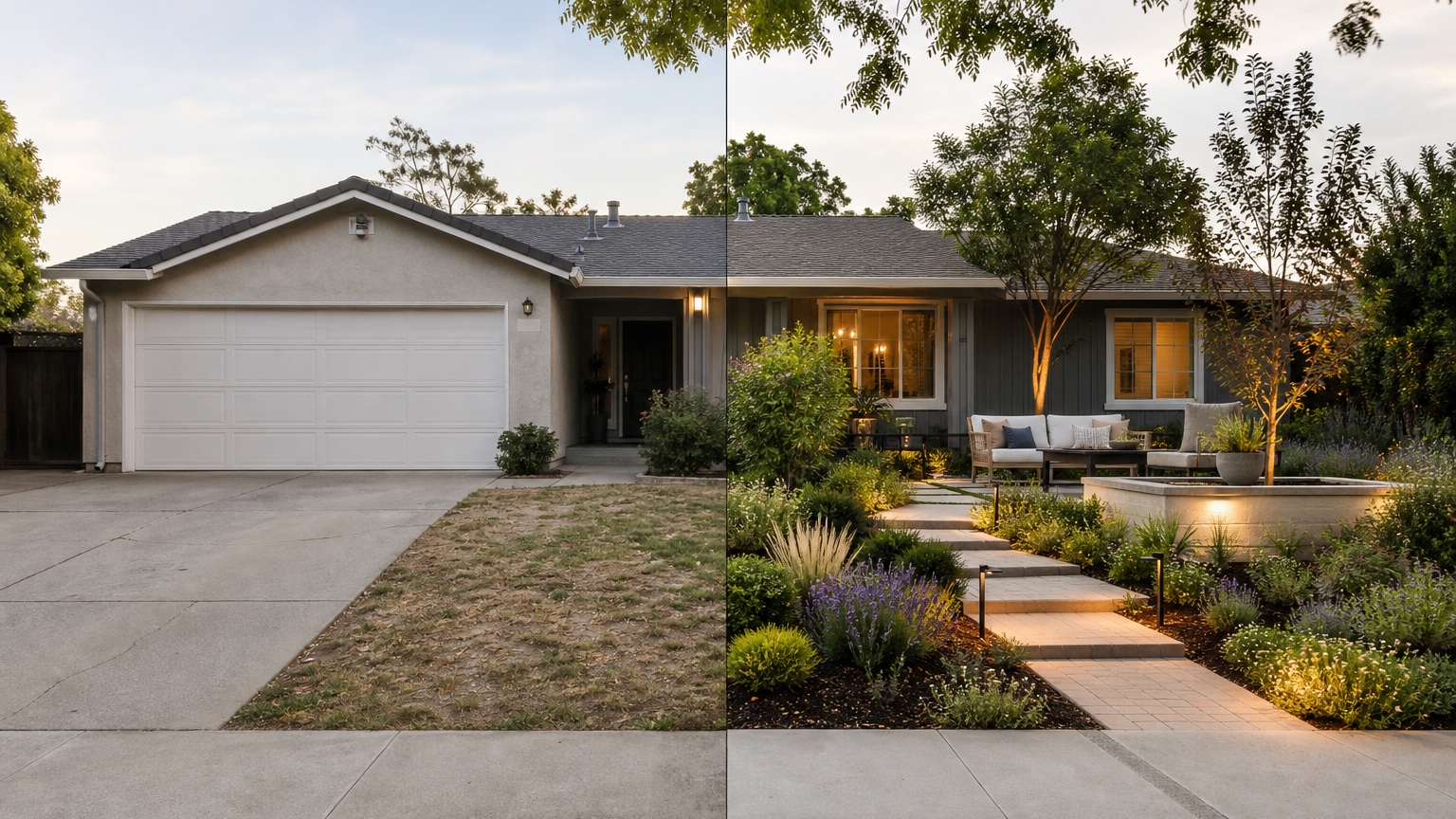
The first mistake is uploading a weak photo of the yard or driveway. A close-up of pavement does not show the entry sequence. A night photo hides plant and material decisions. A cropped image can make the driveway seem wider or flatter than it is. Retake the photo from the street, from the garage, and from the front door when possible.
Another common mistake is widening the request until the driveway question disappears inside a full-yard makeover. “Add a new driveway, outdoor kitchen, pergola, full garden, modern facade, new roof, and luxury lighting” may create an impressive image, but it will not help you decide how to landscape the driveway edge. Separate driveway edging, planting, lighting, walkway, and house-exterior questions into different rounds.
The third mistake is ignoring how the before-and-after comparison should be judged. A driveway image can look more expensive while making maintenance worse. Ask whether the concept leaves room for car doors, keeps plants away from exhaust and heat, maintains sight lines, handles water, and gives guests a safe route to the door.
AI Driveway Landscaping workflow in RedesAIgn from first image to action
In RedesAIgn, choose the editor built for yard or garden scenes and upload the clearest wide photo. RedesAIgn includes 10 AI editors, so you can keep driveway landscaping separate from interior, product, and broader exterior design work. Begin with one focused prompt that preserves the driveway and fixed site features. Then remix the best version to test bed shape, paver edge, gravel strip, low-maintenance planting, lighting, or a more formal entry.
Saved prompts and history help because driveway revisions are often subtle. Keep the version that handles scale and traffic correctly, then test style variations without losing the practical base. Reference images can guide materials, but the source photo should control driveway width, slope, garage location, and entry path.
Share the selected image with the person who will price, plant, approve, maintain, or sell the project. RedesAIgn-generated images can be used commercially where relevant, but the site still needs measurements, material samples, drainage review, utility checks, contractor quotes, and local plant choices. If the driveway connects to a larger plan, compare it with AI landscape design from photo, AI landscape design generator, and AI curb appeal generator. For facade coordination, AI exterior design from photo can help align paint, entry, and landscape direction.
Practical driveway landscaping checklist after the preview
Turn the image into a short field checklist. Measure driveway width, bed depth, car-door clearance, walkway width, slope, and the distance from planting to pavement. Mark drainage areas after rain. Note where snow, leaves, trash bins, delivery routes, and irrigation access affect the design.
Then price the project in phases. Phase one might be edging and mulch. Phase two might be shrubs and grasses. Phase three might be lighting or a paver border. If drainage or pavement repair is needed, solve that before installing delicate planting. The best AI driveway landscaping result is not the most dramatic image. It is the version that makes the entrance more attractive while keeping the driveway practical every day.
Try these prompts in redesAIgn
Redesign this front yard with a stone walkway, low-water plants, and clean planting beds.
Create a backyard seating patio with string lights, shrubs, and a simple lawn edge.
Add curb-appeal landscaping with layered greenery while keeping the driveway clear.
Related guides
- AI Landscape Architecture Generator for Early Outdoor Concepts
Use an AI landscape architecture generator for early outdoor concept exploration, studio reviews, feasibility checks, and photo-based design iteration.
- AI Landscape Visualizer: Preview Yard Changes Before You Commit
Use an AI landscape visualizer to preview realistic yard changes from a photo, compare landscaping options, and reduce decision risk before outdoor work.
- AI Lawn Makeover Ideas: Turn a Plain Yard Into a Plan
Use an AI lawn makeover to preview lawn shape, planting borders, paths, edging, seating, and practical yard upgrades before hiring or starting work.
- AI Xeriscape Design Ideas for Low-Water Yards
Use AI xeriscape design to preview low-water planting, gravel, paths, shade, irrigation zones, and maintenance tradeoffs before changing your yard.
- AI Backyard Makeover: Generate Outdoor Design Before and Afters
Use an AI backyard makeover workflow to preview layout zones, maintenance tradeoffs, before-and-after options, and practical next steps from a real yard.