AI Xeriscape Design Ideas for Low-Water Yards
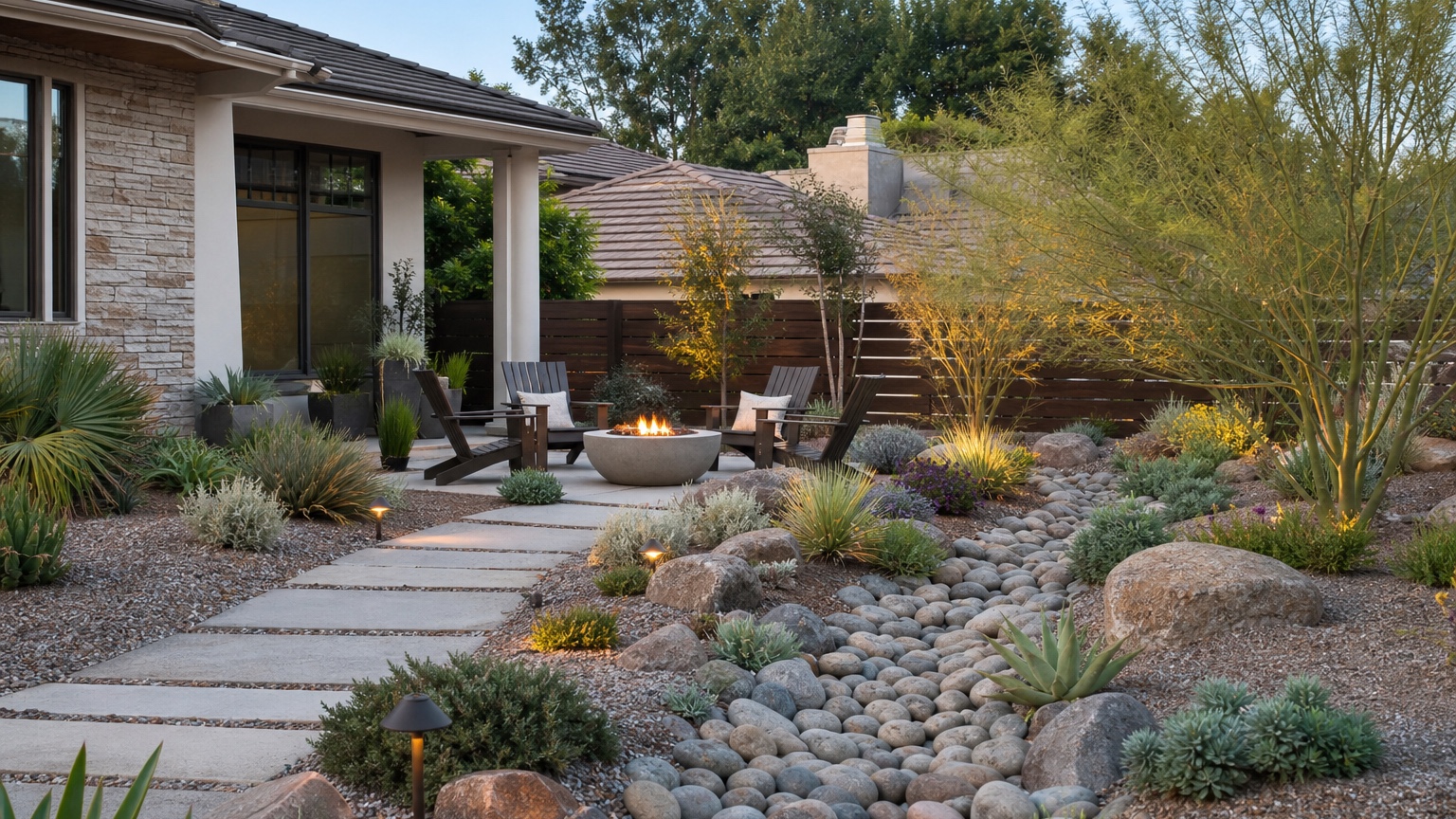
AI xeriscape design is useful when a yard needs to use less water without becoming a bare field of rock. Homeowners may be trying to replace thirsty lawn, reduce irrigation bills, meet drought restrictions, or make a rental or listing easier to maintain. Landscapers may need to show clients that low-water landscapes can still feel intentional, shaded, seasonal, and comfortable.
The challenge is that xeriscape decisions are hard to judge from plant lists alone. A gravel color that looks clean in a catalog may glare beside stucco. A cactus or agave layout that looks sculptural online may be unsafe near a walkway. A native meadow can look soft and climate-smart, but only if the bed shape, path, mulch, and maintenance plan are clear. A useful AI xeriscape design preview keeps the real house and yard recognizable while testing low-water layout, circulation, shade, plant massing, and hardscape balance.
RedesAIgn can help with that early visual decision. Upload a clear yard photo, choose a landscape-focused workflow, and compare prompts, remix images, reference images, saved prompts, and history. RedesAIgn includes 10 AI editors, 5 free AI credits, and no credit card requirement for a first test. If a homeowner, landscaper, or small design business needs more rounds, one-time credit packs are available.
AI Xeriscape Design: the real decision this article should help with
The real decision is not whether the yard should be “desert style.” It is how much water, maintenance, shade, access, and curb appeal the yard should support after the change. A low-water front yard may need a welcoming path, safe driveway edges, screening from the street, and a small area of seasonal color. A backyard may need a dining patio, dog route, kids' play strip, garden access, or fire-safe buffer. A commercial or rental yard may need clear upkeep rules and durable materials more than dramatic planting.
A good AI xeriscape design result should help you choose between practical directions. Should the lawn become a decomposed-granite field with planted islands, a native shrub border, a small synthetic-free seating court, a gravel garden, or a reduced lawn surrounded by low-water beds? Should the path be straight and efficient, or softer and garden-like? Should shade come from an existing tree, a new small tree, a pergola, or a preserved patio umbrella location?
Use the image to make the next step clearer. After reviewing the preview, you should know whether to measure bed areas, price mulch and gravel, request a drip irrigation quote, remove lawn in phases, check local rebate rules, or compare the low-water plan against a broader AI backyard design generator concept. The image is not a planting plan by itself. It is a decision aid that turns a vague drought-friendly goal into a visible layout.
Outdoor layout and maintenance tradeoffs in low-water yards
Xeriscape design is often described as plant choice, but layout comes first. People still need to move through the yard. Guests need an obvious route to the door. A landscaper needs access for pruning, cleanup, irrigation repair, and plant replacement. Trash bins, gates, hoses, side-yard storage, pets, and outdoor furniture still have to work. If a concept saves water but makes daily use harder, revise it before pricing.
Traffic paths, seating zones, shade, privacy, and upkeep all affect the design. A front yard may need a clear path through gravel so visitors do not cut across planting. A backyard may need a hard-wearing route from patio to gate. A side yard may need gravel or pavers that handle wheelbarrows and trash bins. Seating areas need shade, wind comfort, and enough open surface for chairs. Privacy planting should be placed where it screens views without blocking light, doors, utility meters, or maintenance access.
Hardscape choices affect comfort and cost. Gravel is common in low-water yards, but the size, color, depth, edging, and stabilizing method matter. Large rock can be hard to walk on and difficult to clean. Light gravel can reflect heat. Dark gravel can hold heat. Decomposed granite can look calm and walkable, but it needs containment and may track onto paving. Pavers can define movement, but installation cost and drainage still matter.
Planting choices affect seasons and long-term labor. A sparse cactus-only plan may look unfinished around many homes. A dense native planting plan can be beautiful, but young plants need establishment water and mature spacing. Ornamental grasses can soften gravel, yet they need cutting back. Low shrubs can reduce weeding when planted with room to grow. Trees may use water while establishing, but shade can reduce heat and make the yard more usable. The strongest AI xeriscape design balances water savings with shade, human comfort, and a maintenance rhythm the owner will actually keep.
Prompt brief for realistic AI xeriscape design results
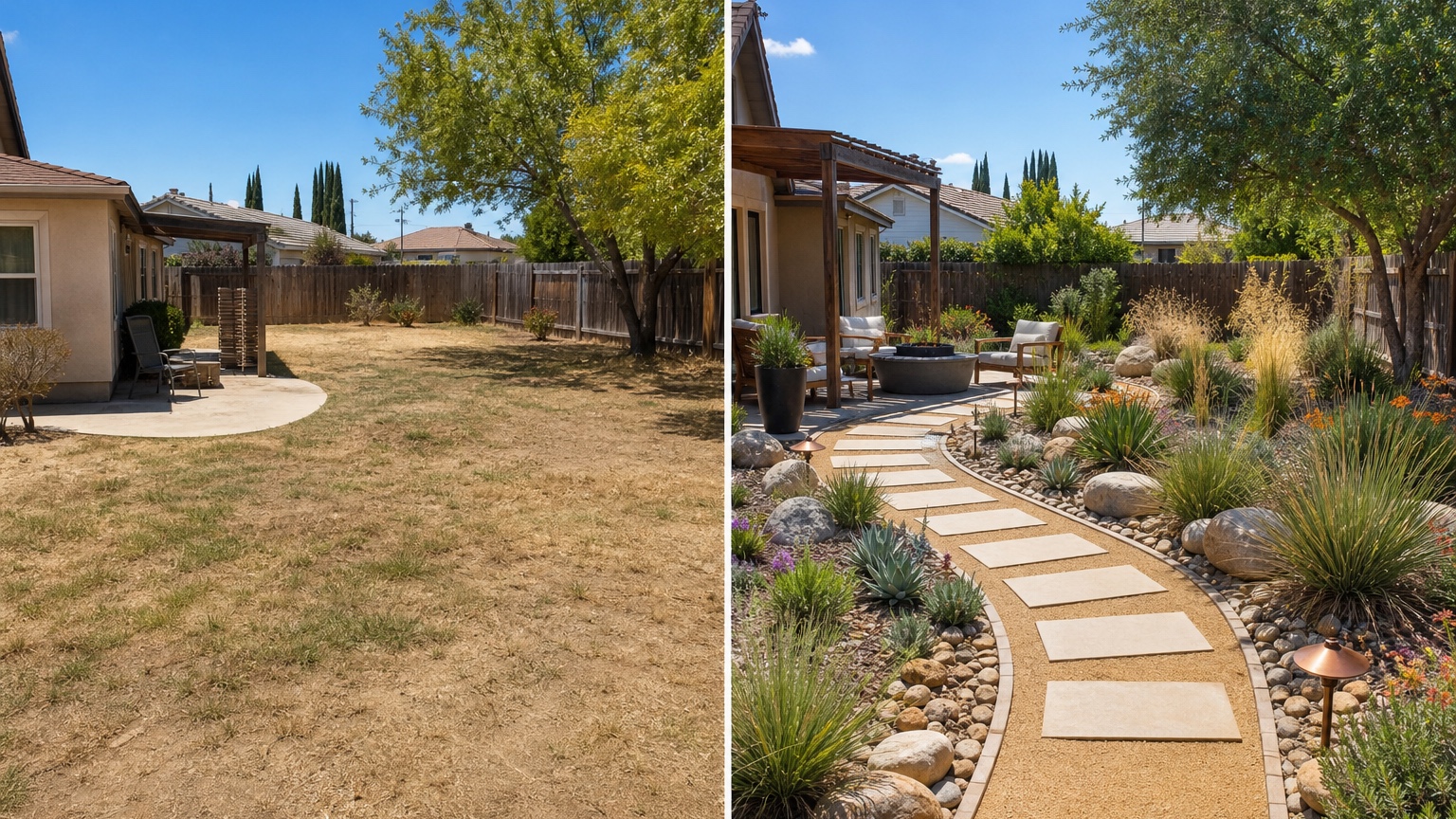
Start the prompt with the outcome: “Create a realistic low-water xeriscape design from this yard photo.” Then define what must stay, what can change, and what decisions you want to compare. The goal is a believable site concept, not a fantasy resort scene.
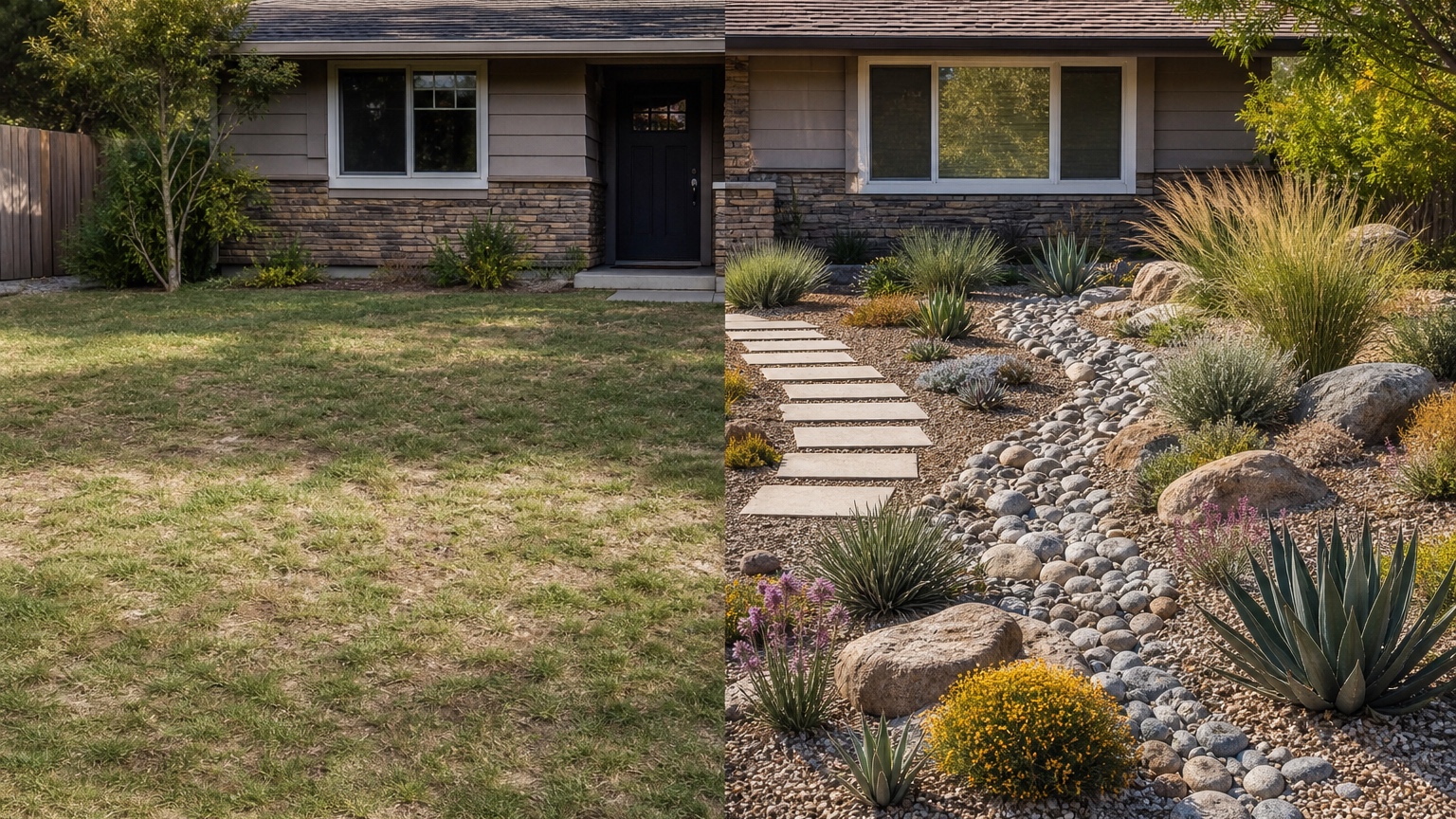
For a front yard lawn replacement, try: “Use this photo to preview a practical AI xeriscape design for a low-water front yard. Preserve the house, driveway, sidewalk, front steps, mature trees, property slope, and utility covers. Replace most of the lawn with drought-tolerant planting beds, gravel or decomposed granite, a clear walkway, simple edging, and low path lighting. Keep the result buildable, easy to maintain, and appropriate for a homeowner to discuss with a landscaper.”
For a backyard, try: “Create three controlled xeriscape layout variations on the same backyard photo: one with a gravel garden and native shrubs, one with a small seating patio and low-water borders, and one with reduced lawn plus drought-tolerant planting around the edges. Do not change the fence, doors, patio location, large trees, drainage slope, or neighboring views.”
For a landscape business, try: “Generate a low-water landscape preview that helps a client compare bed shapes, path placement, shade, plant density, gravel color, and maintenance level. Keep irrigation, drainage, access, and mature plant spacing realistic. Avoid adding unrelated luxury features.”
Name climate and use constraints directly. If the yard is hot, windy, shaded, steep, clay-heavy, sandy, fire-prone, pet-used, or governed by HOA rules, include that. If local plant availability matters, ask for regionally appropriate drought-tolerant planting as a visual direction, then confirm exact species with a local professional. Use reference images to guide gravel color, plant density, or modern versus natural style, but let the source photo control the real yard geometry.
Output review before anyone trusts the xeriscape image
Check scale first. Paths should be wide enough for the people and tools that use them. Planting islands should not block car doors, gates, steps, or hose access. Shrubs should have mature spacing rather than being packed like annual flowers. Trees should not appear under power lines, against foundations, or in places where roots could damage hardscape. If the AI changes the driveway width, deletes a slope, moves a door, or covers a utility lid, generate again.
Check water logic. A low-water yard can still need irrigation during establishment and drought periods. Look for hydrozones: plants with similar water needs grouped together, not mixed randomly. Avoid concepts where high-water plants sit in gravel without a realistic drip plan, or where the driest plants are placed in deep shade. If a design includes a rain garden, swale, dry creek, or permeable area, treat it as a direction that needs site measurements and drainage review.
Check heat, glare, and comfort. Rock-only yards can feel harsh, especially near reflective walls and west-facing windows. The preview should leave some softness: shade, plant mass, mulch, seasonal contrast, or a comfortable path surface. In fire-risk areas, review defensible space guidance and local rules before accepting dense planting near structures. In cold climates, check whether selected materials survive freeze-thaw and snow removal.
Finally, turn the visual into a field list. Measure lawn removal area, proposed bed depth, path width, gravel quantity, edging length, irrigation zones, and any demolition. Mark downspouts, low points, roots, access routes, and utilities. Save the best image as a conversation starter, not a substitute for a site plan. A landscaper still needs measurements, soil conditions, grading, plant selection, local rules, and installation details.
Mistakes that make AI xeriscape design look generic
The first mistake is treating xeriscape as a pile of rocks. A yard can use less water and still have layered planting, shade, paths, seating, and seasonal interest. If the result looks empty, ask for stronger plant massing, better bed shapes, and a clearer circulation plan rather than simply adding more objects.
The second mistake is copying a climate that does not match the property. A Sonoran-style cactus garden may not fit a rainy coastal yard. A meadow-like native plan may not work next to a formal entry without a stronger edge. A Mediterranean palette may need different maintenance than a desert gravel garden. Use reference images for style, but ask the AI to respect the actual climate and site conditions.
The third mistake is ignoring maintenance. Low-water does not mean no work. Gravel needs weeding and cleanup. Drip lines need checks. Shrubs need pruning. Grasses need seasonal cutback. Mulch needs refreshing. If the generated plan includes tiny plants spread across a huge gravel area, ask how the yard will look in year one, year three, and during dormant months.
The fourth mistake is asking for too many upgrades at once. “Replace the lawn, add a pool, outdoor kitchen, pergola, new facade, luxury lighting, and full garden” can produce an impressive image, but it will not answer the xeriscape question. Separate lawn removal, path layout, patio use, planting density, and lighting into different rounds so each output can be judged.
Workflow in RedesAIgn from photo to low-water action plan
In RedesAIgn, start with the clearest daylight photo of the yard. Use a wide view that includes the house, lawn, paths, fences, trees, doors, slope, and neighboring context. Choose the editor that fits an outdoor or landscape scene. Begin with one focused prompt that preserves fixed features and changes only the low-water landscape elements.
Use remix to test controlled variations: gravel color, decomposed granite, native shrubs, reduced lawn, planted islands, walkway changes, shade trees, or simpler maintenance. Saved prompts and history are helpful because xeriscape revisions are often about restraint. Once a version has the right circulation and maintenance level, reuse the prompt to compare plant density or material tone without losing the practical base. Reference images can clarify whether you want modern, naturalistic, desert, Mediterranean, or cottage-low-water character.
Share the strongest image with the person who will approve, build, maintain, or quote the project. A homeowner might use it to discuss phases and budget. A landscaper might use it to narrow client preferences before measuring. A lawn-replacement business might compare it with an AI landscape visualizer workflow or a more focused AI front yard landscaping concept. Keep notes beside the image: what stays, what changes, what must be measured, what needs local plant advice, and what needs irrigation or drainage review.
Questions homeowners and landscapers should answer
How much existing lawn should remain, if any? Where will people walk when the lawn is gone? Which areas need shade rather than more gravel? What views should be screened? Which plants need the same water zone? Where does rainwater go now? What maintenance will happen monthly, seasonally, and yearly? Which part can be installed first if budget is limited?
Those questions turn an AI xeriscape design from a nice preview into a practical next step. The best result is not the driest-looking image. It is the version that reduces water use, keeps the property comfortable, gives the installer clear priorities, and still looks like it belongs to the real home.
Try these prompts in redesAIgn
Redesign this front yard with a stone walkway, low-water plants, and clean planting beds.
Create a backyard seating patio with string lights, shrubs, and a simple lawn edge.
Add curb-appeal landscaping with layered greenery while keeping the driveway clear.
Related guides
- AI Landscape Architecture Generator for Early Outdoor Concepts
Use an AI landscape architecture generator for early outdoor concept exploration, studio reviews, feasibility checks, and photo-based design iteration.
- AI Landscape Visualizer: Preview Yard Changes Before You Commit
Use an AI landscape visualizer to preview realistic yard changes from a photo, compare landscaping options, and reduce decision risk before outdoor work.
- AI Lawn Makeover Ideas: Turn a Plain Yard Into a Plan
Use an AI lawn makeover to preview lawn shape, planting borders, paths, edging, seating, and practical yard upgrades before hiring or starting work.
- AI Backyard Makeover: Generate Outdoor Design Before and Afters
Use an AI backyard makeover workflow to preview layout zones, maintenance tradeoffs, before-and-after options, and practical next steps from a real yard.
- AI Walkway Design Generator for Paths, Pavers, and Garden Entries
Generate walkway design ideas from a yard photo with RedesAIgn. Compare edges, materials, and planting before any hardscape work begins.