AI Deck Design Ideas From Your Backyard Photo
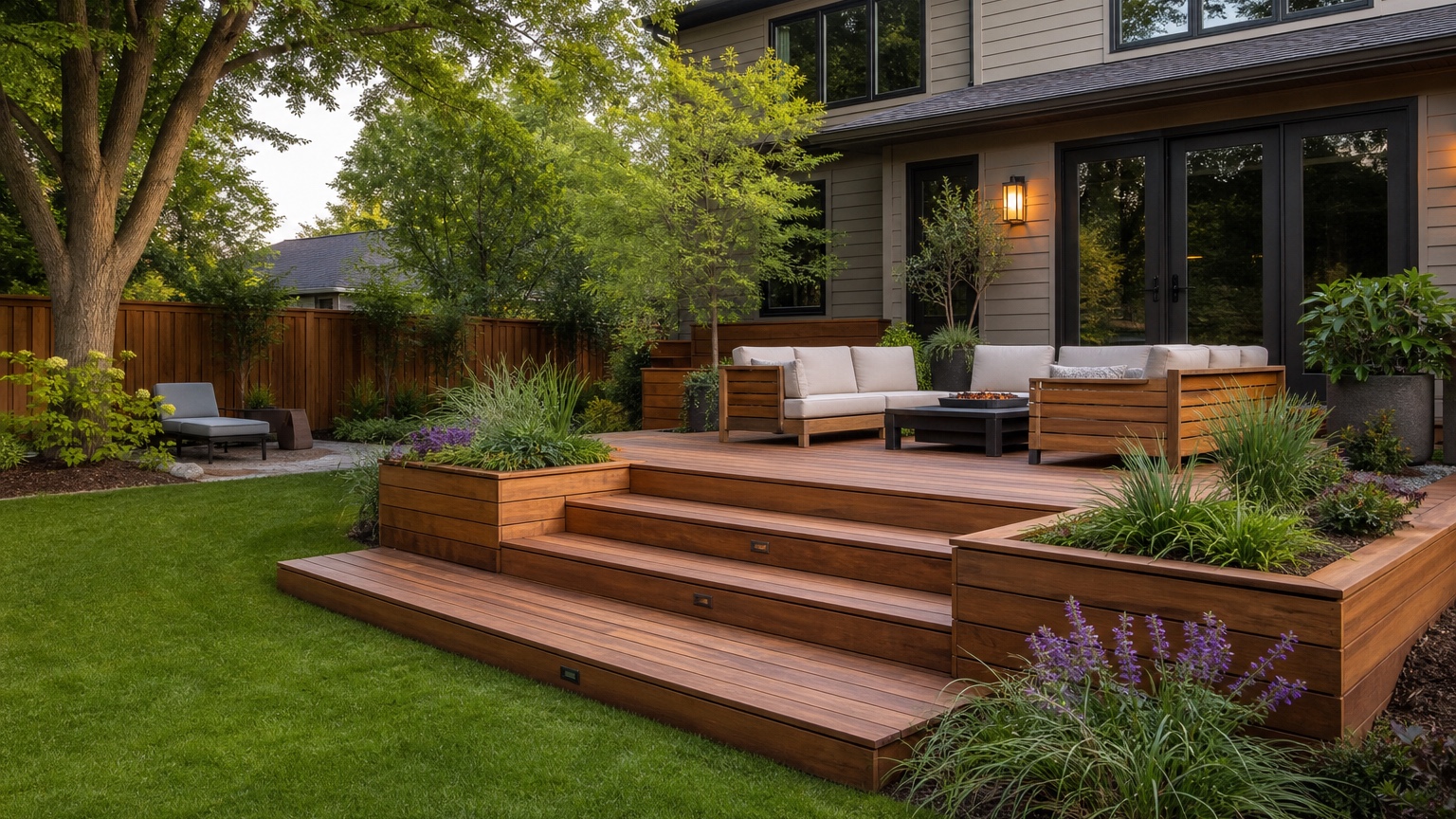
AI deck design ideas are most useful when they start with the backyard you already have. A deck is not an isolated platform. It changes how people leave the house, where furniture fits, how stairs meet the yard, whether a grill has a safe place, how railings affect the view, and whether the whole outdoor area feels connected or awkward. Inspiration photos can show materials and mood, but they cannot answer whether your own slope, fence, patio door, mature tree, drainage pattern, or side-yard access can support the idea.
A photo-based workflow helps homeowners and deck contractors turn vague wishes into visible options. Instead of saying “larger deck with better seating,” you can test a compact landing, a full-width entertainment deck, a two-level design, a privacy-screen version, or a deck that connects to a patio below. The point is not to replace drawings, permits, engineering, or contractor judgment. The point is to reduce uncertainty before anyone prices lumber, composite boards, railings, stairs, footings, lighting, or built-in features.
RedesAIgn can support that early visual planning stage. Upload a clear yard photo, choose the landscape-focused editor, and use prompts, remixing, reference images, saved prompts, and history to compare deck concepts and add-ons. To explore the first deck direction, you can open RedesAIgn for free and use the included 5 AI credits before buying additional revision rounds. If you need more explorations after the first round, one-time credit packs are available.
AI Deck Design Ideas: the real decision this article should help with
The real decision is what kind of deck belongs in the space and what problem it should solve. Deck contractors often need to show concepts and add-ons before a homeowner understands the difference between a simple replacement, a bigger entertaining platform, a screened privacy edge, a stair reconfiguration, or a deck-to-patio connection. Homeowners need to see whether the deck should be larger, smaller, lower, more open, more sheltered, or better integrated with the yard.
The preview should clarify the deck size, connection to the house, and outdoor-living priorities before you request pricing. If the backyard drops away from the house, the image should make stair location and railing impact obvious. If the main issue is afternoon sun, the deck idea may need a pergola, umbrella zone, shade sail, or planting strategy rather than more square footage. If the current deck blocks the best lawn area, a revised footprint may be more valuable than a premium material upgrade.
For a deck idea, the useful output is a better scope: size, stairs, railing, shade, furniture zones, or the next question for a deck contractor. A strong result might help you ask a contractor to price a same-footprint rebuild with new stairs, compare composite decking colors, test a privacy wall near the neighbor’s view, keep a grill away from siding, or phase a lower patio after the deck is safe and code-compliant. If the image only says “make it nicer,” the prompt is not specific enough.
When to test AI Deck Design Ideas visually first
Use AI deck design ideas before spending money on yard or garden changes that depend on the deck footprint. The deck often controls circulation from the house to the lawn, pool, garden, shed, side gate, or patio. If the deck is too deep, it may eat the yard. If it is too shallow, dining chairs may block the door. If stairs land in the wrong place, people will cut across planting beds or walk through muddy low spots.
A preview is especially helpful when a deck contractor, hardscape contractor, realtor, host, or hospitality marketer needs a clearer reference. Contractors can use the image to ask better questions about size, rail type, stairs, privacy, lighting, storage, skirting, or material expectations. Realtors and hosts can use a concept image to discuss curb appeal, listing preparation, or guest experience, while still labeling the result as a concept rather than a built promise.
Use the outline when several stakeholders need to compare the same option. A couple may disagree about railings. A contractor may see structural limits that the homeowner misses. A rental owner may care about durability and maintenance more than built-in planters. A photo-based deck concept gives everyone the same starting point, so the conversation moves from abstract taste to practical tradeoffs.
AI Deck Design Ideas as a decision workflow
Start with the decision the image needs to help decide. Are you testing the deck footprint, stair direction, railing style, privacy, shade, seating, storage, grill location, or connection to a patio? Each generation should answer one or two questions. Asking for a deck, outdoor kitchen, hot tub, fire pit, pool, garden, pergola, and lighting plan all at once may create an impressive scene, but it will not isolate the build decision.
This matters because a deck affects the whole yard. Deck height controls stairs and views. Stair placement controls paths. Railings affect openness and safety. Skirting changes storage and animal access. Material color changes heat, maintenance, and how the deck relates to siding. Built-in benches can save space, but they may limit flexible furniture. A generated concept should make those relationships visible inside the real photo.
Judge the result by actionability before style. Can you roughly understand where the deck begins and ends? Does the stair run make sense? Is there a path from the door to dining and lawn? Does the grill have clearance? Are railings placed where height requires protection? Does the deck still relate to the house, grade, fence, and existing trees? If not, revise before sharing it as a project reference.
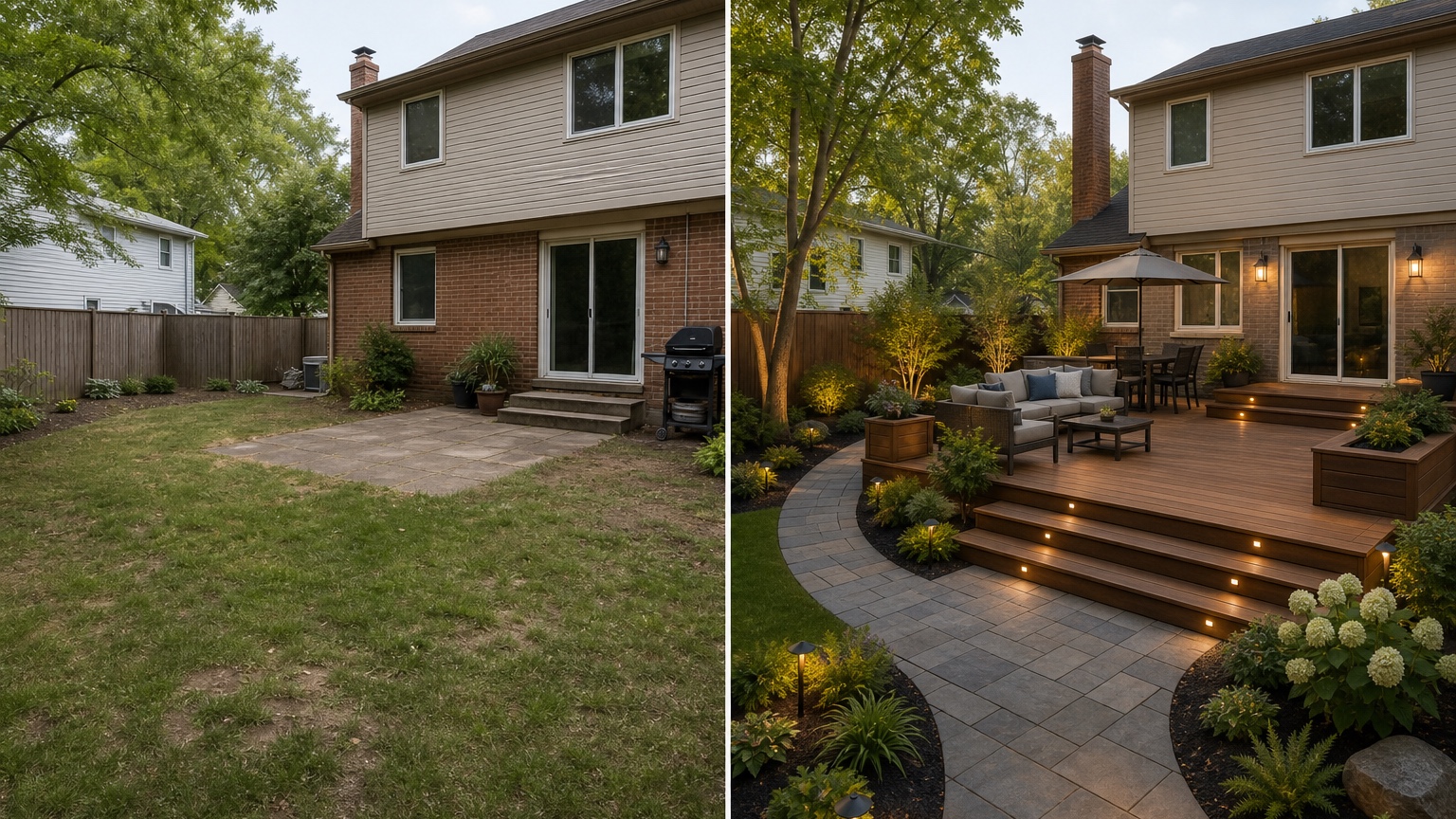
AI Deck Design Ideas input checklist for a believable result
Prepare wide yard angles in daylight. Take one photo from the house looking out, one from the yard looking back at the house, and one from the side if stairs or access matter. Include the patio door, current deck or landing, siding, windows, downspouts, grade change, fences, gates, paths, trees, AC units, utilities, drainage clues, and any patio or garden area that connects to the deck.
Decide what must stay recognizable in the original yard or garden for this deck design ideas edit. Maybe the back door, window locations, roof overhang, fence, mature tree, lawn boundary, side gate, retaining wall, existing patio, or property line cannot move. Say that directly. If the AI invents a new door, moves the stairs through a garden bed, deletes a tree, or hides an AC unit under a bench, the image may be attractive but weak for planning.
Add references only when they clarify deck style, material, color, or mood. A reference can communicate cable rail, black aluminum rail, composite boards, cedar warmth, wide steps, privacy screens, or a modern low platform. It should not override the source photo. The real yard should control scale, door alignment, grade, and circulation.
AI Deck Design Ideas: outdoor layout and maintenance tradeoffs
A good deck concept balances traffic paths, seating zones, shade, privacy, and upkeep. Dining usually wants a clear route to the kitchen. Lounge seating may want a view into the yard rather than a view into a fence. A grill needs safe clearance from siding, railings, overhead structures, and traffic. Stairs should land where people naturally walk, not where they create a shortcut through wet lawn or planting.
Deck add-ons change budget quickly. Privacy screens, pergolas, benches, planters, lighting, storage, skirting, gates, wide stairs, and drink rails can all make a deck more useful, but they also add labor and detailing. Composite decking may reduce staining maintenance, yet the substructure, flashing, drainage, fastening, heat, slip resistance, and color still matter. Wood can be warm and repairable, but it needs finishing and weather exposure planning.
Climate and drainage need review before anyone trusts a pretty image. Snow, freeze-thaw cycles, coastal air, wildfire exposure, heavy rain, intense sun, and termite risk can affect material choices and details. Water should move away from the house and not collect under the deck. Shade may be essential in hot climates, while extra structure may need code, wind, or footing review. Use the visual concept to guide questions, not to skip technical work.
AI Deck Design Ideas prompt brief for stronger deck design results
Start the prompt with the outcome: “Create a realistic outdoor upgrade plan for this backyard focused on deck design ideas.” Then name what stays, what can change, and what decision you want to compare. A focused prompt gives the AI a planning assignment instead of a decoration request.
For a homeowner deck concept, try: “Use this backyard photo to preview a realistic deck design. Preserve the house, patio door, windows, fence, existing tree, grade, side gate, and lawn boundary. Show a practical deck with space for dining and lounge seating, safe stairs to the yard, simple railing, modest privacy screening on the neighbor side, and low-maintenance materials. Keep the design feasible for a deck contractor to price.”
For a controlled comparison, try: “Generate three deck design ideas on the same photo: one same-footprint replacement with improved railing and stairs, one larger entertaining deck with dining and grill zones, and one lower deck connected to a patio and planting edge. Do not change the house, doors, main windows, fence, mature trees, or yard shape.”
Name constraints such as climate, water, drainage, maintenance, budget, code review, and contractor feasibility. If the deck must fit an HOA style, say so. If you want to avoid high-maintenance staining, say so. If the yard needs pet-friendly access, say so. Controlled variations are better than one overloaded prompt because each image tests a different project path.
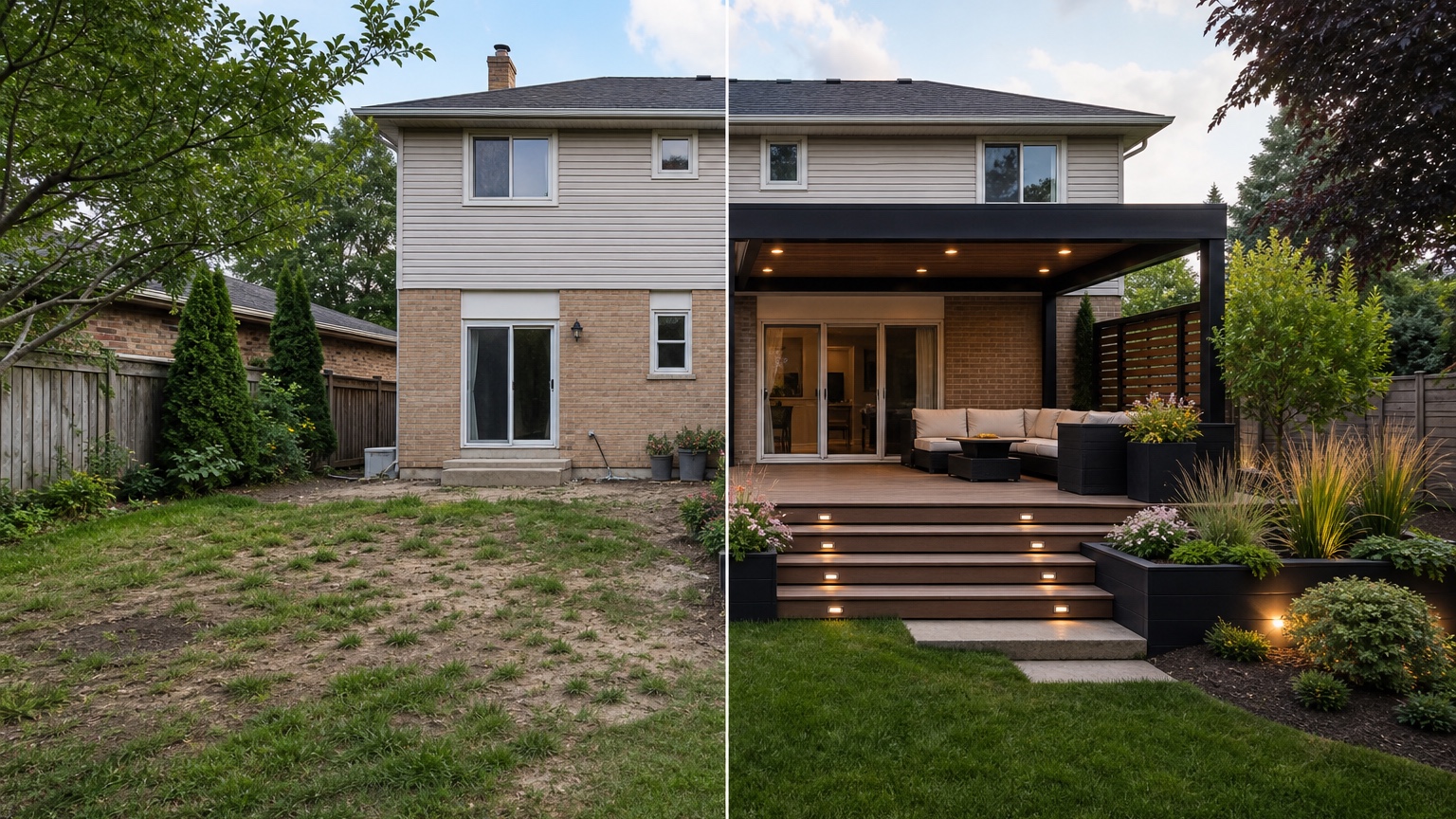
AI Deck Design Ideas output review before anyone trusts the image
Check scale first. A dining table needs chair clearance. A lounge area needs room to walk around furniture. Stairs need sensible width and landing direction. Railings should not disappear at height changes. A built-in bench should not block the door. If the image shows a huge deck on a tiny yard or a narrow platform trying to hold every feature, revise for realistic proportions.
Check edges, lighting, and consistency with the original image. Deck boards should follow the perspective of the house. Stairs should meet grade believably. Posts should look supported. Shadows should match the source photo. If the AI changes the door height, moves windows, erases downspouts, flattens a slope, or invents a roofline, treat that result as inspiration only.
Judge each deck concept against code constraints, water movement, stair placement, maintenance, shade, privacy, and whether the structure is realistic to build. A contractor still needs measurements, structural review, footing design, beam and joist sizing, ledger attachment, flashing, guardrail details, permits, and material selections. Save the strongest deck design ideas version as a zone plan, hardscape comparison, and maintenance note set, then use it to ask better pricing questions.
AI Deck Design Ideas mistakes that make results look generic
The first mistake is uploading a weak photo of the yard or garden. A close-up of old deck boards will not show how the deck relates to the house, lawn, slope, fence, sun, or stairs. Retake wide daylight photos with the camera level and the whole decision area visible.
A second mistake is combining deck planning with too many unrelated backyard changes, which makes the useful design choice harder to see. A prompt that adds a deck, pool, pergola, outdoor kitchen, fire pit, new landscaping, hot tub, and full lighting plan may look impressive, but it will not help you choose the deck. Separate footprint, stair, railing, shade, and add-on questions into different rounds.
The third mistake is ignoring how to turn the image into a practical next step. The best AI deck concept is not the most dramatic. It is the one that lets you measure a footprint, ask about structure, price a material direction, compare railing options, or decide whether the project should include a patio connection later.
AI Deck Design Ideas workflow in RedesAIgn from first image to action
In RedesAIgn, choose the editor built for outdoor and landscape scenes, upload the clearest backyard photo, and begin with a restrained prompt. RedesAIgn includes 10 AI editors, so you can keep deck planning separate from exterior paint, interior rooms, and product-style edits. Generate a practical concept first, then remix the strongest version to test footprint, stairs, railing, privacy, shade, lighting, or material color.
Saved prompts and history are useful because deck revisions can be subtle. Keep the prompt that preserved the house and grade best, then create versions for same-footprint replacement, expanded dining, lower platform, privacy edge, or deck-to-patio transition. Reference images can guide material mood, but the original photo should control structure and scale.
Share the final reference with a deck contractor, hardscape contractor, realtor, host, or hospitality marketer when execution matters. RedesAIgn-generated images can be used commercially where relevant, but the built project still needs measurements, structural design, permits, samples, and professional review. If the deck connects to a larger backyard plan, compare it with the pending AI patio design generator, AI pergola design generator, AI outdoor living design, and AI garden planner from photo. If the deck changes how the house exterior reads, AI exterior design from photo can help coordinate the facade and outdoor space.
Deck questions to answer before pricing
Before asking for a quote, use the selected image to write a short brief. What is the approximate footprint? Which door does it serve? Where do stairs land? What railing style is preferred? Does the deck need shade, privacy, lighting, gates, storage, or skirting? Which parts are must-haves and which are later upgrades?
Then collect the real constraints: dimensions, grade, ledger condition, drainage, utilities, code requirements, permit rules, HOA limits, material availability, and maintenance expectations. Mark the rough footprint outside if possible and test furniture clearances with tape, chairs, or temporary markers. A good AI deck design ideas preview should make that next conversation clearer, more specific, and less likely to turn into a costly redesign after construction starts.
Try these prompts in redesAIgn
Redesign this front yard with a stone walkway, low-water plants, and clean planting beds.
Create a backyard seating patio with string lights, shrubs, and a simple lawn edge.
Add curb-appeal landscaping with layered greenery while keeping the driveway clear.
Related guides
- AI Landscape Architecture Generator for Early Outdoor Concepts
Use an AI landscape architecture generator for early outdoor concept exploration, studio reviews, feasibility checks, and photo-based design iteration.
- AI Landscape Visualizer: Preview Yard Changes Before You Commit
Use an AI landscape visualizer to preview realistic yard changes from a photo, compare landscaping options, and reduce decision risk before outdoor work.
- AI Lawn Makeover Ideas: Turn a Plain Yard Into a Plan
Use an AI lawn makeover to preview lawn shape, planting borders, paths, edging, seating, and practical yard upgrades before hiring or starting work.
- AI Xeriscape Design Ideas for Low-Water Yards
Use AI xeriscape design to preview low-water planting, gravel, paths, shade, irrigation zones, and maintenance tradeoffs before changing your yard.
- AI Backyard Makeover: Generate Outdoor Design Before and Afters
Use an AI backyard makeover workflow to preview layout zones, maintenance tradeoffs, before-and-after options, and practical next steps from a real yard.