AI Fire Pit Backyard Design Ideas From a Photo
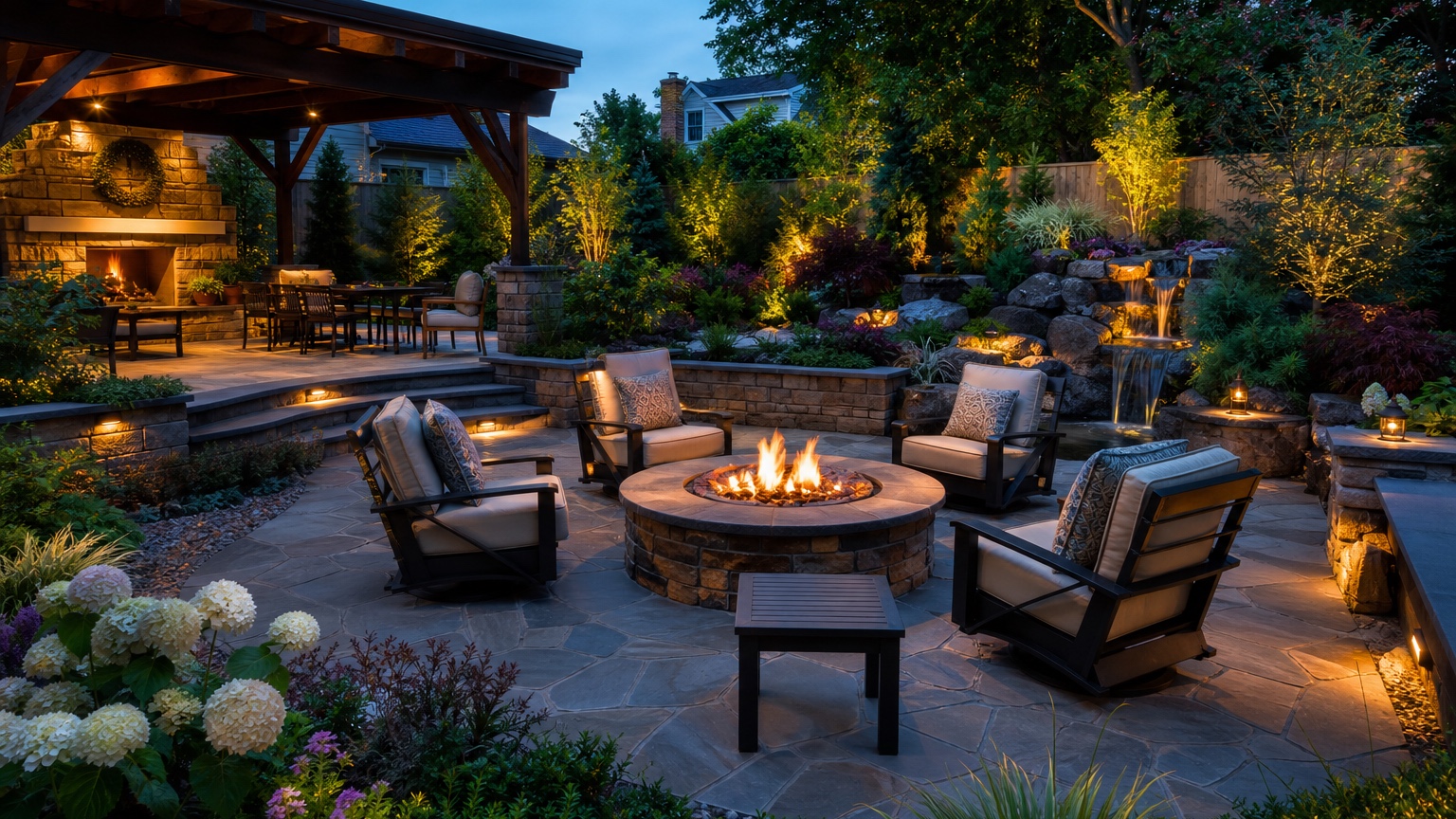
AI fire pit backyard design is most useful when the question is bigger than “Where could a fire pit go?” A fire pit changes how guests move through the yard, where chairs collect, how smoke and heat affect comfort, what needs lighting, which views need privacy, and whether the space feels like a usable outdoor room or a random circle of chairs on lawn.
For Airbnb hosts, the decision is also commercial. A fire pit can make a listing feel more social and support evening use, but only if it looks safe, intentional, easy to maintain, and believable for the property. For homeowners, the same preview can prevent an expensive mistake: building a patio pad too small, placing seating in a windy corner, blocking the path from the house, or creating a feature that is hard to keep clean.
A photo-based workflow gives you a better starting point than inspiration boards alone. Upload a wide backyard photo, preserve the parts that must stay, and use controlled prompts to test fire pit placement, seating orientation, paths, planting, privacy, and lighting on the yard you actually have. RedesAIgn can help with that early planning step: it includes 10 AI editors, supports prompts, remix images, reference images, saved prompts, and history, and lets you start free with RedesAIgn with 5 free credits and no credit card required. If you need more iterations later, one-time credit packs are available.
AI Fire Pit Backyard Design: the real decision this article should help with
The real decision is how to turn a backyard into a social outdoor zone without making the yard less useful. A fire pit should relate to the patio, back door, grill, pool, lawn, fence, trees, and main view. If it sits too far away, guests may not use it. If it sits too close, it can crowd dining, circulation, or doors. If the seating zone floats without paths or edges, it may look unfinished.
Airbnb hosts need to visualize social outdoor zones because guests judge the space quickly. A listing photo with a clear fire pit lounge, defined seating, tidy gravel or pavers, warm lighting, and simple planting tells guests where the evening activity happens. A photo with scattered chairs on patchy grass does not create the same confidence. The preview should help a host decide whether the upgrade is a gravel conversation zone, a paver patio, a gas fire table near existing hardscape, a built-in stone pit, or a modest portable feature staged well.
For homeowners, the preview should reduce uncertainty around the outdoor upgrade plan. A good AI fire pit backyard design result can show whether the yard needs a new path, a larger landing outside the door, a privacy screen, a planting backdrop, a retaining edge, or a simpler seating layout. The useful answer is a concrete next step: measure the zone, price pavers, ask a landscaper about drainage, test a seating arrangement, or remove a fire pit idea that looks wrong once seen in context.
AI Fire Pit Backyard Design input checklist for a believable result
Start with wide yard photos in daylight. Include the house wall or back door if the fire pit will relate to the home, plus the patio, deck stairs, fence, gate, slope, trees, garden beds, drainage clues, pool edge, utilities, and any fixed paths. A close-up of the lawn will not show whether the fire pit interrupts the route from kitchen to grill or whether chairs block the gate.
Take at least two angles: one from the house looking out, and one from the far corner looking back. For a rental property, include the angle that would become the listing photo. The best construction reference may not be the best guest-facing image. A host needs the fire pit to read clearly in a hero photo, while a homeowner may care more about the view from the kitchen.
Decide what must stay recognizable in the original yard. The prompt should preserve existing fences, mature trees, deck posts, patio slabs, pool shape, retaining walls, utility covers, irrigation equipment, and the basic yard footprint unless the project truly includes changing them. If the AI removes the slope, invents a new terrace, replaces the fence, or moves a tree, the image may be attractive but less useful for planning.
Reference images help when they clarify style, material, color, or mood: pea gravel, modern concrete pavers, a gas fire table, rustic stone, black metal seating, warm string lights, or drought-tolerant planting. Use references as direction, not as a demand to copy a resort courtyard into a narrow suburban side yard.
AI Fire Pit Backyard Design: outdoor layout and maintenance tradeoffs
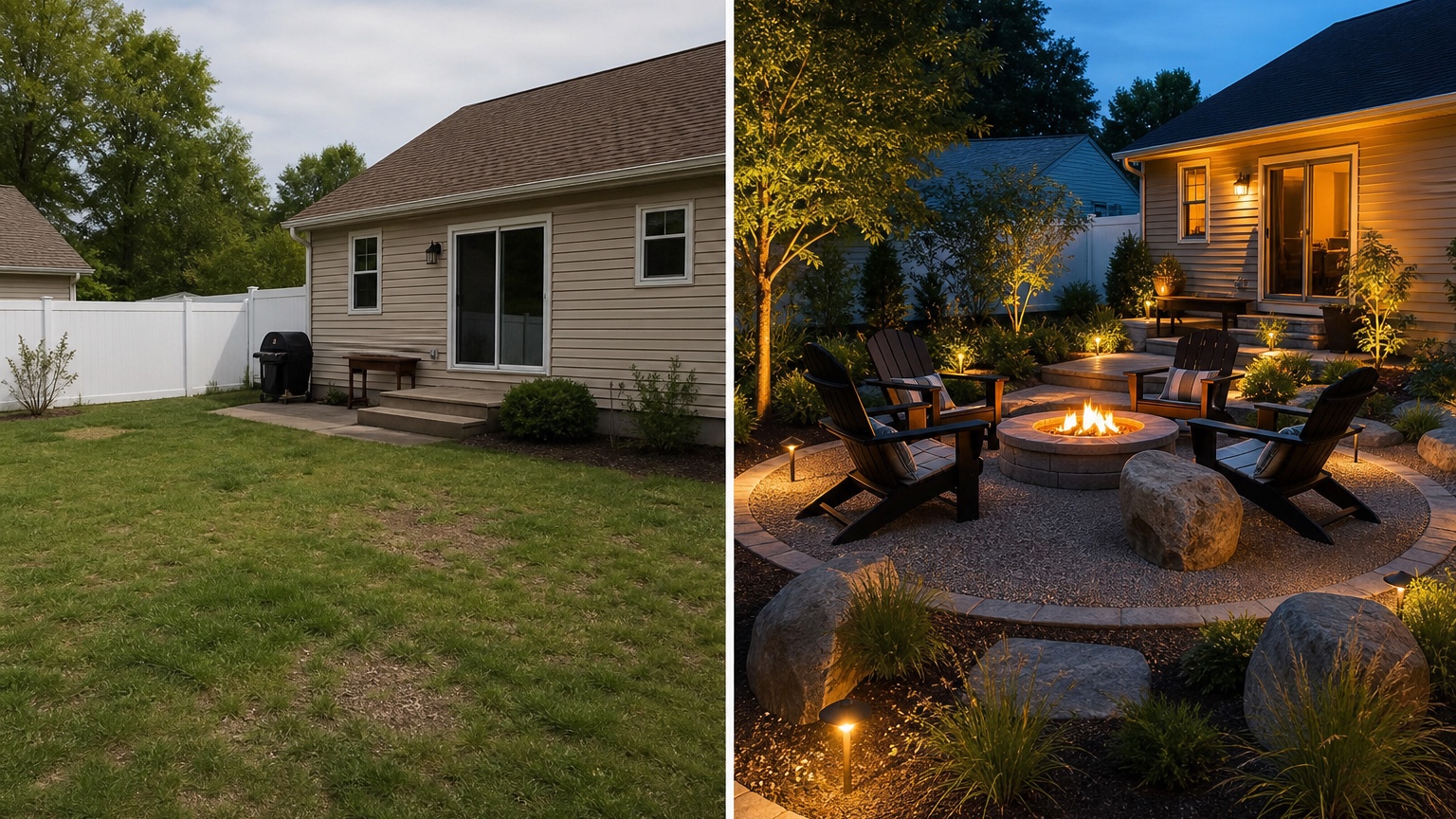
Fire pit design is a circulation problem before it is a style problem. Guests need a clear path from the house to the seating zone. Chairs need room to pull back, and a serving tray needs somewhere to land. The fire pit should not occupy the only open lawn if the household needs that space for children, pets, games, or flexible use.
Think in zones. One zone might be dining near the house, one might be grilling, one might be open lawn, and one might be the fire pit lounge. The AI preview should make those zones legible. If everything blends into one oversized patio, the yard may lose function. If the fire pit is isolated at the back fence without lighting or a path, it may look inviting in the image but feel disconnected at night.
Seating is the practical test. Four chairs around a portable pit need a different footprint than a sectional around a gas fire table. Built-in seat walls look tidy but reduce flexibility. Adirondack chairs photograph well but may not suit every guest or climate. For Airbnb hosts, choose furniture that looks clean, durable, and easy to reset between stays.
Plants and hardscape choices affect budget and seasons. Gravel is flexible and often lower cost than pavers, but it needs edging and periodic cleanup. Pavers create a clean host-ready surface, but the base preparation matters. Mulch near a fire feature may be a poor idea depending on local rules and use. Planting can frame the space, soften fences, and add privacy, but the concept should account for water, leaf drop, thorns, deer pressure, and winter appearance.
Climate, drainage, and local rules still need review. A beautiful fire pit image cannot confirm setbacks, burn bans, fuel requirements, gas line feasibility, wind exposure, tree clearance, HOA rules, code, or whether a low spot becomes muddy after rain. Treat the AI image as a planning reference, not as a permit, construction drawing, or safety approval.
AI Fire Pit Backyard Design prompt brief for stronger fire pit backyard design results
Start the prompt with the outcome: “Create a realistic AI fire pit backyard design concept from this yard photo.” Then name the decision, the constraints, and what should stay unchanged. A focused brief keeps the image from becoming a generic luxury backyard that cannot be built.
For a host-friendly concept, try: “Use this backyard photo to create a realistic fire pit lounge for an Airbnb property. Preserve the house, deck, fence, lawn shape, trees, gate, and patio. Add a defined gravel or paver seating zone with durable chairs, a clear path from the back door, subtle lighting, low-maintenance planting, and tidy edges. Keep the design practical, safe-looking, easy to maintain, and believable for a rental listing.”
For a homeowner comparison, try: “Generate three controlled fire pit backyard design options on the same photo: one modest gravel seating zone, one paver patio with a gas fire table, and one more polished built-in fire pit area. Keep the fence, patio, trees, slope, back door, and yard boundaries unchanged. Compare placement, path direction, seating layout, privacy, and maintenance.”
Name constraints such as climate, water, drainage, maintenance, smoke, wind, contractor feasibility, and budget. If the yard must keep open lawn, say so. If the fire pit should be gas instead of wood-burning, say so. For a short-term rental, ask for durable furniture, clear walkways, simple lighting, and a layout that photographs well.
Generate controlled variations instead of one overloaded prompt. First test placement, then surface material, seating type, privacy, and planting. This makes each image answer a specific question. It is easier to compare a gravel circle against a paver rectangle than to judge a fantasy backyard that changes the deck, fence, plants, furniture, lighting, and house at once.
AI Fire Pit Backyard Design output review before anyone trusts the image
Check scale first. The fire pit should not be so large that chairs have no room, and the chairs should not be so close that the zone looks uncomfortable. Paths should appear walkable. Paver joints, gravel edges, steps, and retaining details should follow the photo perspective. If the image turns a small yard into a resort courtyard by stretching the background, regenerate with stricter constraints.
Check edges, lighting, and consistency with the original image. A useful fire pit concept keeps the yard recognizable. The fence line should remain in place. The patio edge should still connect to the house. Shadows should make sense. If lighting becomes cinematic but hides trip hazards, steps, drainage, or uneven grade, the image may be better for mood than for planning.
Evaluate the fire pit concept against clearance, seating distance, smoke direction, drainage, surface material, maintenance, and local safety rules. A stone pit on a slope may need grading or a retaining edge. A sunken lounge may be unrealistic where drainage is poor. Dense planting may look great in a rendering but require irrigation, pruning, and cleanup. For a rental, also consider turnover: can a cleaner reset the chairs quickly, remove ash or debris, and inspect the area without special instructions?
Save the strongest version as three notes: zone plan, planting and hardscape comparison, and maintenance checklist. The zone plan explains where the fire pit, seating, path, lighting, and privacy features go. The comparison explains gravel versus pavers, portable versus built-in, and open seating versus sectional seating. The maintenance checklist covers surfaces, cushions, leaf drop, ash, lighting, irrigation, and seasonal storage.
AI Fire Pit Backyard Design mistakes that make results look generic
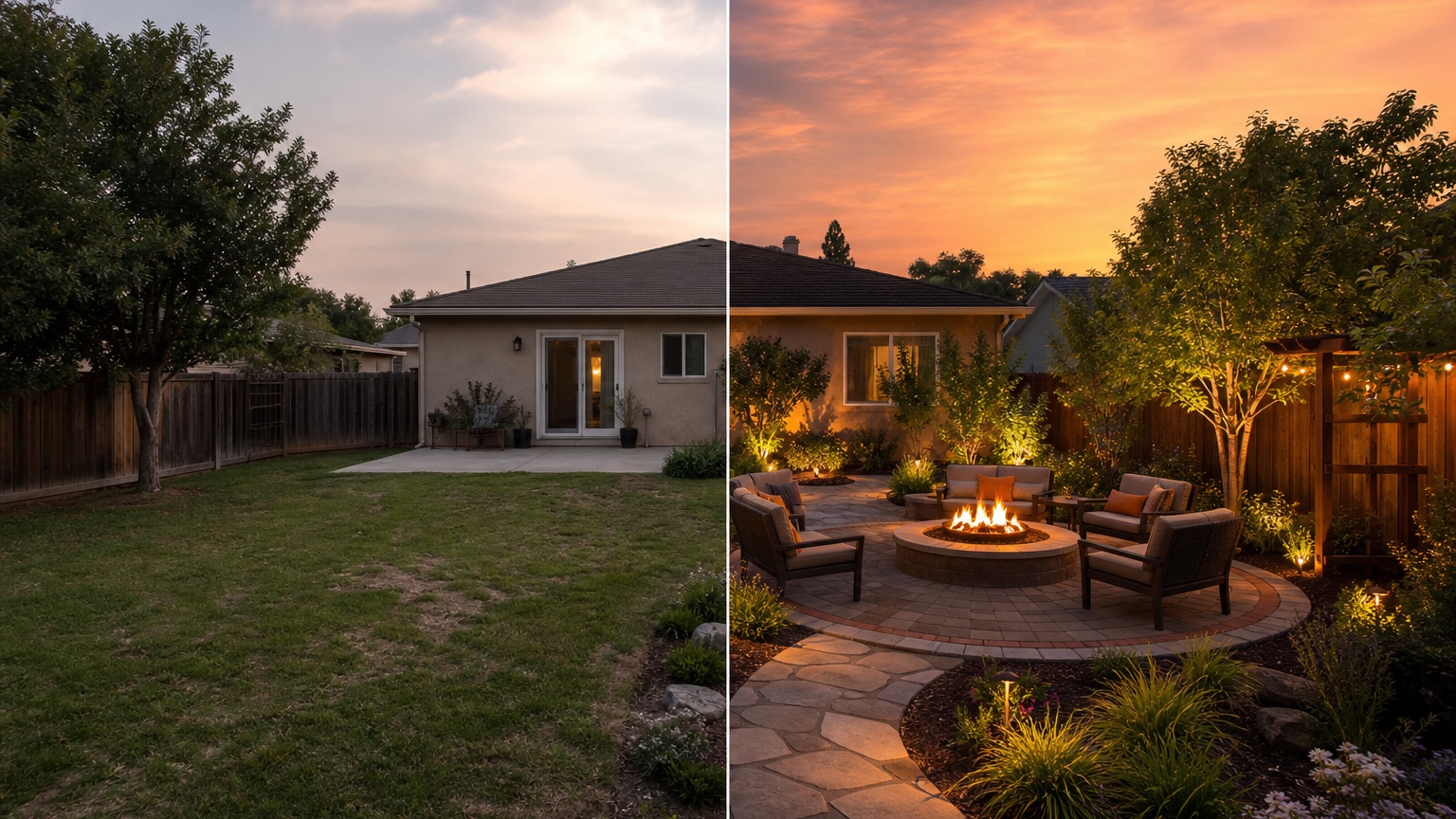
The first mistake is uploading a weak photo of the yard or garden. Cropped fence lines, night photos, heavy shadows, cluttered corners, and close-ups make it harder to judge layout. Retake wide daylight images that show the full relationship between house, lawn, patio, fence, paths, trees, and the proposed lounge area.
The second mistake is asking for unrelated fire pit backyard design changes that blur the decision. “Add a fire pit, pool, outdoor kitchen, pergola, new deck, full landscaping, hot tub, and luxury lighting” may produce a dramatic image, but it will not tell you where the fire pit should go or what surface and seating make sense. Separate fire pit placement from larger outdoor living planning.
The third mistake is ignoring execution. A preview can make a wood-burning pit look cozy under a tree canopy, place chairs on a slope, or show string lights without supports. Before building, confirm clearances, surfaces, local fire rules, drainage, fuel choices, furniture durability, and whether the layout works at night.
AI Fire Pit Backyard Design workflow in RedesAIgn from first image to action
In RedesAIgn, choose the landscape-focused editor for yard and garden scenes, upload the clearest wide photo, and begin with a prompt that preserves the existing yard. RedesAIgn includes 10 AI editors, so you can keep landscape experiments separate from exterior facade, interior, or listing-style edits. Use remix images to revise the best version rather than starting over each time.
Saved prompts and history are useful because fire pit design depends on small differences. Keep the prompt that preserves the yard accurately, then create variations for seating count, gravel versus pavers, wood-burning versus gas appearance, privacy screening, lighting level, and host-ready staging. Reference images can guide material and mood, but the original photo should control scale and constraints.
Share the final AI fire pit backyard design reference with the person who will use it: a landscaper, hardscape contractor, realtor, Airbnb host, property manager, or hospitality marketer. RedesAIgn-generated images can be used commercially where relevant, but execution still needs measurements, product choices, quotes, samples, code review, and professional judgment. If the fire pit is part of a larger plan, compare it with the pending AI backyard design generator, AI outdoor living design, AI patio design generator, and AI yard design app. For planting-heavy decisions, the pending AI garden planner from photo can help refine beds around the lounge.
AI Fire Pit Backyard Design questions to answer before you commit
Ask what the preview can show accurately for Airbnb hosts and homeowners: likely placement, seating orientation, path direction, surface mood, planting backdrop, privacy intent, lighting style, and how the finished zone might photograph. Then ask what still needs samples, measurements, products, quotes, or professional review: fire clearances, code, fuel type, drainage, grade, utilities, tree canopy, furniture dimensions, material durability, and local restrictions.
The selected fire pit backyard design concept should guide the next real-world step. Mark the proposed zone with stakes or chairs. Walk the route from the house. Measure the seating footprint. Price the surface. Check whether guests or family members can move around comfortably. Ask a contractor about drainage and base preparation before choosing pavers or stone.
For an Airbnb host, also create an operations note. Decide where cushions are stored, how ash or debris is handled, what the house rules say, how the area is lit, and whether the feature is photographed honestly. The best AI fire pit backyard design is not the most luxurious image. It is the version that turns an underused yard into a clear, practical, host-ready social zone without hiding the work required to build and maintain it.
Try these prompts in redesAIgn
Redesign this front yard with a stone walkway, low-water plants, and clean planting beds.
Create a backyard seating patio with string lights, shrubs, and a simple lawn edge.
Add curb-appeal landscaping with layered greenery while keeping the driveway clear.
Related guides
- AI Landscape Architecture Generator for Early Outdoor Concepts
Use an AI landscape architecture generator for early outdoor concept exploration, studio reviews, feasibility checks, and photo-based design iteration.
- AI Landscape Visualizer: Preview Yard Changes Before You Commit
Use an AI landscape visualizer to preview realistic yard changes from a photo, compare landscaping options, and reduce decision risk before outdoor work.
- AI Lawn Makeover Ideas: Turn a Plain Yard Into a Plan
Use an AI lawn makeover to preview lawn shape, planting borders, paths, edging, seating, and practical yard upgrades before hiring or starting work.
- AI Xeriscape Design Ideas for Low-Water Yards
Use AI xeriscape design to preview low-water planting, gravel, paths, shade, irrigation zones, and maintenance tradeoffs before changing your yard.
- AI Backyard Makeover: Generate Outdoor Design Before and Afters
Use an AI backyard makeover workflow to preview layout zones, maintenance tradeoffs, before-and-after options, and practical next steps from a real yard.