AI Floor Plan Interior Design: Furnish Layouts Before You Build
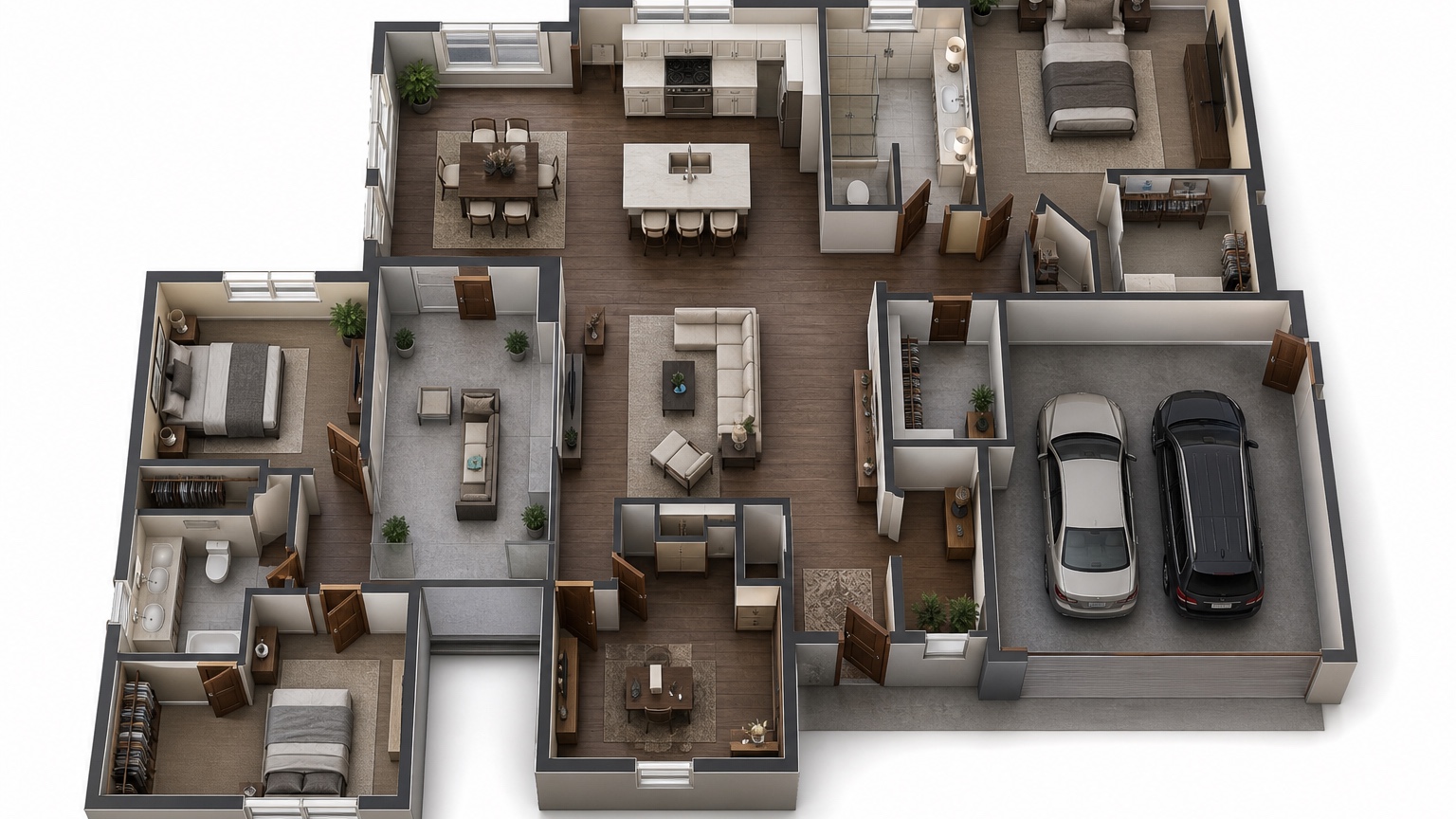
Ai Floor Plan Interior Design is most useful when it helps homeowners and interior designers decide whether furniture, storage, and daily routines fit the plan before money is spent. It can expose furniture and storage tradeoffs, but it does not measure the room or confirm product fit by itself.
The frame here is a furnishing and room-purpose stress test. Begin with how the household will live, place furniture and storage logically, compare alternatives, and keep the most functional version for measuring, sourcing, or design review.
RedesAIgn can help homeowners and designers generate those options with prompts, reference images, remixing, saved prompts, and generation history. The first layout study can use 5 free credits without a credit card, with one-time credit packs available if more furniture or storage rounds are useful.
Treat the plan as a daily-life test
Interior design from a floor plan should prove how the home will function, not just decorate it.
A flat plan can look generous until furniture enters the room. Then the sectional blocks the door, the dining table crowds the island, the desk has no quiet wall, or the nursery lacks storage. AI floor plan interior design is useful because it lets homeowners and designers test these everyday conflicts before ordering furniture or requesting drawings.
For homeowners and interior designers, the practical test is whether the visual changes the next meeting. If it only looks impressive, it is not enough.
List room purposes before styles
A style prompt is premature if the plan does not know what each zone must do.
Write the role of every space: conversation, meals, homework, storage, entry drop zone, guest sleep, play, work, reading, entertaining, or rental turnover. Then include furniture that must stay and furniture that can change. This keeps the output from filling the room with attractive pieces that do not solve the household problem.
For homeowners and interior designers, the practical test is whether the visual changes the next meeting. If it only looks impressive, it is not enough. For room-photo work, compare AI interior design from photo; for specific pieces, use AI furniture visualizer.
Use furniture scale as the first filter
If the furniture does not fit with circulation, the visual is not a success.
Ask for practical clearances around beds, islands, dining chairs, sofas, closets, and doors. A generated room may look finished from above, but if someone cannot walk between the island and refrigerator or open a wardrobe, it fails the plan. Run a smaller-furniture version and a full-comfort version so the client can see the tradeoff.
For homeowners and interior designers, the practical test is whether the visual changes the next meeting. If it only looks impressive, it is not enough.
Compare storage and purpose options
The best version may be the one that adds function rather than drama.
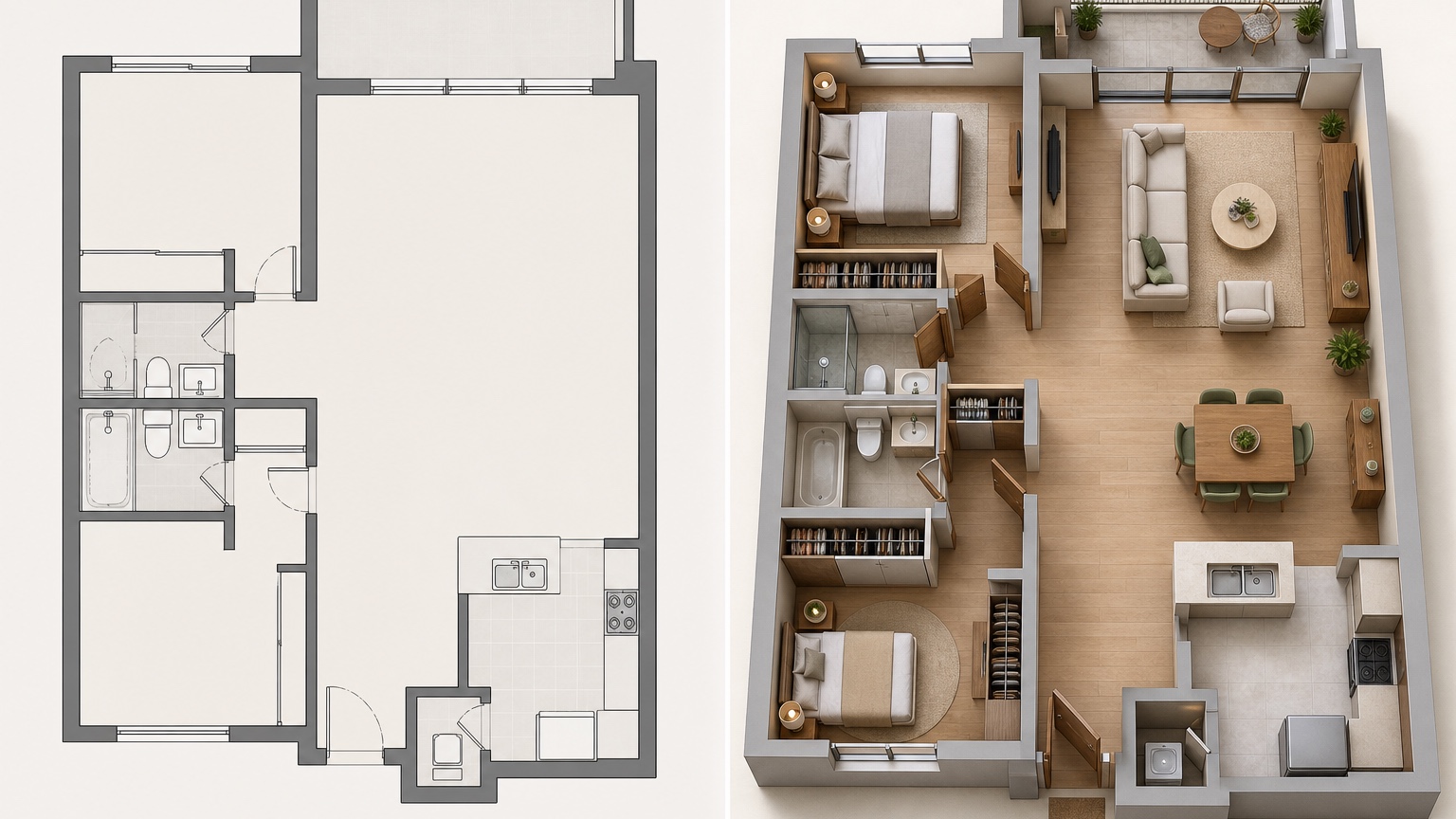
Test built-ins, pantry storage, toy storage, mudroom benches, guest-office hybrids, or flexible dining arrangements as separate versions. Designers can use the images to show why a room needs fewer pieces, a different focal point, or a custom storage wall. Homeowners can decide whether the plan needs renovation or simply better furnishing.
For homeowners and interior designers, the practical test is whether the visual changes the next meeting. If it only looks impressive, it is not enough.
Move from concept to shopping or drafting notes
The final image should become a checklist, not a fantasy board.
Record approximate furniture sizes, areas that need measurement, pieces to keep, and professional questions. If the AI concept suggests moving plumbing, altering structure, or changing egress, mark that as a design question for a qualified professional. Use RedesAIgn history to preserve the prompt that produced the most functional layout.
For homeowners and interior designers, the practical test is whether the visual changes the next meeting. If it only looks impressive, it is not enough.
How to make the review more useful
Interior designers can use this workflow as a pre-selection filter. Before sourcing expensive pieces, generate one layout with existing furniture, one with smaller-scale pieces, one with built-ins, and one with a different room purpose. Then compare what each option does to storage, comfort, sight lines, and movement. Homeowners often discover that the desired style is not the real issue; the real issue is a missing drop zone, a dining table that is too large, or a workspace placed in the noisy part of the plan. That discovery saves time before shopping begins.
A practical RedesAIgn workflow
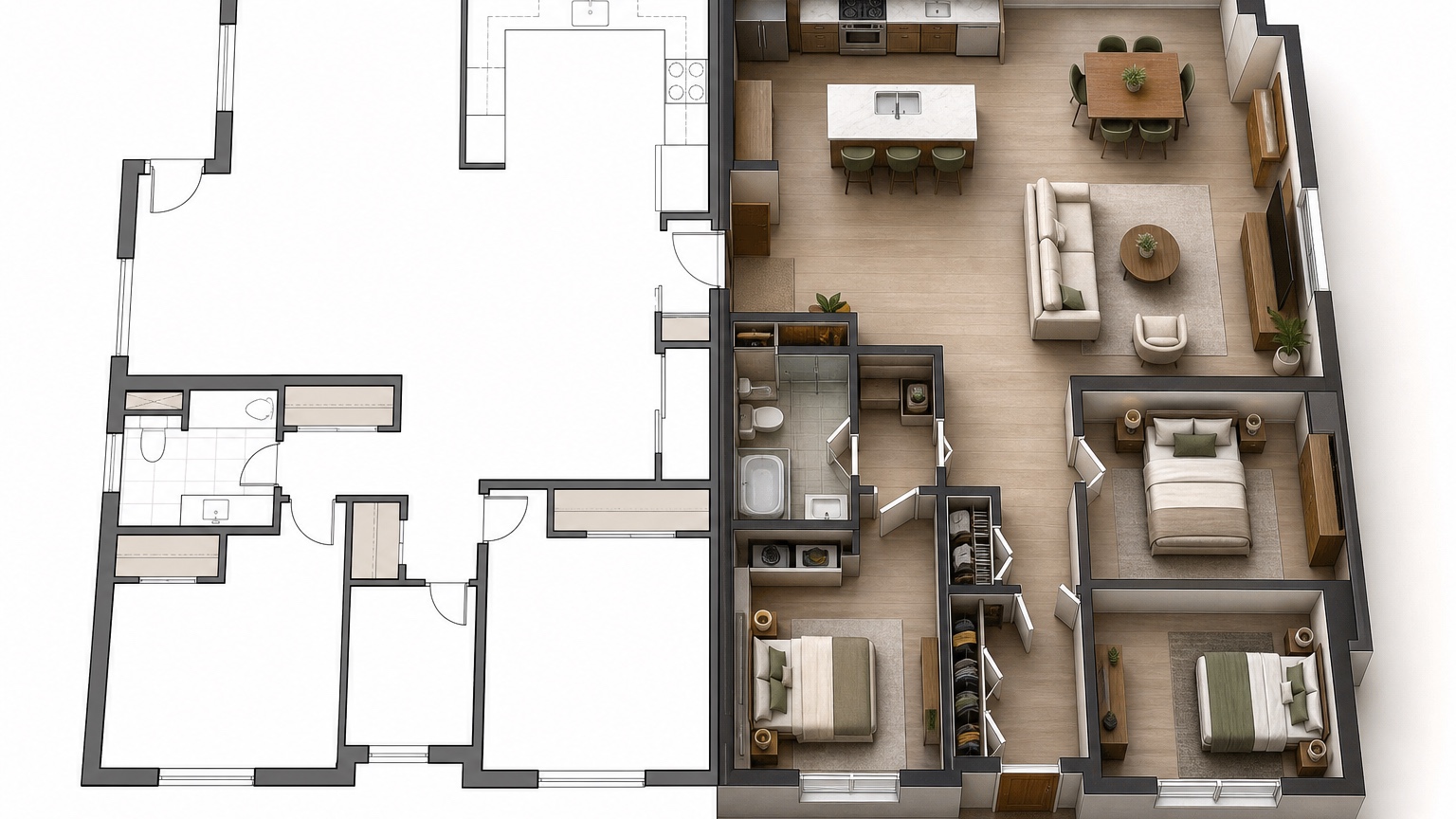
For floor plan interior design, create a baseline using existing furniture, a smaller-scale option, a storage-focused option, a hosting or family-life option, and a refined version of the strongest direction. Name prompts around function, not style: better storage, clearer dining path, quieter office, or smaller sectional.
Reference images are useful after the layout works. They can guide warmth, material tone, or furniture character, but they should not shrink circulation or ignore door swings. If the visual looks beautiful while daily routines still fail, revise the plan logic before decorating.
Use the strongest image as a bridge to measurements and sourcing. Designers can turn it into a furniture plan or shopping list; homeowners can decide what to keep, replace, or measure before buying.
Designer-homeowner review notes
Interior plan review should start with routines. Walk through a normal day: entering with bags, cooking, eating, working, watching television, hosting guests, putting away toys, doing laundry, and going to bed. If the furnished plan interrupts those routines, the style is not solving the real problem. A beautiful layout that blocks a closet or leaves no drop zone should be rejected early.
Ask the homeowner to mark must-keep pieces, flexible pieces, and items that can be replaced only if the improvement is obvious. Ask the designer to note where custom storage, lighting, rug size, outlet placement, or window treatments may affect the final plan. These notes make the AI concept useful without pretending it has exact measurements.
In RedesAIgn, save versions by function: storage-first, entertaining, small-scale furniture, work-from-home, or family routine. That naming makes comparison easier than style labels alone. Once the functional version wins, style references can refine the mood without damaging circulation.
Example scenario: furnishing before buying
Picture a homeowner moving into an open living and dining area with several pieces they hope to keep. The sofa, dining table, desk, and storage cabinet all seem reasonable individually, but the plan may not support them together. An AI floor plan interior design study can test that mix before the homeowner buys rugs, lighting, or replacement furniture.
The first version can place existing pieces and expose conflicts. The second can reduce furniture scale. The third can add built-in storage. The fourth can prioritize entertaining or a work-from-home corner. A designer can then review which version best supports movement, sight lines, and room purpose. This is more useful than choosing a style board too early because function determines what the room can realistically become.
RedesAIgn prompt history gives the homeowner a record of why one option won. If the storage-first plan solves daily clutter, save it. If the entertaining layout looks good but blocks the patio door, label it as rejected. Those notes make shopping and measuring more disciplined.
After choosing a version, translate the image into a measurement list. Note sofa length, dining clearance, bed wall, desk depth, storage height, rug size, and door clearance questions. That list keeps the next shopping or design step grounded in the room instead of letting the AI concept drift into wishful decoration.
If a version wins, save the prompt and the reason it won. That note will help later when comparing furniture, storage quotes, and design revisions. Add a second note for what still needs a tape measure, because furniture comfort depends on real clearances, not just a pleasing image.
FAQ: AI Floor Plan Interior Design
How can AI help with floor plan interior design?
It can visualize furniture zones, storage, room purpose, and circulation from a plan before you buy furniture or commit to remodeling work.
Is an AI interior floor plan a measured design plan?
No. It is a planning visual. Measure the room, verify products, and involve professionals for construction, code, or structural decisions.
What should I try first in RedesAIgn?
Use the free credits to test one baseline layout, one storage-focused option, one smaller-furniture option, one entertaining option, and one refined version of the strongest result.
Try these prompts in redesAIgn
Convert this floor plan into a bright open-concept living area with a kitchen island and natural light.
Show furniture placement for a 2-bedroom layout with a dining nook and entry storage.
Visualize this blueprint as a modern ADU with compact kitchen, loft bed, and bathroom.
Related guides
- AI Floor Plan With Furniture: See How Rooms Could Work
Add furniture to floor plans with RedesAIgn so scale and circulation stay realistic before you buy pieces or rearrange a real room layout.
- AI Kitchen Floor Plan Visualizer for Remodel Layout Ideas
Visualize kitchen floor plans with AI before remodeling. Compare work triangles, islands, storage, and circulation with realistic furniture scale.
- AI Open Concept Floor Plan Ideas From Existing Layouts
Compare open-concept floor plans with AI before removing walls. Preview kitchen, living, and dining flow plus furniture zones and circulation.
- AI ADU Floor Plan Visualizer for Backyard Homes and Rentals
Preview ADU floor plans with AI for backyard homes and rentals. Compare compact layouts, baths, kitchens, and access before permitting talks.
- AI Basement Floor Plan Design: Visualize Finished Basement Layouts
Design finished basement layouts with AI floor plans. Compare recreation, guest, office, and bath options before construction estimates.