AI Pool Landscaping Ideas: Visualize Resort-Style Outdoor Spaces
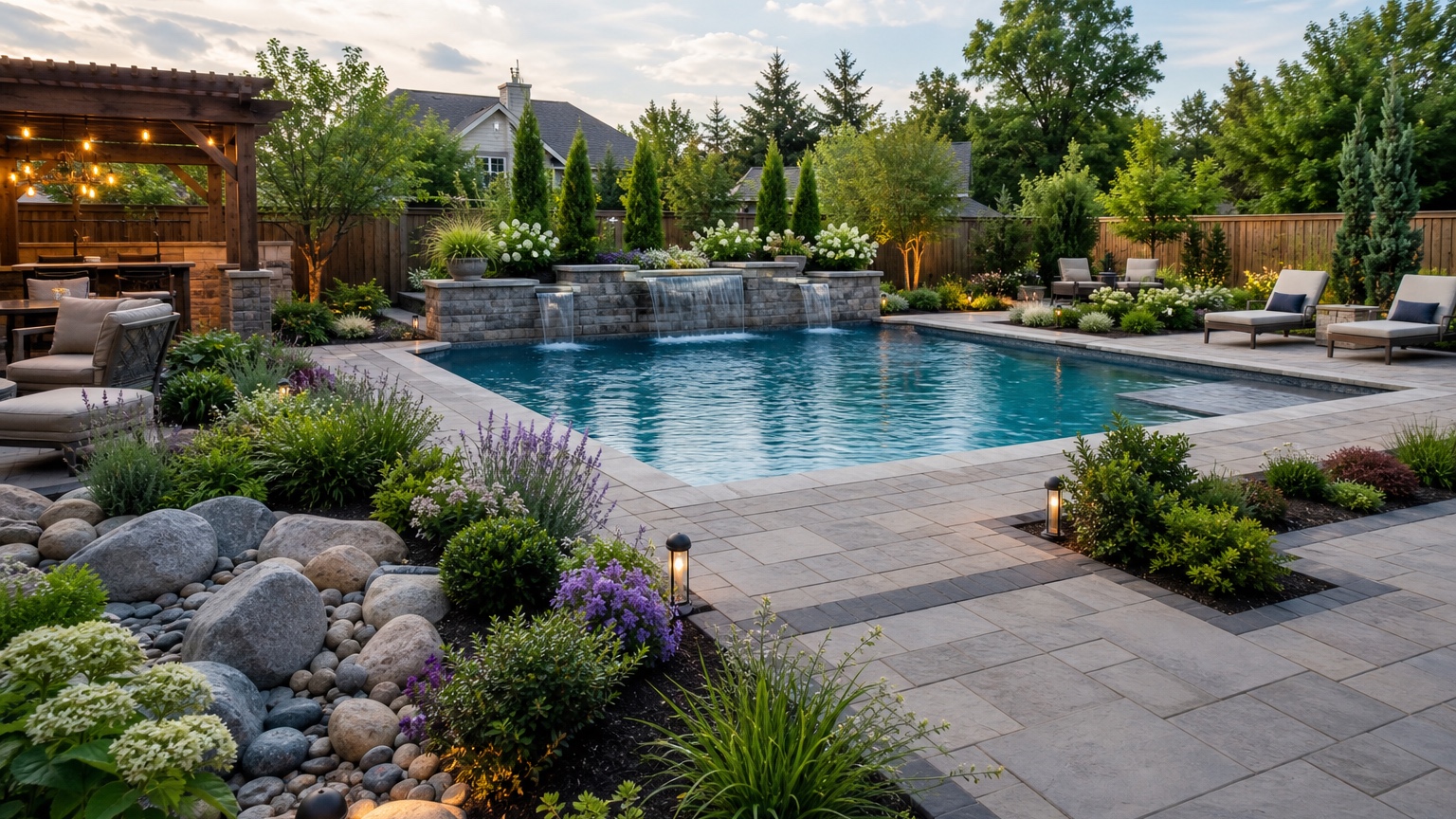
AI pool landscaping ideas are most useful when they help answer a real layout question: how should the area around this specific pool work before anyone pays for plants, pavers, lighting, privacy screens, shade structures, or a larger backyard renovation? A pool can look impressive in isolation, but the surrounding landscape decides whether the space feels calm, usable, safe, private, and maintainable.
For homeowners, the decision is often emotional and practical at the same time. You may want a resort-style backyard, but you also need enough deck clearance, clean traffic paths, durable surfaces, manageable planting, and shade that does not drop constant debris into the water. For pool contractors and landscape pros, the challenge is translating a client’s inspiration into something that respects the pool shell, patio edge, equipment access, drainage, fencing, and budget.
RedesAIgn can help with that early visualization step. Upload a real backyard or pool photo, guide the result with a focused prompt, and compare controlled versions using prompts, remix images, reference images, saved prompts, and history. If you want to test your own pool area, start free with RedesAIgn and use 5 free credits with no credit card required.
AI pool landscaping ideas should solve the outdoor layout decision
The useful output is not a fantasy resort pasted onto a backyard. It is a visual reference that helps decide where the landscape should support the pool experience. Around a pool, every design choice affects several others. Plant height changes privacy and sightlines. Paver color changes glare and heat. Trees create shade but may create leaf drop. A lounge area can feel luxurious, but it may block the path from the house to the pool gate.
Pool contractors need a way to preview landscaping around pools before a proposal becomes too abstract. A client may ask for “lush tropical,” “modern resort,” or “low-maintenance Mediterranean,” but those labels do not say where people walk, what hides the equipment pad, or how much planting can fit without crowding the deck. A photo-based concept gives everyone a more concrete starting point.
Homeowners benefit because the preview reduces uncertainty. Instead of buying random palms, gravel, furniture, and lights, use AI to compare one clean hardscape concept, one privacy-focused concept, and one planting-heavy concept. The best image is not necessarily the most dramatic. It is the one that shows which changes are worth discussing with a landscaper, pool builder, hardscape contractor, or maintenance provider.
If your project is broader than the pool zone, compare this workflow with AI landscape design from photo or AI backyard design generator. If the main goal is curb-facing presentation, the AI front yard landscaping guide keeps the scope focused on the front of the property.
Use AI pool landscaping ideas as a decision workflow
Start by defining what the image needs to decide. A pool landscape concept can answer many different questions, but it should not try to answer all of them in one version. Are you choosing between travertine, concrete pavers, gravel borders, and turf? Are you testing whether a hedge, fence screen, or pergola creates enough privacy? Are you deciding where to place lounge chairs, an outdoor dining zone, a fire feature, or path lighting?
This matters because a pool area is a working outdoor room, not just a pretty view. People move from the house to the pool, from the pool to seating, from seating to shade, and from the gate to the deck. The concept should make those routes easier to understand.
Judge the result by function first. Does the pool still look accessible? Are the deck edges clear? Is there room to walk behind furniture? Does planting stay far enough from coping, drains, and equipment? Does the landscape improve privacy without making the yard feel boxed in? If the image only adds lush plants and perfect lighting but ignores movement and maintenance, treat it as mood inspiration rather than a practical next step.
Input checklist for a believable pool landscaping preview
Use a wide daylight photo that shows the pool, surrounding deck, house relationship, fence line, slope, planting beds, equipment location if visible, paths, gates, and nearby patio or lawn. A straight-on view can help with symmetry. A corner or elevated view often works better for pool layouts because it shows how people move around the water.
Avoid photos where furniture, toys, umbrellas, hoses, bins, pool covers, or temporary clutter hide the edges you need to judge. If drainage is part of the problem, include the ground plane beyond the pool so the concept does not flatten slopes or push water toward the house.
Before generating, decide what must stay recognizable. Most realistic pool landscaping previews should preserve the pool shape, coping line, existing patio footprint if it is staying, house wall, fence, major grade changes, mature trees, and equipment access. If you are not replacing the pool deck, say so. If the fence must remain for safety or code, say so. If the design needs to keep a clear path for service, include that in the prompt.
Reference images can help when they clarify a specific mood or material: light limestone pavers, a drought-tolerant planting palette, horizontal privacy screens, simple path lights, large planters, or a modern pergola. Do not overload the prompt with unrelated resort images. The reference should support the real pool photo, not replace it.
Balance traffic paths, seating zones, shade, privacy, and upkeep
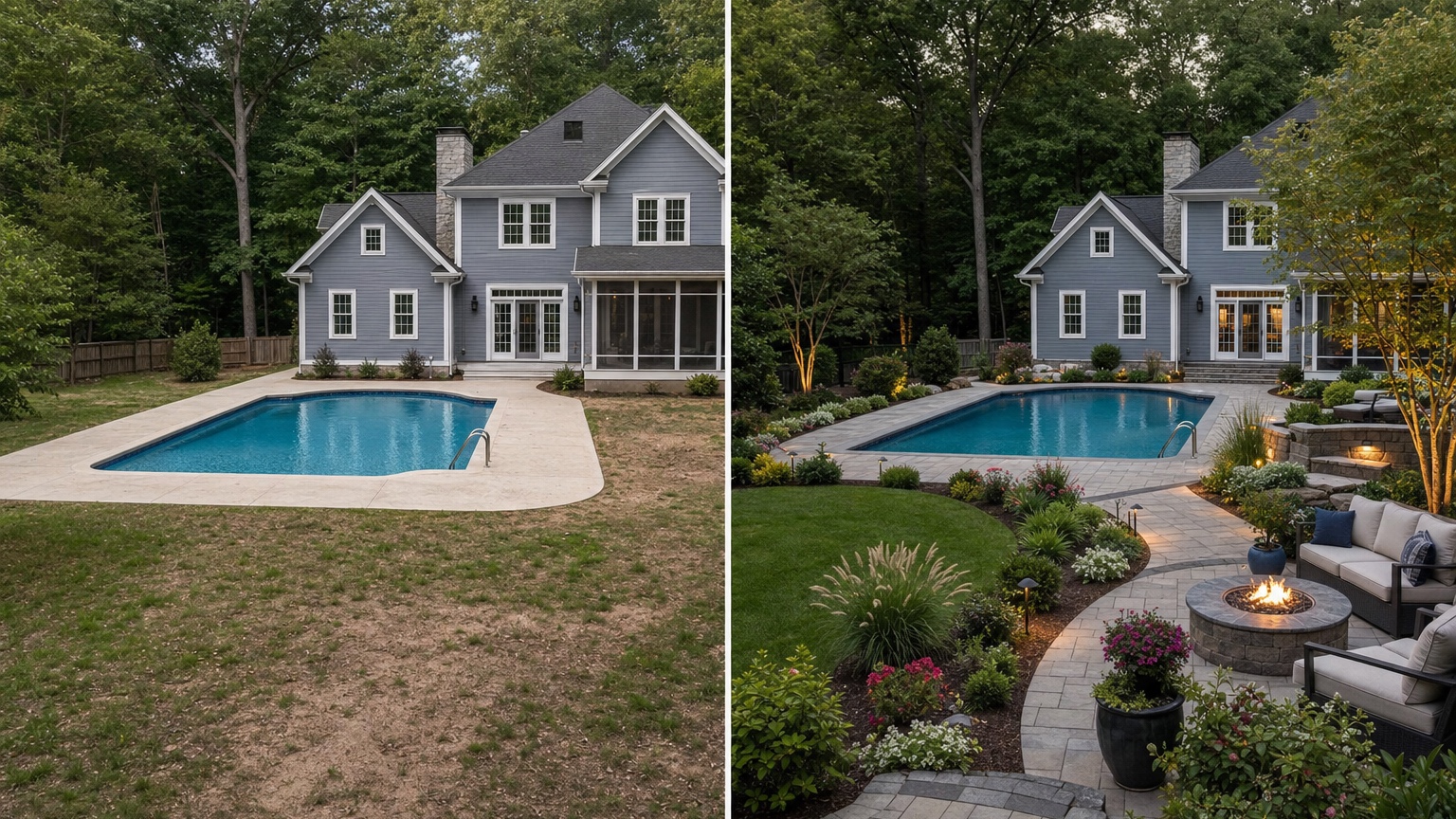
Traffic paths come first. A pool landscape needs clear circulation between the house, gate, pool steps, seating, outdoor kitchen or dining area, and equipment access. AI concepts sometimes place planters, chairs, or ornamental grasses exactly where people need to walk. Reject those results. Around water, a beautiful obstruction is still an obstruction.
Seating zones should be sized for real use. Lounge chairs need space behind them. A dining table needs a route that does not force wet feet through planting beds. If the yard is small, test fewer, better zones instead of asking for every outdoor feature at once.
Shade should be planned with both comfort and pool maintenance in mind. A pergola, sail shade, umbrella cluster, or small pavilion can make the pool area more usable in hot weather. Trees can soften the space and reduce glare, but overhanging branches may drop leaves, flowers, seed pods, or fruit into the water.
Privacy is another tradeoff. Hedges, screens, fences, raised planters, and layered shrubs can block neighbor views, but they can also trap heat, limit airflow, or make a narrow yard feel smaller. Use AI to compare privacy levels: a light screen with ornamental grasses, a fuller hedge with structured beds, and a more architectural wall or slat fence. Then choose the version that solves the view problem without overbuilding the perimeter.
Upkeep should be visible in the prompt. Ask for low-maintenance planting, drought-tolerant choices, tidy edging, limited lawn, durable hardscape, or simple seasonal color if that fits the owner’s lifestyle.
How plants and hardscape choices affect budget and seasons
Plants create atmosphere, but around pools they also create cleaning, irrigation, root, and safety questions. Low shrubs can soften a fence without blocking sightlines. Ornamental grasses add movement, but they need seasonal cutting and may shed. Palms and tropical plants can create a resort feeling in the right climate, but they may be unrealistic or expensive elsewhere. In dry regions, succulents, gravel, and drought-tolerant shrubs may make more sense than lawn and lush beds.
Hardscape sets the daily experience. Light surfaces can reduce visual heaviness but may show stains. Dark surfaces can look modern but may become hot underfoot. Smooth materials may be elegant but slippery when wet. Textured pavers, stone, concrete, decking, gravel, and artificial turf all carry different comfort and maintenance implications. Use the AI image to compare material direction, then confirm real product performance with a contractor or supplier.
Seasonality matters too. A concept that depends on full bloom may not look that way for most of the year. If the pool is used heavily in summer, prioritize shade, heat, and water use. If the home is a vacation rental or hospitality property, consider durability, easy cleanup, and a layout that photographs well without fragile details.
Prompt brief for stronger AI pool landscaping ideas
A strong prompt starts with the outcome: a realistic outdoor upgrade plan around an existing pool. It should name the pool features that must stay, the zones you want to test, and the constraints that matter.
For a practical homeowner concept, try:
“Create a realistic pool landscaping concept for this backyard. Preserve the existing pool shape, coping, house, fence, main patio footprint, gates, mature trees, and service access. Improve the space with defined walking paths, comfortable lounge seating, low-maintenance planting, subtle privacy screening, warm landscape lighting, and durable hardscape suitable for a real pool area.”
For a pool contractor or landscaper discussion, try:
“Generate three controlled pool landscape options from the same photo: one low-maintenance refresh, one resort-style seating and shade concept, and one privacy-focused planting and hardscape plan. Keep the pool shell, deck limits, fence line, drainage direction, and equipment access realistic. Avoid moving structural features or adding impossible grade changes.”
For a rental or hospitality-style backyard, try:
“Design a polished poolside outdoor living concept that improves guest usability without high maintenance. Add clear circulation, durable seating zones, simple planting, evening lighting, shade, and tidy hardscape. Preserve safety clearances, gates, pool edge visibility, and easy cleaning around the pool.”
Name climate, water, drainage, maintenance level, budget, local code, HOA rules, pets, children, and contractor feasibility when relevant. Style words such as modern, coastal, desert, tropical, Mediterranean, or minimal can help, but they should come after the practical boundaries.
Review the output before anyone trusts the image
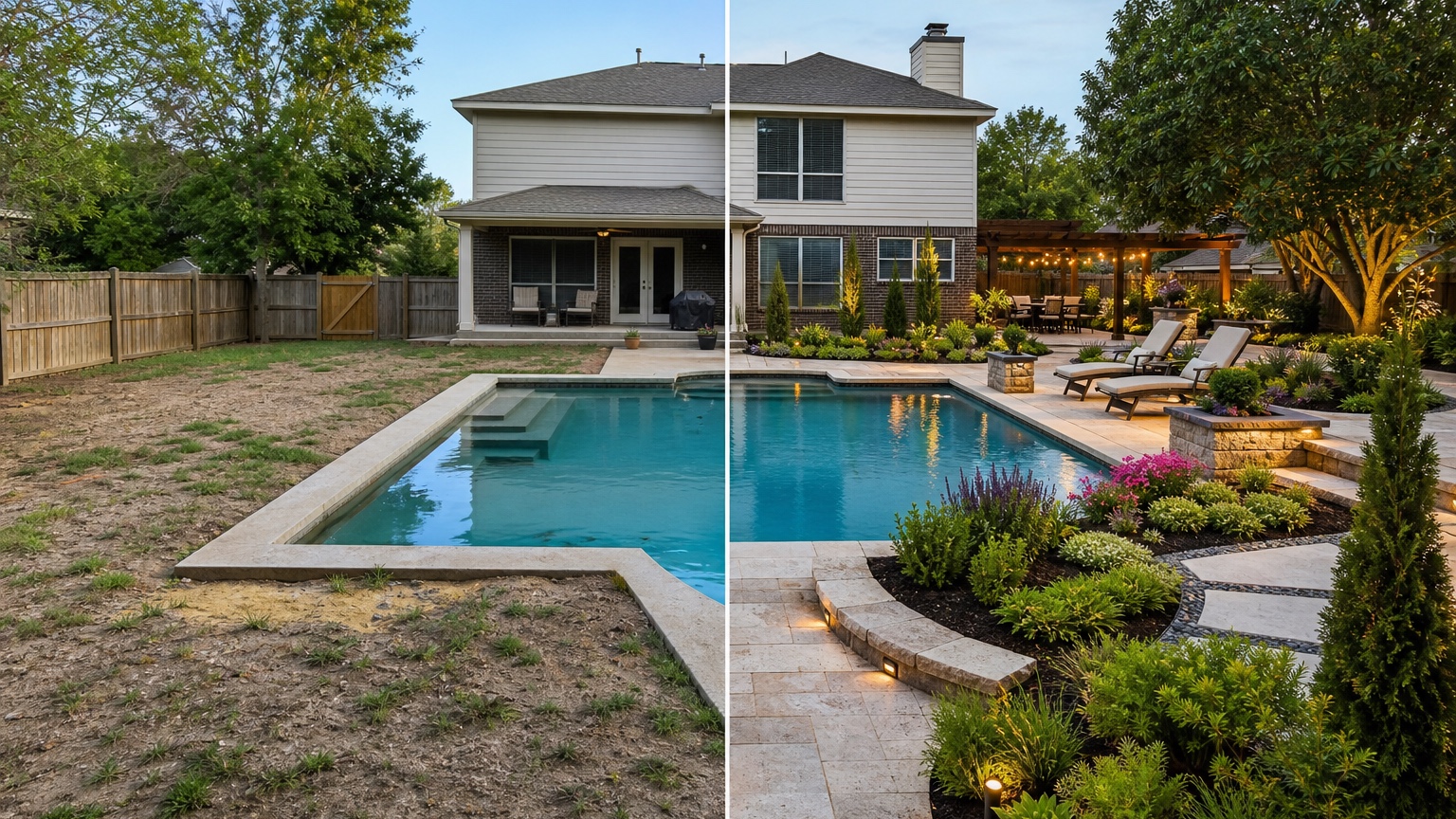
AI pool landscaping previews can look convincing while quietly making mistakes. First, check scale. Furniture should not be too large for the deck. Planters should not pinch walking routes. Shrubs should not crowd coping, skimmers, drains, steps, or fences. A pergola should not appear where footings, setbacks, or utilities would make it unrealistic.
Second, check edges and lighting. The pool shape should remain consistent. Coping should not melt into planting. Pavers should follow the photo perspective. Reflections and shadows should not hide surface changes. If the AI changes the waterline, removes a fence, invents a retaining wall, or erases slope, the image may still be useful for mood, but it is not a reliable layout reference.
Third, compare the concept against climate, water, drainage, maintenance, and contractor feasibility. A lush tropical border may fail in a dry climate. Gravel may migrate into a pool without proper containment. Trees may conflict with utilities or pool plumbing. Drainage may need grading, drains, or retaining solutions before any planting plan makes sense.
Finally, save the strongest version as more than an image. Add notes for zones, planting direction, hardscape direction, privacy treatment, lighting, open questions, and items that need professional review. This turns the AI concept into a zone plan, planting and hardscape comparison, and maintenance checklist.
Mistakes that make AI pool landscaping ideas look generic
The first mistake is uploading a weak yard photo. If the pool edge is cropped, the house relationship is missing, or the fence and access points are hidden, the AI may design the wrong area. Retake the photo from a wider angle before relying on the result.
The second mistake is asking for unrelated changes in one prompt. If the goal is pool landscaping, do not also request a new house exterior, new roof, full outdoor kitchen, different pool shape, expanded deck, new balcony, and total backyard rebuild unless that is the actual scope. Keep exterior remodel ideas in a separate workflow such as AI exterior design from photo so the pool decision stays clear.
The third mistake is ignoring maintenance. Pool landscapes must deal with water, debris, wet feet, sun, shade, chemicals, cleaning equipment, and seasonal growth. A concept that looks lush but drops leaves into the water every week may not be the right concept.
The fourth mistake is treating the image like construction documentation. AI can help compare ideas, but it does not replace measurements, drainage design, plant selection, utility checks, code review, fence and barrier requirements, slip-resistance testing, structural engineering, or contractor pricing.
How to use RedesAIgn for AI pool landscaping ideas
In RedesAIgn, choose the editor that best fits the yard or outdoor planning task, upload the clearest pool photo, and start with a prompt that protects the pool shape, deck, fence, drainage, and access. Generate a simple refresh first, then remix the strongest version to test more planting, more shade, more privacy, or a different hardscape direction.
Because RedesAIgn includes 10 AI editors, the same account can support related visual planning beyond the pool area. You can use prompts, remixing, reference images, saved prompts, and history to compare revisions without losing the logic behind each version. One-time credit packs are available if you need more generations after the free start, and commercial use is relevant for pool contractors, landscapers, realtors, hosts, and hospitality marketers creating visual concepts for client conversations.
When a concept is strong, share it with the person who will help verify it: a pool contractor, landscape designer, hardscape installer, irrigation specialist, maintenance provider, realtor, host, or hospitality marketer. The goal is not to let AI make the final construction decision. The goal is to make the next conversation clearer, faster, and more visual.
Try these prompts in redesAIgn
Redesign this front yard with a stone walkway, low-water plants, and clean planting beds.
Create a backyard seating patio with string lights, shrubs, and a simple lawn edge.
Add curb-appeal landscaping with layered greenery while keeping the driveway clear.
Related guides
- AI Landscape Architecture Generator for Early Outdoor Concepts
Use an AI landscape architecture generator for early outdoor concept exploration, studio reviews, feasibility checks, and photo-based design iteration.
- AI Landscape Visualizer: Preview Yard Changes Before You Commit
Use an AI landscape visualizer to preview realistic yard changes from a photo, compare landscaping options, and reduce decision risk before outdoor work.
- AI Lawn Makeover Ideas: Turn a Plain Yard Into a Plan
Use an AI lawn makeover to preview lawn shape, planting borders, paths, edging, seating, and practical yard upgrades before hiring or starting work.
- AI Xeriscape Design Ideas for Low-Water Yards
Use AI xeriscape design to preview low-water planting, gravel, paths, shade, irrigation zones, and maintenance tradeoffs before changing your yard.
- AI Backyard Makeover: Generate Outdoor Design Before and Afters
Use an AI backyard makeover workflow to preview layout zones, maintenance tradeoffs, before-and-after options, and practical next steps from a real yard.