AI Isometric Floor Plan Generator for Clear Layout Previews
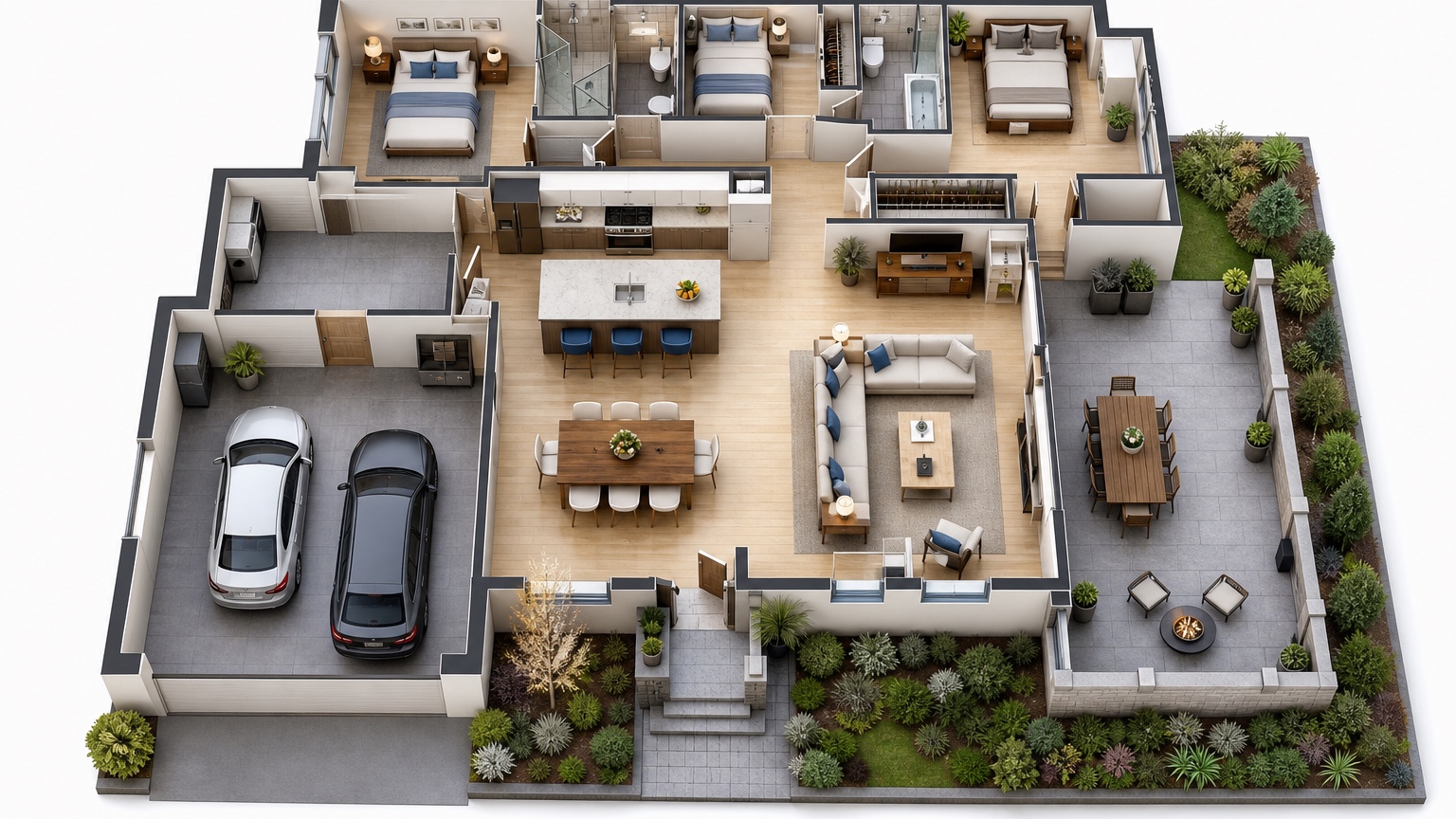
Ai Isometric Floor Plan is most useful when it helps architects and real estate agents decide how to communicate room relationships without forcing people to decode a flat plan. It improves spatial orientation while leaving exact dimensions, disclosures, and verified property facts to the source materials.
This guide treats the isometric plan as a relationship map. The workflow is to decide who needs orientation, preserve the real layout, choose a readable angle, and evaluate whether the view explains adjacency faster than the flat drawing.
RedesAIgn offers a practical place to create and compare those spatial views with prompts, remix/reference images, saved prompt history, and multiple AI editors. A first comparison can start with 5 free credits and no credit card; more versions can be made later with one-time credit packs when the image proves useful.
Use isometric views when relationships matter
An isometric floor plan is strongest when adjacency is the message.
Flat plans are efficient for professionals, but clients and buyers often need to see how spaces relate in a more physical way. An isometric view can show that the kitchen faces the family room, the primary suite is separated from secondary bedrooms, the entry opens toward a stair, or a balcony connects to the living zone. That makes it useful for listings, concept reviews, and early design presentations.
For architects and real estate agents, the practical test is whether the visual changes the next meeting. If it only looks impressive, it is not enough.
Choose what the angle must explain
The view should prioritize circulation, room hierarchy, or sales clarity rather than every detail.
Before generating, decide whether the image is for a buyer, a homeowner, an investor, or a design team. A buyer needs orientation and room purpose. A homeowner needs daily flow. An architect may need stakeholder alignment on massing and adjacency. A developer may need a board that explains rentable or saleable space quickly.
For architects and real estate agents, the practical test is whether the visual changes the next meeting. If it only looks impressive, it is not enough. When the goal shifts from orientation to renovation planning, compare AI floor plan rendering with AI floor plan visualizer.
Keep the plan recognizable
The isometric treatment should not invent rooms, erase doors, or change the footprint.
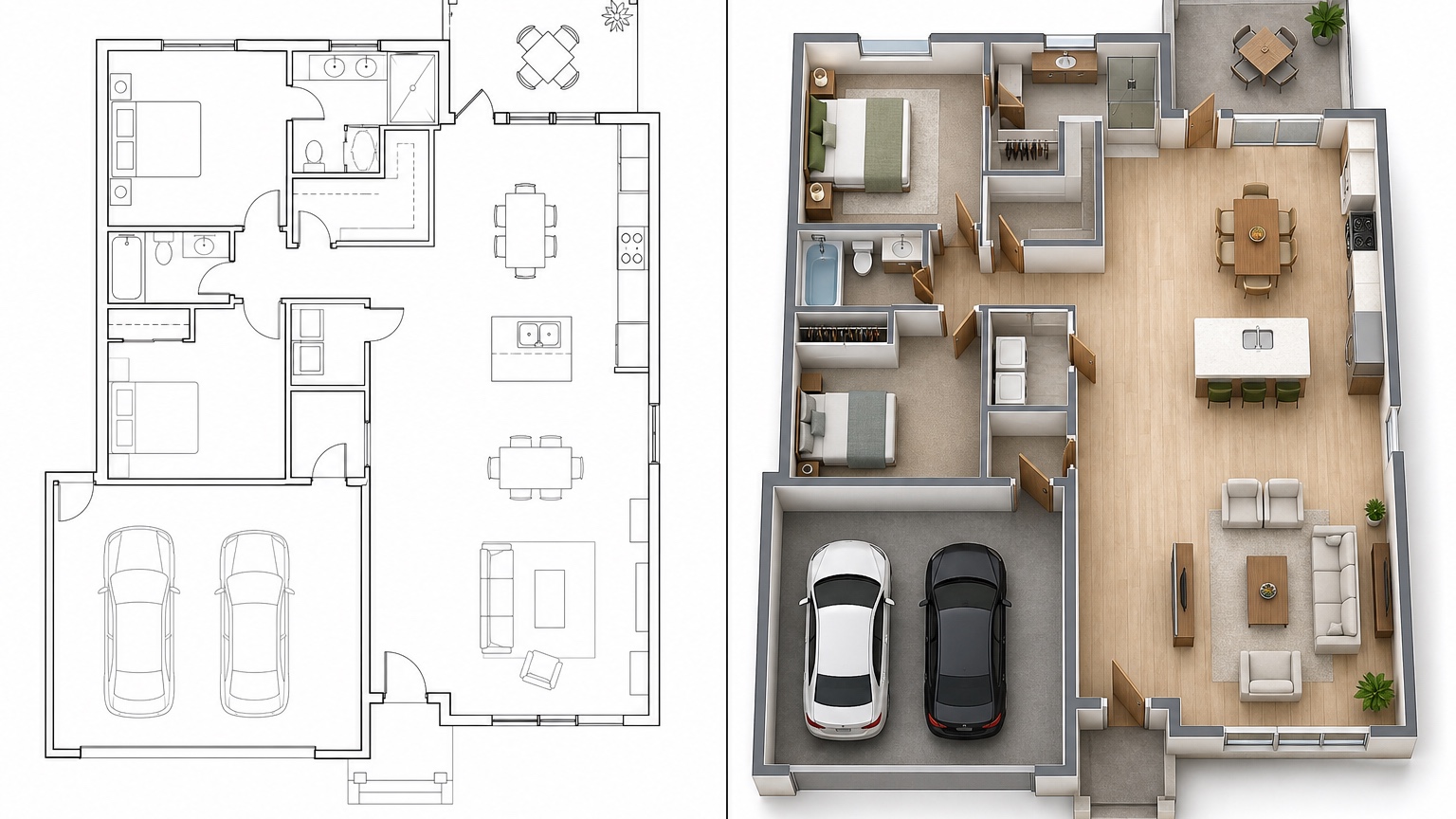
Upload the clearest floor plan and write a prompt that asks the AI to preserve walls, openings, stairs, fixed plumbing, and room names as spatial logic, even if the final view avoids visible text. Use references for style only. If the output changes the bedroom count or makes the hallway disappear, reject it no matter how polished it looks.
For architects and real estate agents, the practical test is whether the visual changes the next meeting. If it only looks impressive, it is not enough.
Review the view like a communication asset
Good isometric images make orientation faster and objections more specific.
Ask a simple test: could someone explain the home after looking at the image for ten seconds? If not, the angle may be too dramatic, furniture may be cluttered, or the room hierarchy may be unclear. For real estate use, the image should clarify flow without overpromising exact finishes. For architecture use, it should invite precise feedback.
For architects and real estate agents, the practical test is whether the visual changes the next meeting. If it only looks impressive, it is not enough.
Create a comparison set
Safe, practical, and bold versions help stakeholders choose a direction.
Use one version that stays closest to the plan, one that improves furniture and flow, and one that tests a bolder presentation. Score each by usefulness, realism, cost implication, and fit with the brief. Keep the version that clarifies the decision fastest.
For architects and real estate agents, the practical test is whether the visual changes the next meeting. If it only looks impressive, it is not enough.
How to make the review more useful
For agents, the isometric view should be handled with the same care as photography. It can clarify a property, but it should not misrepresent room size, bedroom count, outdoor access, or finish quality. For architects, the same visual can help nontechnical stakeholders understand why one plan feels more open or why privacy improves when bedrooms shift away from public rooms. In both cases, the best prompt keeps the geometry sober and lets the angle do the work. If the generated view turns into a fantasy dollhouse, simplify it and bring the plan logic back to the center.
A practical RedesAIgn workflow
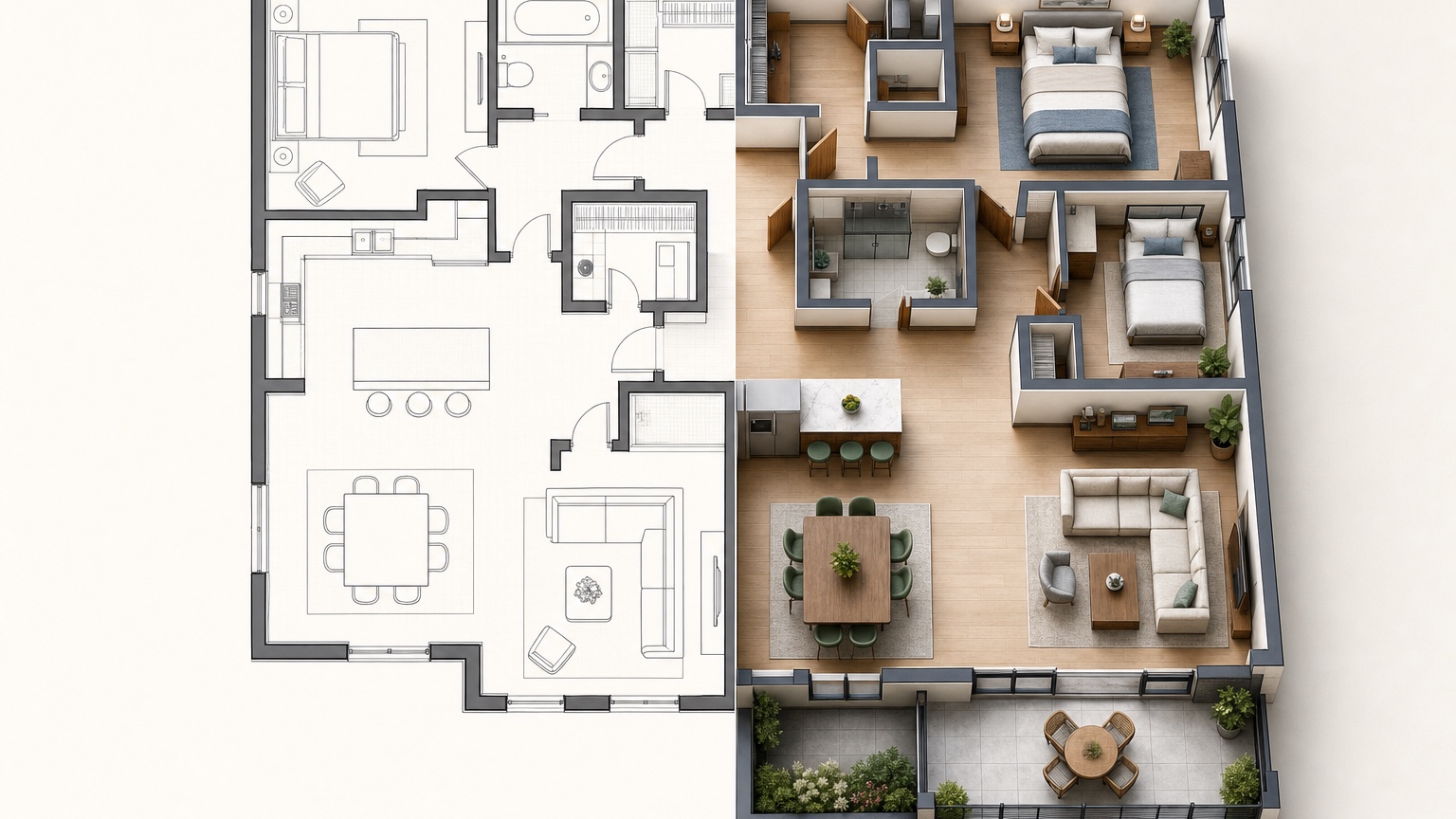
For an isometric floor plan, start with the cleanest plan interpretation. Next, create one buyer-friendly orientation view, one architect-oriented relationship view, and one simplified version that removes distracting detail. Save the prompts by audience so a listing image does not get confused with a design-review image.
References can guide brightness, portfolio tone, and rendering style, but the view must continue to respect the footprint. If the AI adds rooms, changes bedroom privacy, or makes circulation misleading, simplify the prompt and regenerate around recognizability.
Use the best isometric image as a communication layer. Agents can explain flow faster; architects can gather stakeholder comments; developers can discuss unit logic. The image earns its place when it makes the next question more precise.
Orientation review notes
An isometric plan should be reviewed like a map. The viewer should immediately understand public versus private spaces, how the entry connects to daily rooms, where bedrooms sit, and how circulation moves through the plan. If the angle hides the hallway or makes one room look much larger than the plan supports, the view may be persuasive but not useful.
For real estate, compare the image to listing facts before sharing it. Bedroom count, bath count, outdoor access, garage relationship, and room proportions must remain honest. For architecture, compare the image to the design intent. Does it explain why rooms were grouped in a certain way? Does it make privacy, light, or circulation easier to discuss?
RedesAIgn can generate several orientation levels. One version may stay sparse and plan-like. Another may add furniture for scale. A third may use a brighter portfolio style for presentation. Keep those versions separate so a marketing view does not accidentally become the design team’s evidence for exact room size.
Example scenario: explaining a listing or concept plan
Imagine an agent preparing a listing page for a property with a confusing flat plan. The home has a useful separation between public rooms and bedrooms, but buyers may not understand it from the drawing. An isometric floor plan can make the relationship clearer: entry to living, kitchen to dining, bedroom wing to bath, and outdoor access to the patio. The image should remain honest, with no invented rooms or exaggerated proportions.
For an architect, a similar view can help a client understand why a proposed layout improves privacy or circulation. Instead of debating symbols on a drawing, the client can see room hierarchy and movement. The architect can ask whether the family wants the office closer to the entry, whether the bedroom separation feels right, or whether the kitchen relationship supports entertaining.
RedesAIgn can create several versions for these different audiences. The agent version may be brighter and simpler. The design-review version may preserve more plan logic. Keeping those versions distinct prevents the most attractive image from becoming misleading evidence.
A helpful isometric view should also avoid visual clutter. Remove decorative objects that do not explain the plan, keep furniture simple, and preserve enough empty floor area for orientation. The clearer the image is, the easier it becomes for a buyer or client to ask about the actual layout rather than the rendering style.
If the image will be used publicly, review it beside the original plan one more time. Accuracy and clear orientation matter more than decorative drama.
FAQ: AI Isometric Floor Plan
What is an AI isometric floor plan useful for?
It helps communicate room relationships, circulation, and spatial hierarchy for buyers, clients, architects, agents, and developers.
Should an isometric floor plan include exact labels?
For final blog or marketing visuals, avoid visible labels unless you intentionally need them. The prompt can use room names privately while the output stays clean.
Can RedesAIgn create isometric floor plan concepts?
RedesAIgn can help generate concept visuals from prompts and reference images, then use saved prompts and history to compare iterations.
Try these prompts in redesAIgn
Convert this floor plan into a bright open-concept living area with a kitchen island and natural light.
Show furniture placement for a 2-bedroom layout with a dining nook and entry storage.
Visualize this blueprint as a modern ADU with compact kitchen, loft bed, and bathroom.
Related guides
- AI Floor Plan With Furniture: See How Rooms Could Work
Add furniture to floor plans with RedesAIgn so scale and circulation stay realistic before you buy pieces or rearrange a real room layout.
- AI Kitchen Floor Plan Visualizer for Remodel Layout Ideas
Visualize kitchen floor plans with AI before remodeling. Compare work triangles, islands, storage, and circulation with realistic furniture scale.
- AI Open Concept Floor Plan Ideas From Existing Layouts
Compare open-concept floor plans with AI before removing walls. Preview kitchen, living, and dining flow plus furniture zones and circulation.
- AI ADU Floor Plan Visualizer for Backyard Homes and Rentals
Preview ADU floor plans with AI for backyard homes and rentals. Compare compact layouts, baths, kitchens, and access before permitting talks.
- AI Basement Floor Plan Design: Visualize Finished Basement Layouts
Design finished basement layouts with AI floor plans. Compare recreation, guest, office, and bath options before construction estimates.