AI Open Concept Floor Plan Ideas From Existing Layouts
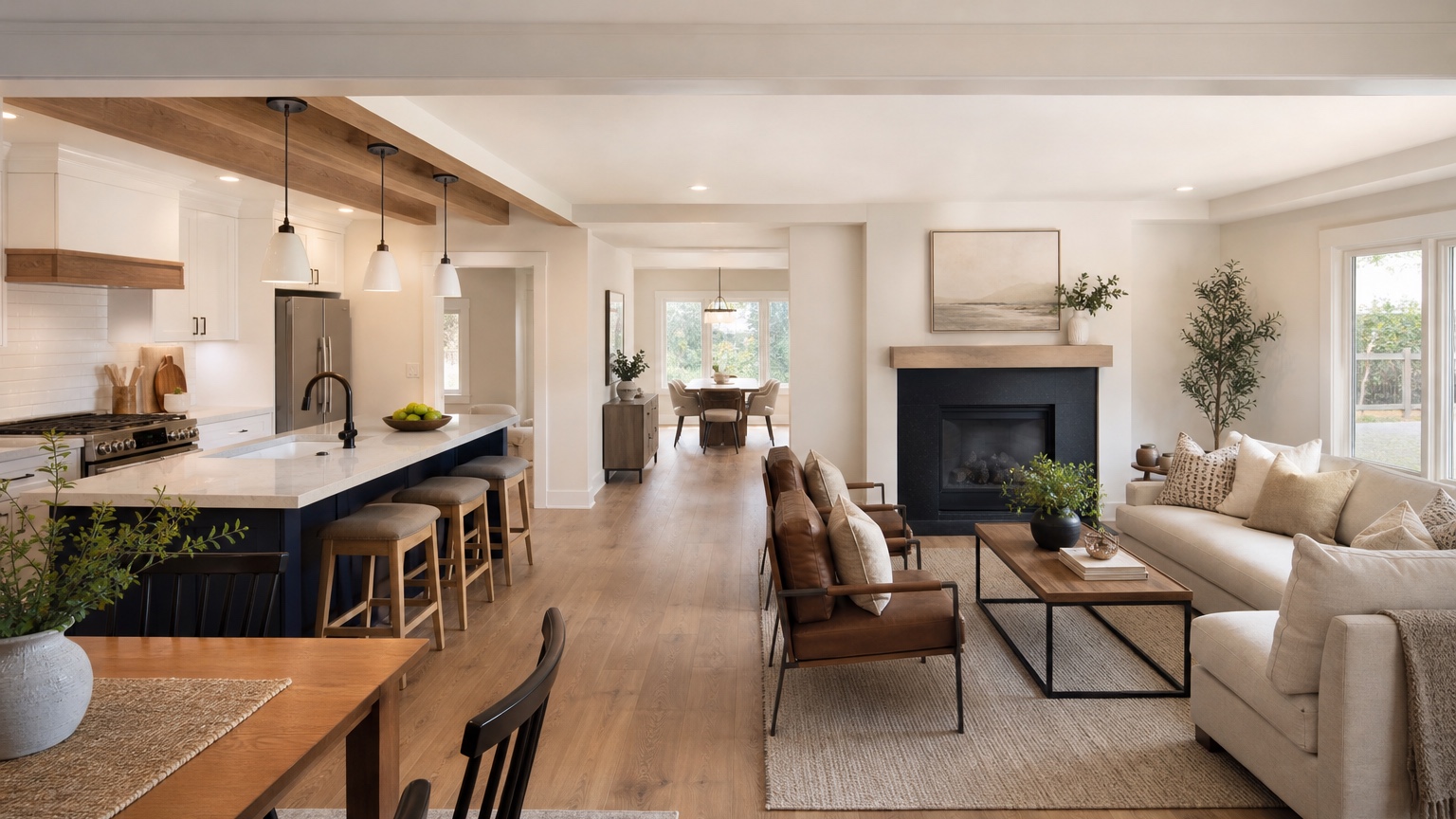
An open concept image should make homeowners more precise, not simply more excited. Wall changes affect structure, noise, storage, utilities, ceiling transitions, furniture, and the visibility of daily mess.
Use a wall-removal dossier frame that lets restraint compete with boldness: furniture-only fixes, partial openings, wider cased openings, and fully connected spaces all deserve separate review.
RedesAIgn is useful for those early comparisons because prompts, reference images, saved prompts, and history preserve each option. The 5 free AI credits and no-card start gives enough room to test a cautious baseline first.
Ask what “open” is supposed to fix
Open concept is not automatically better; it should solve a specific daily problem.
Decide whether the goal is more light, better entertaining, sightlines to children, easier kitchen-to-dining movement, resale appeal, or a calmer entry. A visualizer can compare those goals, but only if the prompt names the tradeoff. Sometimes a wider cased opening or partial wall solves the issue with less disruption than a fully open plan.
For open concept review, list what improves and what disappears: storage walls, sound control, cabinet runs, entry definition, ceiling order, and furniture zones. The safer option may be the more persuasive one.
Mark every wall as unknown until verified
AI can show possibilities, but it cannot know load paths, utilities, ducts, or plumbing hidden in walls.
Upload the existing plan and describe which walls are being tested as conceptual only. Note fireplaces, stairs, second-floor bearing clues, kitchen plumbing, electrical panels, HVAC chases, and ceiling changes. Use the image to prepare questions for engineers and contractors, not to assume removal is simple.
For open concept review, list what improves and what disappears: storage walls, sound control, cabinet runs, entry definition, ceiling order, and furniture zones. The safer option may be the more persuasive one.
For adjacent decisions, review AI floor plan interior design when furniture zoning is unclear and AI architectural visualization when presentation must include exterior or structural context.
Compare degrees of openness
A useful open concept study includes restraint.
Generate a minimal version with furniture and better lighting, a partial-opening version, a wide-opening version, and a bold combined-room version. Score each for storage loss, noise, furniture placement, kitchen mess visibility, entry definition, and construction complexity. The prettiest option may not be the one a family enjoys daily.
For open concept review, list what improves and what disappears: storage walls, sound control, cabinet runs, entry definition, ceiling order, and furniture zones. The safer option may be the more persuasive one.
Watch for blank-room syndrome
Removing walls can create large spaces that are harder to furnish.
Review whether the output creates a natural dining zone, conversation area, work surface, traffic path, and focal point. If the room becomes a single showroom rectangle with nowhere to put coats, toys, books, or media, ask for a more zoned version.
For open concept review, list what improves and what disappears: storage walls, sound control, cabinet runs, entry definition, ceiling order, and furniture zones. The safer option may be the more persuasive one.
Use visual evidence to slow down expensive decisions
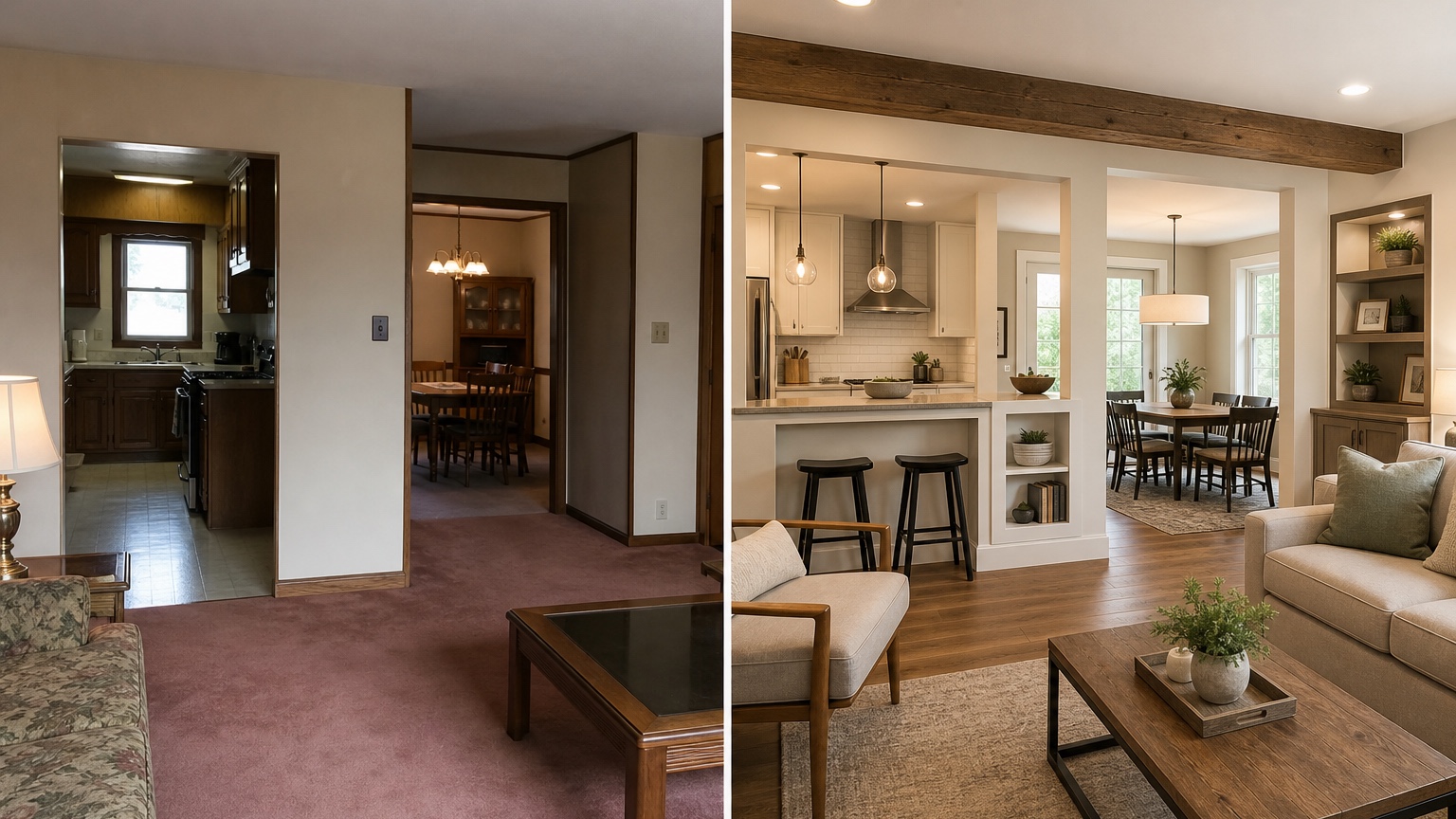
The purpose is to make the next professional meeting concrete.
Bring the comparison set to a remodeler with notes about desired openings, feared compromises, and must-keep storage. RedesAIgn saved prompts and history help preserve that reasoning instead of relying on vague before-and-after excitement.
For open concept review, list what improves and what disappears: storage walls, sound control, cabinet runs, entry definition, ceiling order, and furniture zones. The safer option may be the more persuasive one.
A practical RedesAIgn workflow for this decision
For open concept studies, let a restrained improvement compete against a partial opening, a wide opening, and a bold combined-room version. Save each prompt with the wall or zone being tested so professional pricing starts from clear assumptions rather than vague excitement. Use the open concept output as a comparison board while structural review, utilities, HVAC, flooring transitions, and budget determine feasibility.
Review the concept before anyone acts
Open concept reviews should include a “what do we lose?” pass. Removing a wall may remove art space, sound control, toy containment, upper cabinets, a coat zone, a quiet reading corner, or a natural dining boundary. Ask the AI for a version that keeps some separation, then compare it against the fully open version. The winning idea should improve the stated problem without making everyday routines worse. Also review ceiling transitions, lighting zones, flooring continuity, and how furniture creates rooms inside the larger room. A plan that looks open but cannot hold a sofa, table, storage piece, and traffic path is not ready for pricing.
What to save after the first generation
Keep the open concept view that explains both gain and loss, plus a rejected option that erased storage or room identity. The handoff should name the wall, desired lifestyle change, and structural, HVAC, flooring, utility, and budget unknowns.
Open concept loss-and-gain review
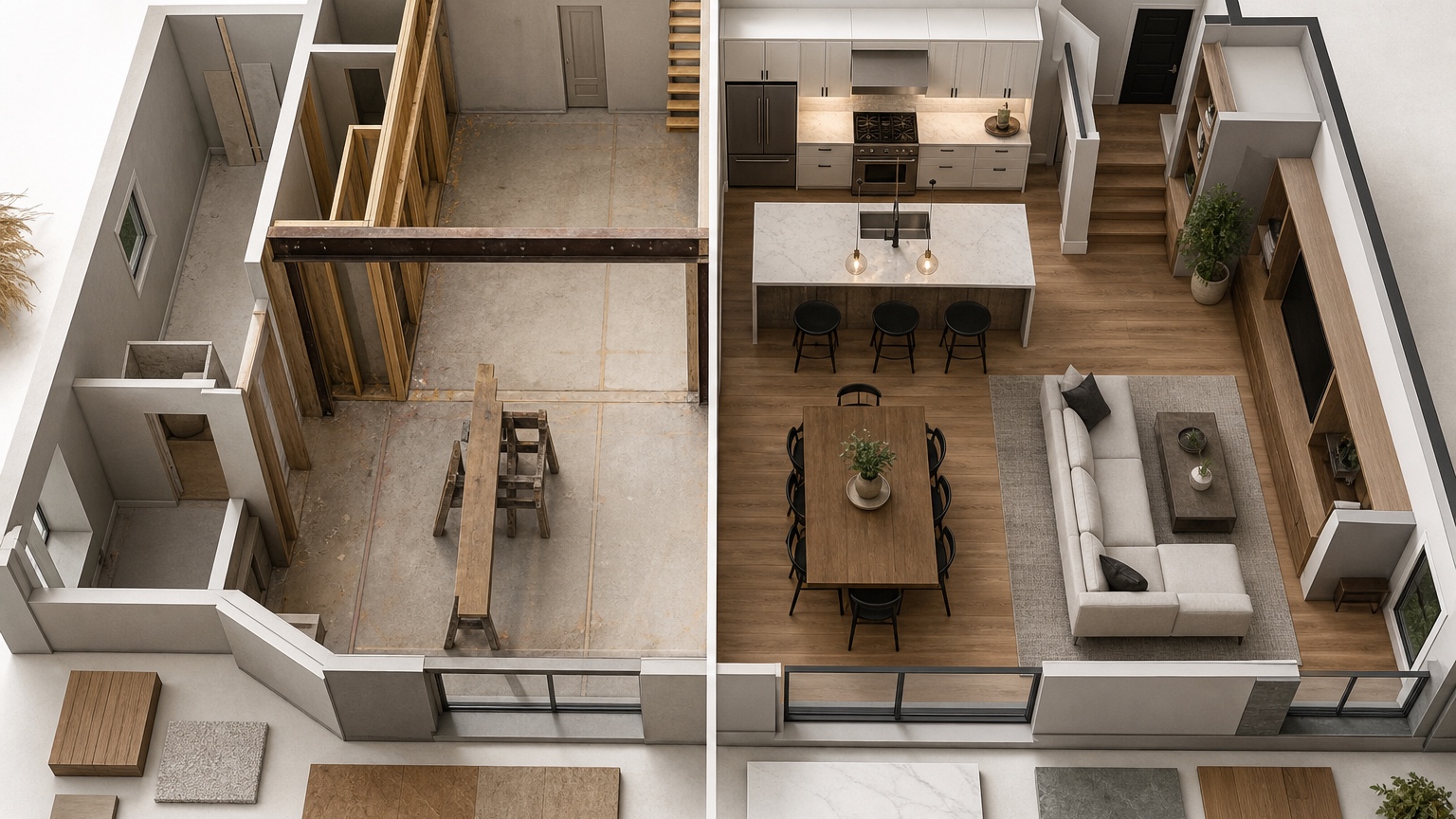
Every open concept image should be reviewed for what disappears as well as what improves. A removed wall may bring light and conversation, but it can also remove upper cabinets, art space, toy containment, acoustic separation, a coat drop zone, a quiet reading corner, or a natural dining boundary. Ask for a version that keeps partial separation and another that opens the room more dramatically. Compare them side by side before assuming the boldest concept is best. The strongest option often keeps enough structure to make the larger room easier to furnish.
Furniture zoning is the second test. A wide open rectangle can look impressive while becoming harder to live in. Check whether the image creates a conversation area, dining table, kitchen work zone, traffic route, storage wall, and focal point. Look at ceiling beams, floor transitions, lighting zones, and where daily clutter will be visible. If the concept makes the kitchen mess the first thing seen from the entry, the family may prefer a more modest opening. If it removes the only wall for media or storage, the plan may need built-ins or partial screening.
Use RedesAIgn to build a restrained comparison set: existing layout improved with furniture and lighting, partial opening, wide cased opening, and fully connected plan. Save each prompt by the wall or zone being tested. Then bring the images to a remodeler with questions about structure, utilities, HVAC, flooring, cabinet loss, ceiling repair, and budget. The image should make professional advice more focused, not make demolition feel automatic. RedesAIgn's 5 free AI credits and no-card start are enough to test that first comparison.
Common open concept prompt mistakes to avoid
Do not ask the AI to remove every wall simply because the phrase open concept sounds desirable. A prompt should name the specific problem: dark dining room, isolated kitchen, poor sightline, cramped doorway, or awkward entertaining path. Without that problem, the output may create a larger room that is harder to furnish and noisier to use.
Avoid ignoring partial solutions. A wider opening, glass door, pass-through, better lighting, or furniture reset can sometimes solve the problem with less structural risk. Generate at least one restrained option so the remodeler can discuss cost difference honestly. The comparison may save money and preserve storage.
Final handoff note
Before sharing the open concept concept, write a loss-and-gain note. Name the wall or opening being tested, the lifestyle improvement expected, the storage or acoustic compromise, and the furniture zones that must still work. Add the unknowns that need professional review: beam size, utilities, ducts, floor patching, lighting, permits, and cost. This note helps the remodeler compare a restrained opening against a dramatic one without letting style dominate the conversation.
A final open concept sanity check is daily noise. Cooking, television, homework, pets, and conversation all share more air when walls disappear. If the image has no quiet edge or storage buffer, a partial solution may serve the household better.
FAQ: AI Open Concept Floor Plan
Can AI tell me if a wall can be removed?
No. Structural feasibility, utilities, permits, and cost must be verified by qualified professionals. AI visuals are for early comparison.
What open concept options should I compare?
Compare no-wall-removal improvements, a partial opening, a wide cased opening, and a bolder open layout so cost and livability tradeoffs are visible.
Why use RedesAIgn for open concept ideas?
RedesAIgn helps generate and compare concept visuals with prompts, reference images, saved prompts, history, and 5 free starter credits.
Try these prompts in redesAIgn
Convert this floor plan into a bright open-concept living area with a kitchen island and natural light.
Show furniture placement for a 2-bedroom layout with a dining nook and entry storage.
Visualize this blueprint as a modern ADU with compact kitchen, loft bed, and bathroom.
Related guides
- AI Floor Plan With Furniture: See How Rooms Could Work
Add furniture to floor plans with RedesAIgn so scale and circulation stay realistic before you buy pieces or rearrange a real room layout.
- AI Kitchen Floor Plan Visualizer for Remodel Layout Ideas
Visualize kitchen floor plans with AI before remodeling. Compare work triangles, islands, storage, and circulation with realistic furniture scale.
- AI ADU Floor Plan Visualizer for Backyard Homes and Rentals
Preview ADU floor plans with AI for backyard homes and rentals. Compare compact layouts, baths, kitchens, and access before permitting talks.
- AI Basement Floor Plan Design: Visualize Finished Basement Layouts
Design finished basement layouts with AI floor plans. Compare recreation, guest, office, and bath options before construction estimates.
- AI Remodel Floor Plan Visualizer for Additions and Layout Changes
Visualize remodel floor plans with RedesAIgn to clarify addition, circulation, and scope before hiring pros or building the next phase.