AI Floor Plan With Furniture: See How Rooms Could Work
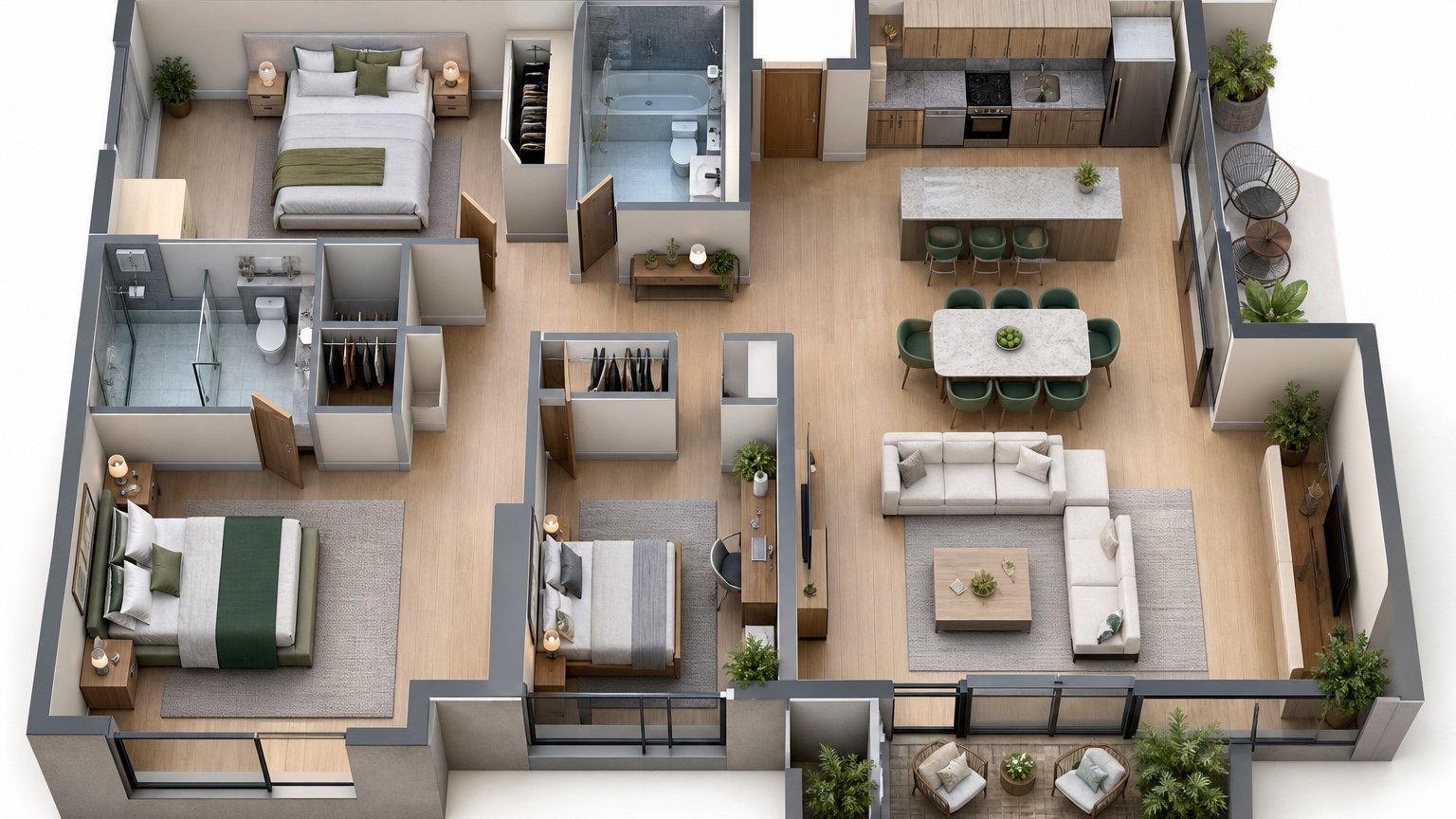
A furnished floor plan should make room purpose and scale easier to understand without misleading buyers, owners, renters, or agents. Fantasy furniture sizes can make a plan worse than a blank drawing.
Use a furniture-fit explainer frame: begin with realistic pieces, test life scenarios, inspect circulation before style, and convert the best view into a staging or shopping checklist.
RedesAIgn can quickly furnish plan concepts through prompts, remix/reference images, saved prompts, history, and multiple editors. Try the first layout with 5 free AI credits and no card before paying for more variations.
Use furniture to explain room purpose
A floor plan becomes easier to understand when people can see how life fits inside it.
Flat plans often show walls and room names but not the scale of a sofa, bed, table, desk, crib, or storage wall. A furnished AI concept can help a buyer understand a condo, a homeowner plan a move, or an agent communicate why an odd room is useful. The point is clarity, not fantasy staging.
For furnished-plan review, note which room purpose became clearer, which furniture sizes are assumed, and where movement might pinch. Then verify dimensions before shopping, staging, or publishing.
Start with realistic furniture sizes
Oversized or undersized pieces can make the plan misleading.
Tell RedesAIgn the room dimensions when available and ask for practical clearances around doors, closets, beds, dining chairs, islands, and seating. Include must-keep items such as a sectional, piano, nursery furniture, desk pair, or king bed. If the image squeezes furniture through impossible paths, reject it.
For furnished-plan review, note which room purpose became clearer, which furniture sizes are assumed, and where movement might pinch. Then verify dimensions before shopping, staging, or publishing.
If furnishing raises larger layout questions, use AI floor plan visualizer for plan logic and AI isometric floor plan for spatial communication.
Create different life scenarios
The same plan may need to work for a family, remote worker, renter, host, or downsizer.
Generate one buyer-friendly staging version, one family-storage version, one work-from-home version, and one minimalist version. Realtors can use this to make confusing rooms legible; homeowners can see whether existing furniture belongs in the new place or needs replacement.
For furnished-plan review, note which room purpose became clearer, which furniture sizes are assumed, and where movement might pinch. Then verify dimensions before shopping, staging, or publishing.
Check flow before style
Furniture plans fail when movement becomes awkward.
Look for pinch points near entries, closet doors, balcony sliders, dining chairs, and kitchen work zones. A visually rich output should still leave understandable circulation. If the strongest version uses less furniture, that is useful evidence, not a failure.
For furnished-plan review, note which room purpose became clearer, which furniture sizes are assumed, and where movement might pinch. Then verify dimensions before shopping, staging, or publishing.
Turn the concept into a shopping or staging checklist
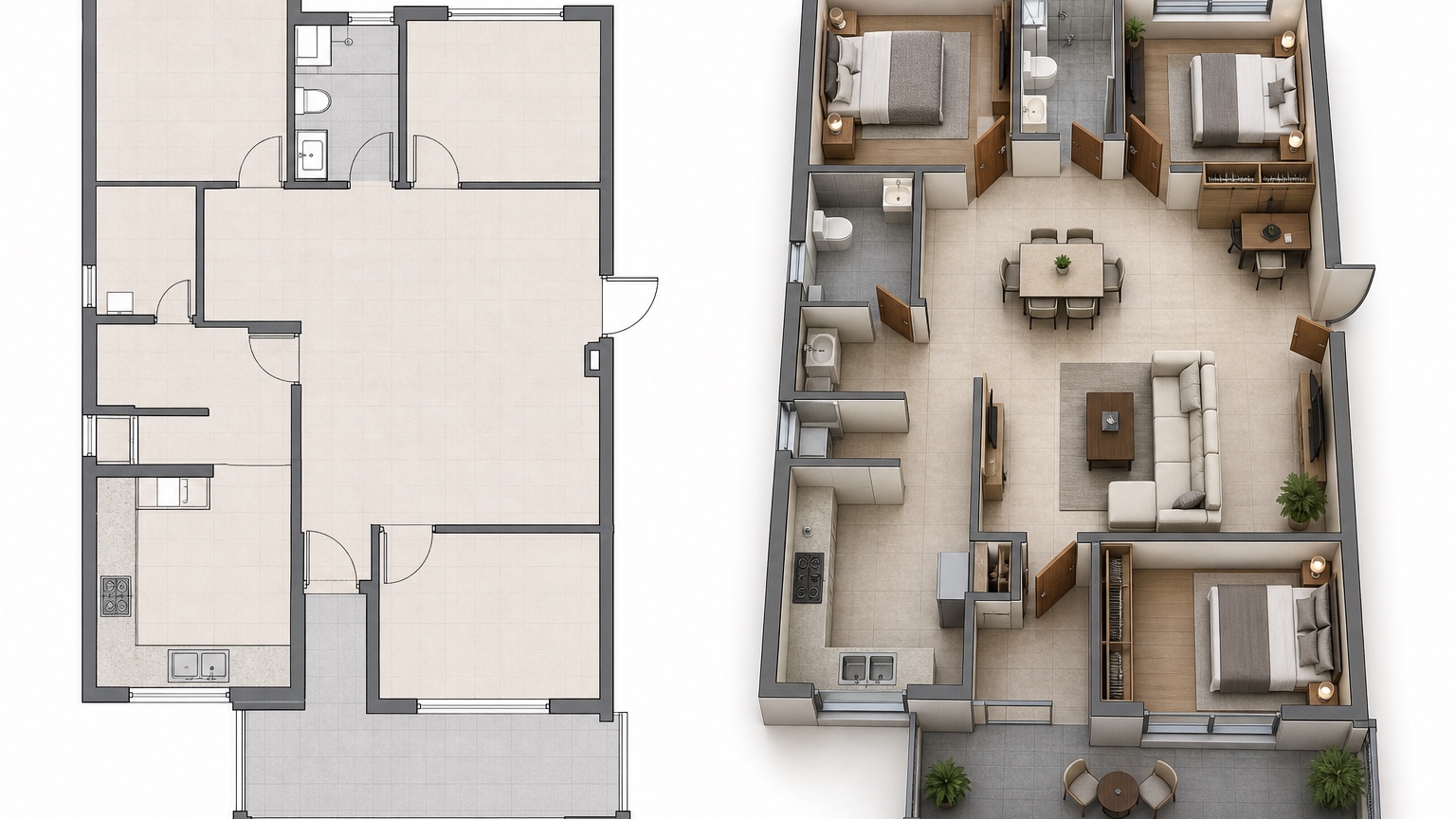
The best image becomes a list of sizes and decisions.
Record what worked: sofa orientation, bed wall, desk location, dining scale, rug size, storage need, and missing lighting. Use RedesAIgn history to compare these choices, then confirm dimensions before buying, staging, or publishing a listing visual.
For furnished-plan review, note which room purpose became clearer, which furniture sizes are assumed, and where movement might pinch. Then verify dimensions before shopping, staging, or publishing.
A practical RedesAIgn workflow for this decision
For furnished plans, create a realistic baseline with common furniture sizes and clear paths. Then compare buyer staging, family storage, work-from-home, and minimalist versions. Save prompts by scenario so viewers know why each sofa, bed, desk, or table changed. Use the furnished-plan output as a communication aid while actual measurements, product dimensions, staging ethics, and delivery paths remain verified separately.
Review the concept before anyone acts
When a furnished plan is meant for a listing or buyer conversation, honesty matters. The image should make possibilities clear without implying exact dimensions or included furniture. For realtors, that means choosing common furniture sizes, avoiding impossible bed placements, and not turning a small den into a fake bedroom. For homeowners, it means testing beloved furniture before a move and recognizing when downsizing is the smarter answer. For rental hosts, it means balancing sleep count with luggage storage, cleaning access, and durable circulation. Save one version that is attractive and one that is deliberately practical. The comparison can prevent expensive purchases and helps viewers understand the plan faster.
What to save after the first generation
Save the furnished plan that communicates scale honestly and a rejected version that squeezes furniture or blocks doors. The handoff should include likely furniture sizes, circulation pinch points, staging assumptions, and measurements to confirm.
Furniture-scale truth check
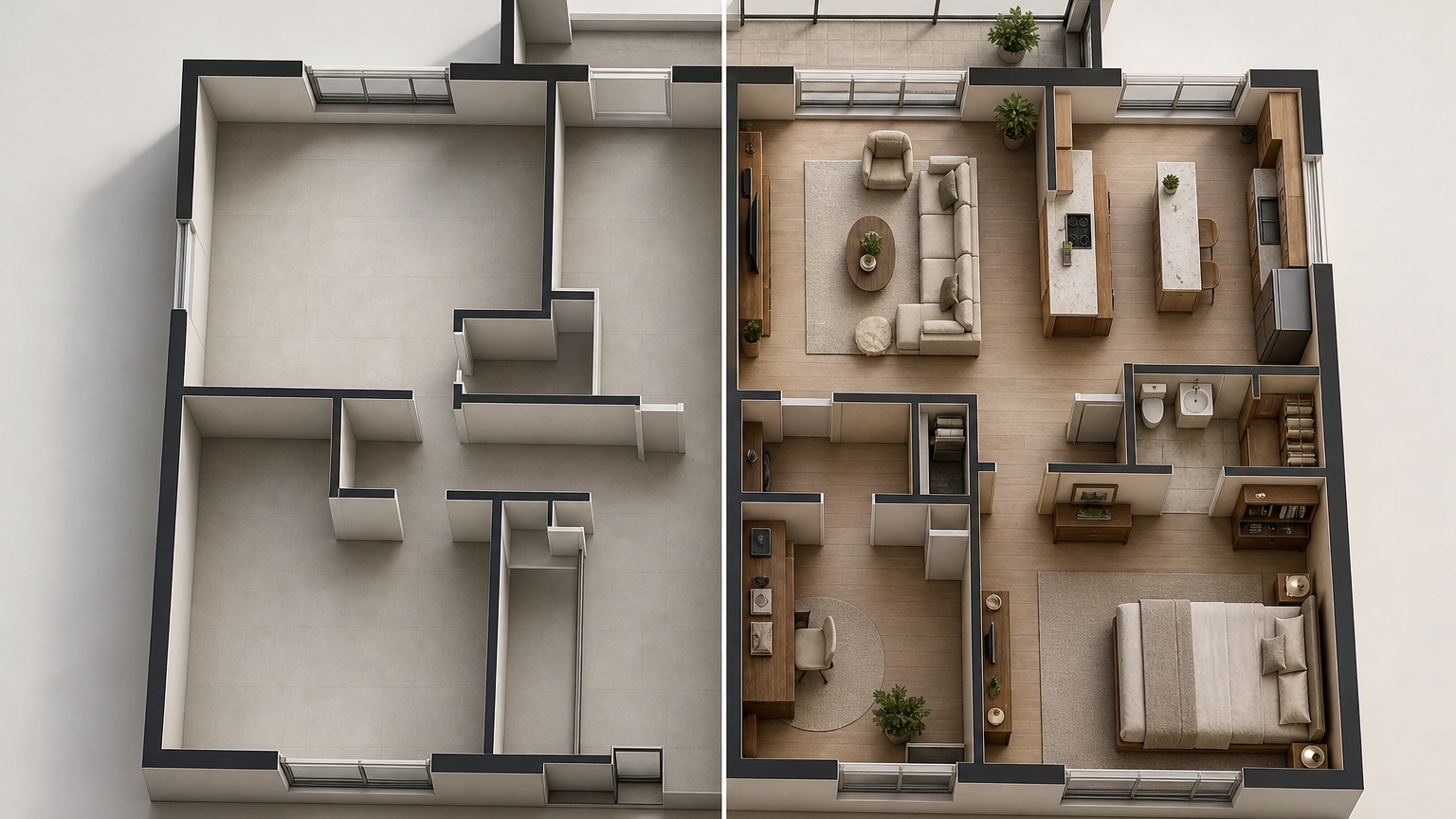
A furnished plan must be reviewed for honesty. Start with the largest items: bed size, sofa depth, dining table clearance, desk width, crib or dresser placement, and storage pieces. Then follow the paths from entry to closet, bedroom to bath, kitchen to dining, sofa to balcony, and desk to door. If a chair blocks a wardrobe or a bed leaves no walkway, the visual is giving false comfort. The point is not to fill every room beautifully; it is to help someone understand what the plan can support.
Different audiences need different furniture scenarios. A realtor may need buyer-friendly staging that makes an odd den understandable without pretending it is a legal bedroom. A homeowner may need to test existing furniture before moving. A rental host may care about luggage storage, cleaning access, durable pieces, and realistic sleep count. A downsizer may need a minimalist version that proves fewer items will work better. RedesAIgn lets you save each scenario as a prompt, which makes the comparison easier to explain to a spouse, client, buyer, or listing team.
After choosing a concept, convert the image into a checklist: sofa orientation, bed wall, dining scale, rug size, desk location, storage need, lighting gap, and measurements to verify. Do not buy furniture from the image alone. Measure the room, check product dimensions, and consider doorways, elevators, stairs, and delivery paths. The AI concept is valuable because it narrows decisions before money is spent and makes a flat plan easier to understand. It should support honest planning, staging, and communication.
Common furnished-plan prompt mistakes to avoid
Do not let the AI choose fantasy furniture sizes. Ask for common dimensions, modest staging, and clear paths around doors, closets, tables, and beds. If the room only works with a tiny sofa or an invisible dresser, the output is not helping a buyer or homeowner understand the plan.
Avoid turning every spare room into a perfect office, nursery, guest room, gym, or bedroom at once. Pick the scenario that matters and generate alternatives separately. A useful furnished floor plan is honest about tradeoffs, especially for small condos, rentals, listings, and homes where existing furniture must be reused.
Final handoff note
Before sharing a furnished plan, write a scale note that identifies assumed furniture sizes, room purposes, traffic pinch points, and items that need measurement. For listings, include a reminder that the image is a concept and should not imply exact included furnishings. For homeowners, list which existing pieces are being tested. For rental hosts, add luggage, cleaning, and durability needs. This makes the visual useful as planning evidence rather than just attractive staging.
A final furnished-plan sanity check is delivery and ownership. Furniture has to fit through doors, elevators, stairs, and hallways, and someone has to live with the maintenance. If the image only works as a showroom, simplify it.
If the furnished image is for a buyer or tenant, pair it with honest language: concept only, dimensions to verify, furnishings not included unless separately stated. Clear disclosure protects trust.
When the plan is small, include one deliberately sparse version. Empty space is not wasted if it keeps circulation honest and helps viewers understand how the room will actually feel.
FAQ: AI Floor Plan With Furniture
Is an AI floor plan with furniture accurate enough for shopping?
Use it as a planning guide, then measure the room and verify product dimensions before buying furniture.
Who benefits from furnishing a floor plan visually?
Homeowners, realtors, stagers, rental hosts, designers, and buyers can all use furnished concepts to understand room purpose and scale.
How can RedesAIgn help furnish a plan?
RedesAIgn supports prompt-based visual concepts, remix/reference images, saved prompts, generation history, and a free start with 5 AI credits.
Try these prompts in redesAIgn
Convert this floor plan into a bright open-concept living area with a kitchen island and natural light.
Show furniture placement for a 2-bedroom layout with a dining nook and entry storage.
Visualize this blueprint as a modern ADU with compact kitchen, loft bed, and bathroom.
Related guides
- AI Kitchen Floor Plan Visualizer for Remodel Layout Ideas
Visualize kitchen floor plans with AI before remodeling. Compare work triangles, islands, storage, and circulation with realistic furniture scale.
- AI Open Concept Floor Plan Ideas From Existing Layouts
Compare open-concept floor plans with AI before removing walls. Preview kitchen, living, and dining flow plus furniture zones and circulation.
- AI ADU Floor Plan Visualizer for Backyard Homes and Rentals
Preview ADU floor plans with AI for backyard homes and rentals. Compare compact layouts, baths, kitchens, and access before permitting talks.
- AI Basement Floor Plan Design: Visualize Finished Basement Layouts
Design finished basement layouts with AI floor plans. Compare recreation, guest, office, and bath options before construction estimates.
- AI Remodel Floor Plan Visualizer for Additions and Layout Changes
Visualize remodel floor plans with RedesAIgn to clarify addition, circulation, and scope before hiring pros or building the next phase.