AI Front Porch Design Ideas From Your House Photo
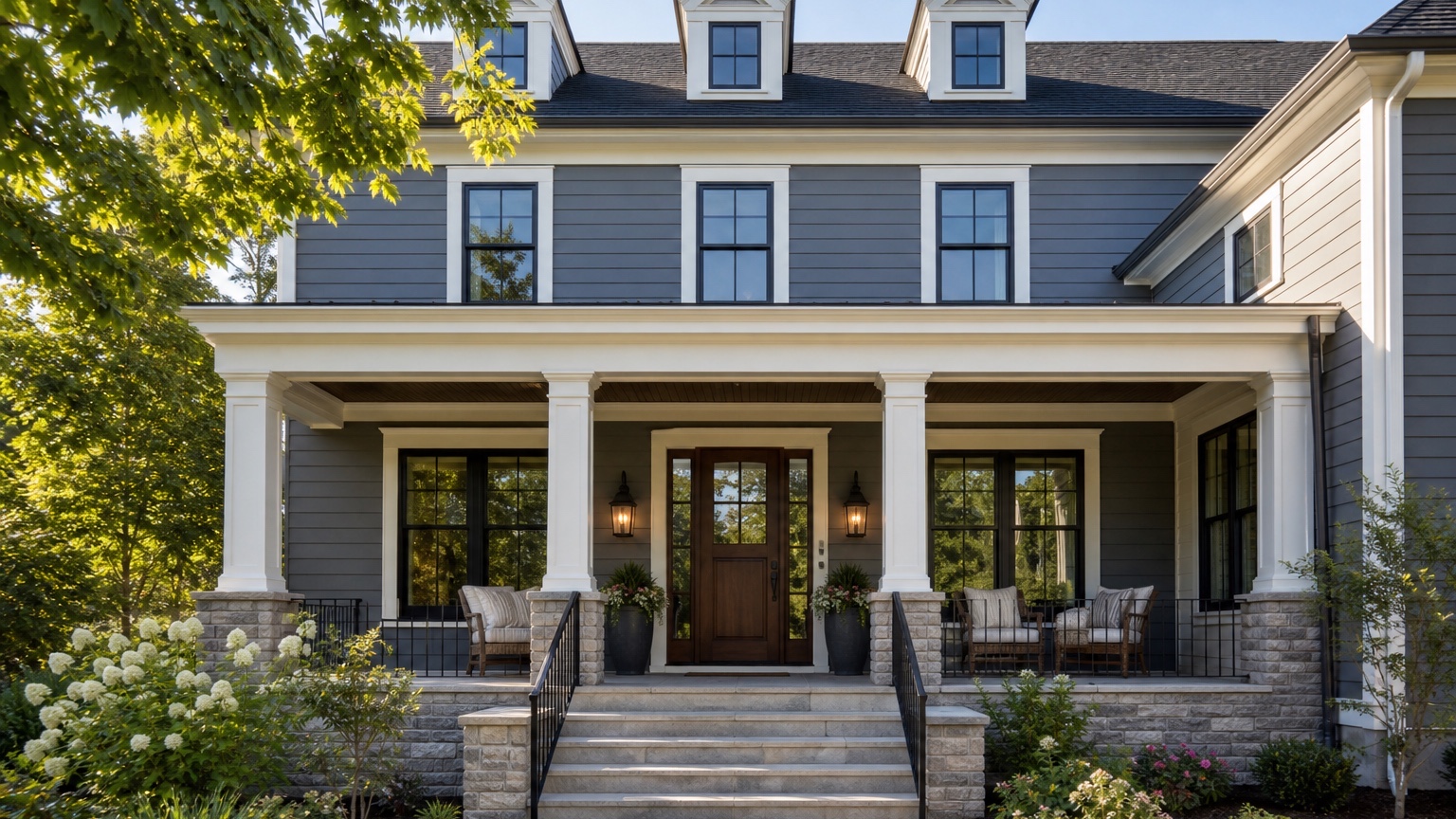
AI front porch design is useful because the porch is usually the part of the exterior people judge first and touch first. It frames the front door, changes how welcoming the house feels, affects curb appeal photos, and can make a dated facade feel intentional without remodeling the whole property. But porch decisions are also easy to misread from samples and inspiration boards. A railing style that looks clean online may feel too heavy on your house. A wood ceiling may warm up the entry, but only if it works with the existing siding, trim, roofline, and light.
For homeowners and porch contractors, the practical question is not “Can AI make a beautiful porch?” The better question is: “Can this image help us choose a porch upgrade that fits this actual house?” A useful AI front porch design preview should keep the home recognizable while testing entry appeal, columns, railings, steps, door color, lighting, materials, furniture, and nearby landscaping.
RedesAIgn helps with that middle step between vague ideas and paid work. Upload a real exterior photo, use the Exterior Editor, and generate controlled porch options before you ask for quotes or buy materials. If you want to test your own entry ideas, start free with RedesAIgn and use 5 free AI credits with no credit card required.
Start with the porch decision, not the style label
Many porch projects begin with a style word: modern, farmhouse, craftsman, coastal, traditional, or contemporary. Style can help, but it is not enough. The real decision might be whether to keep existing columns, replace the railing, add a small portico, change the front door, paint the steps, remove shutters, or make the entry feel brighter from the street.
AI works best when the prompt names that decision clearly. “Make this porch beautiful” gives the tool permission to invent details that may not fit the house. “Improve the front porch curb appeal while preserving the existing roofline, window placement, walkway, and porch footprint” is more useful. It tells the AI that the design should be judged as a potential next step, not as generic decoration.
For a homeowner, that clarity prevents overbuying. You can compare a simple refresh against a bigger porch remodel before committing. For a porch contractor, it creates a visual reference for the client conversation. Instead of interpreting “warmer” or “more welcoming,” everyone can point to the same image and discuss columns, railing spacing, step materials, lighting, and budget.
Keep the original house recognizable
The strongest AI front porch design concepts preserve the major structure unless you intentionally ask for a structural redesign. The roof shape, door location, window rhythm, porch footprint, foundation height, driveway, walkway, and main facade should still read as the same property. If the AI moves the front door, creates a new second-story balcony, changes the roof pitch, or widens the entire entry without being asked, treat that version as inspiration rather than a practical plan.
This matters because porch work often touches real construction constraints. Columns may support a roof. Steps need proper dimensions and handrails. Railings need safe attachment and local code review. Lighting requires wiring. Door changes may affect trim, weather sealing, and threshold details. An AI image can show a direction, but it does not measure loads, confirm code, or replace a contractor’s inspection.
Use the preview to decide what should be investigated. If a version with square wood columns, black railings, a warm door, and cleaner planting feels right, the contractor can help determine what is buildable, what needs permits, and what should be separated into phases.
Use a source photo that shows the entry clearly
A believable porch result starts with a good photo. Use a daylight image that shows the front elevation or a three-quarter view of the house. The porch roof, columns, railing, steps, front door, siding, trim, windows, walkway, and landscaping should be visible. Keep the camera level. Avoid deep shadows under the porch, parked cars blocking the entry, seasonal clutter, trash bins, open doors, and photos taken so close that the porch is distorted.
Overcast light is often better than harsh sun because the AI can read edges and colors more consistently. If the porch is dark, take a second photo at a different time of day. If the project includes side railings or wraparound details, start with the main front view, then repeat the winning concept on additional angles later.
Do not try to solve every angle in one generation. Generate the front porch direction first, save the prompt, then reuse that prompt with other photos. That makes it easier to keep materials and proportions consistent.
Decide which porch surfaces should change first
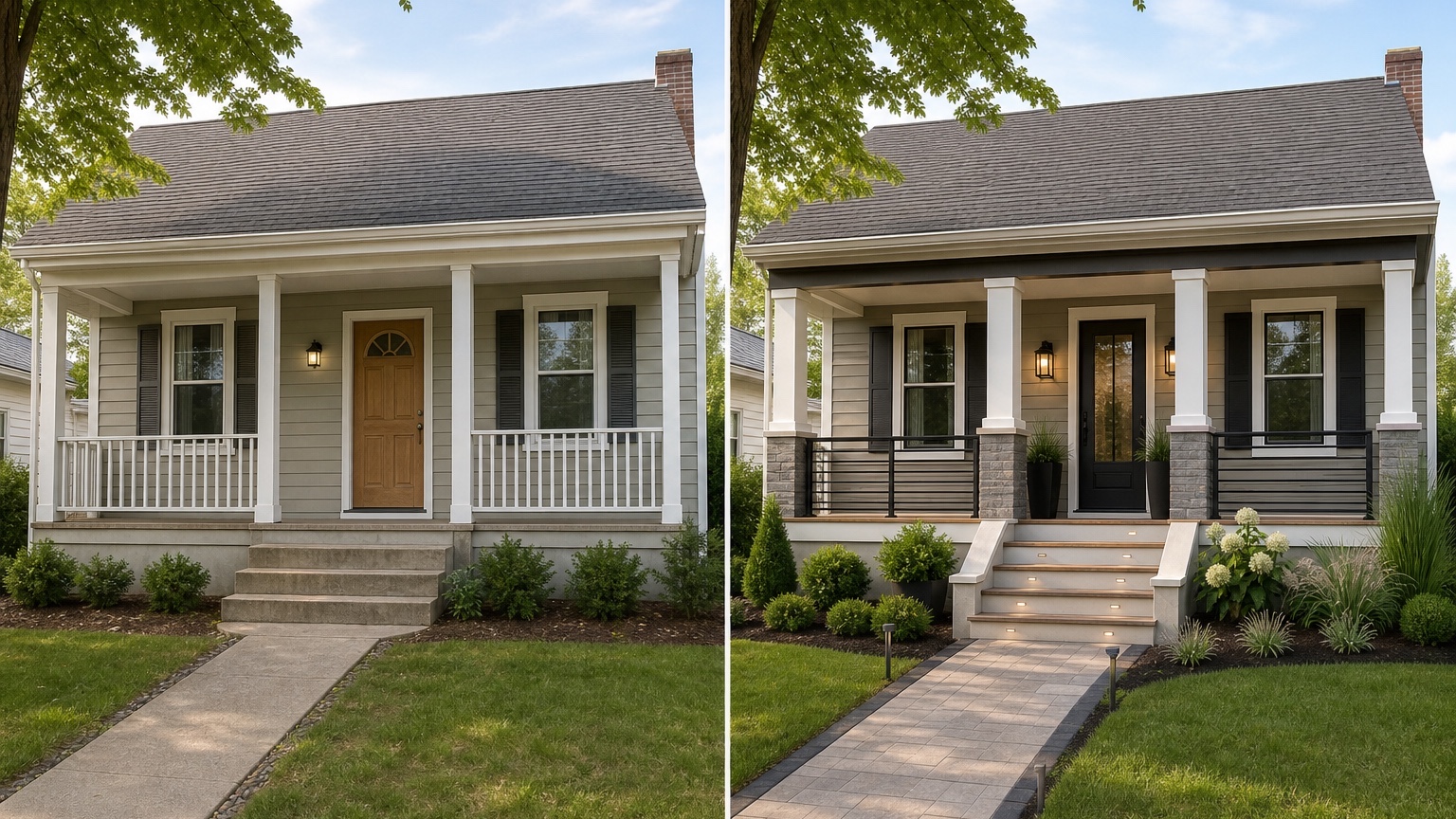
Front porch design usually includes more than one surface. The trick is to change enough to learn something without turning the concept into a fantasy remodel. Start with the surfaces that shape the first impression: front door, columns, railing, steps, trim, porch ceiling, light fixtures, house numbers, planters, and nearby foundation planting.
If the porch already has good proportions, a cosmetic refresh may be enough. Test a new door color, updated lights, cleaner trim contrast, black or bronze hardware, simplified planters, and a less cluttered entry. If the porch feels undersized or visually weak, test more substantial updates such as thicker columns, a defined portico, new railing, wider steps, or material changes that make the entrance feel grounded.
Pay attention to the roof and siding that are not changing. A bright white porch with black railings can look sharp, but it may clash with a warm brown roof or cream siding. Natural wood can soften a flat facade, but too much wood can look disconnected if no other exterior element repeats the tone. The goal is a porch design that belongs to the entire exterior.
Write prompts that separate safe, practical, and bold options
One AI image can make an idea feel more certain than it is. Create three categories instead: a safe refresh, a practical upgrade, and a bold concept.
A safe refresh might say: “Update this front porch for better curb appeal while keeping the existing porch footprint, roofline, columns, windows, and walkway. Freshen the front door, improve trim contrast, add simple exterior lights, clean up planters, and make the entry feel brighter and more welcoming.”
A practical upgrade can go further: “Create a realistic front porch design with square painted columns, simple black railings, warm wood front door, updated step finish, matching house numbers, and low-maintenance foundation planting. Preserve the roofline, door location, window openings, and walkway.”
A bold concept can explore more change while still being honest about uncertainty: “Show an ambitious porch renovation concept with a more defined entry, upgraded columns, larger visual presence, new railing, improved lighting, and coordinated landscaping. Keep the main house massing recognizable and avoid changing the roof pitch unless necessary for the concept.”
These categories help homeowners and contractors talk about cost and feasibility. The safe version asks, “What can we improve quickly?” The practical version asks, “What could we quote?” The bold version asks, “Is this direction worth professional design review?”
Check the AI porch design before trusting it
AI results can look polished while hiding problems. First, check scale. Are the columns the right size for the roof above them? Are railings tall enough to look plausible? Do steps meet the porch and walkway naturally? Does the door still fit the opening? Are planters, furniture, and lights sized realistically?
Second, check edges and continuity. Porch railings should connect to posts. Steps should align with the entry. Trim should wrap cleanly around the door and windows. Materials should follow the existing perspective. If the AI creates warped rails, floating lights, uneven columns, or impossible shadows, revise the prompt or generate a cleaner version.
Third, compare the design with real constraints. HOA rules, local codes, structural support, weather exposure, maintenance, and quote accuracy still matter. A covered porch in a wet climate may need different materials than a dry-climate entry. Painted steps may require maintenance. Wood accents need appropriate products and detailing. The AI image helps you choose a direction; professionals confirm how to execute it.
Avoid generic front porch design mistakes
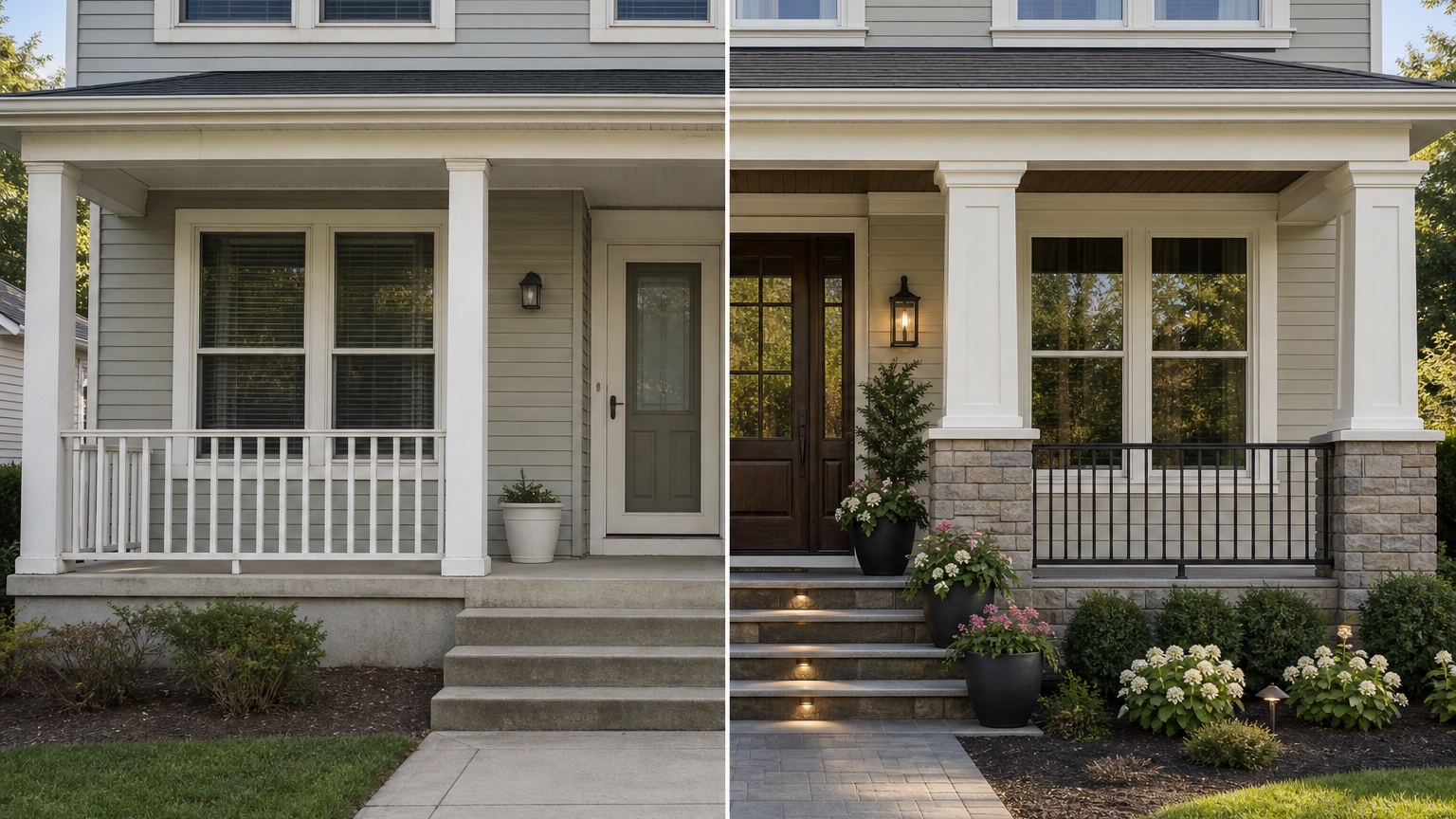
The most common mistake is uploading a weak photo and expecting a precise design. If the porch is hidden by shadows, cropped out, blocked by furniture, or distorted by a wide-angle lens, the result will be less useful. Retake the photo before spending credits on variations.
The second mistake is asking for unrelated changes. If the decision is railing style, do not also ask for new windows, new roof, new driveway, new landscaping, new siding, and sunset lighting in the same prompt. The output may look dramatic, but it will not tell you which porch change matters.
The third mistake is ignoring the next real-world step. A front porch concept should become a reference, not an endpoint. Save the strongest image with notes: what should stay, what changed, what materials are being considered, and what a contractor needs to confirm. If you are planning a larger facade refresh, compare this narrower porch workflow with AI exterior design from photo and AI curb appeal generator ideas.
How to use RedesAIgn for AI front porch design
In RedesAIgn, start with the Exterior Editor and upload the clearest photo of the entry. Write a prompt that identifies the porch goal, the changes you want to test, and the elements that must remain unchanged. Generate a few versions, then refine one variable at a time: columns first, then railing, then door and lighting, then planting and decor.
Use reference images only when they clarify a specific style, material, or color palette. A single reference for a railing style or wood door can be helpful. A large collection of unrelated inspiration images can confuse the direction. Save prompts that work so you can repeat the same porch idea on another angle or compare it with a broader AI exterior home design concept.
For homeowners, the output can clarify whether a modest refresh is enough or whether the porch deserves a larger project. For porch contractors, it can make client conversations more concrete. For realtors, it can show entry appeal potential as long as concept images are not presented as completed work.
When you are ready to compare porch options from your own house photo, try RedesAIgn for free. You get 5 free AI credits, no credit card required, and can use the results to prepare better questions before you buy materials or request quotes.
FAQ: AI front porch design
Can AI design my front porch from a photo?
AI can create visual porch concepts from a real exterior photo, including ideas for columns, railings, doors, lighting, steps, trim, planters, and curb appeal. It should be used as a planning preview, not as construction documentation.
What should stay the same in a realistic porch preview?
For most practical previews, preserve the roofline, door location, window openings, porch footprint, walkway, and main house shape. Change only the porch details you are actually considering unless you want a more ambitious concept.
Can a contractor use an AI porch image for a quote?
A contractor can use the image as a reference for discussion, but they still need measurements, product choices, site inspection, code review, and structural evaluation before quoting or building.
How many front porch versions should I create?
Start with three: a safe refresh, a practical upgrade, and a bold concept. Compare them by realism, cost, usefulness, maintenance, and how well they fit the existing house.
What makes an AI porch result look believable?
A believable result keeps the house recognizable, uses realistic scale, aligns steps and railings, matches the lighting and perspective, and respects the materials and colors on the rest of the exterior.
Before you commit to porch materials, railings, columns, or entry paint, sign up on RedesAIgn and test the design from your own photo. You can use the free 5-credit start to compare porch directions without entering a credit card.
Try these prompts in redesAIgn
Refresh this house exterior with modern paint, black trim, and updated front door lighting.
Improve curb appeal with new siding color, shutters, and a clearer entry path.
Keep the roofline, but modernize windows, porch posts, and exterior finishes.
Related guides
- AI Exterior Design App for Homeowners and Remodelers
Use RedesAIgn as an exterior design app to preview paint, trim, roof, and curb appeal ideas from real house photos before you renovate.
- AI Exterior Before and After: Generate Home Makeover Concepts
Create AI exterior before and after previews from real home photos to compare curb appeal concepts, renovation scope, materials, and client options.
- AI Black Windows Exterior Ideas: See the Look on Your House
Use AI black windows exterior previews to see black frames, trim contrast, siding, roof color, and curb appeal on a real home photo before replacement.
- AI Exterior Remodel Visualizer for Siding, Paint, Doors, and Windows
Use an AI exterior remodel visualizer to compare siding, paint, doors, windows, trim, garage updates, and curb appeal ideas on a real house photo.
- AI House Color Visualizer: Test Exterior Color Palettes From a Photo
Use an AI house color visualizer to compare exterior paint palettes, trim contrast, undertones, and curb appeal from a real home photo before painting.