AI Black Windows Exterior Ideas: See the Look on Your House
Last updated March 2026
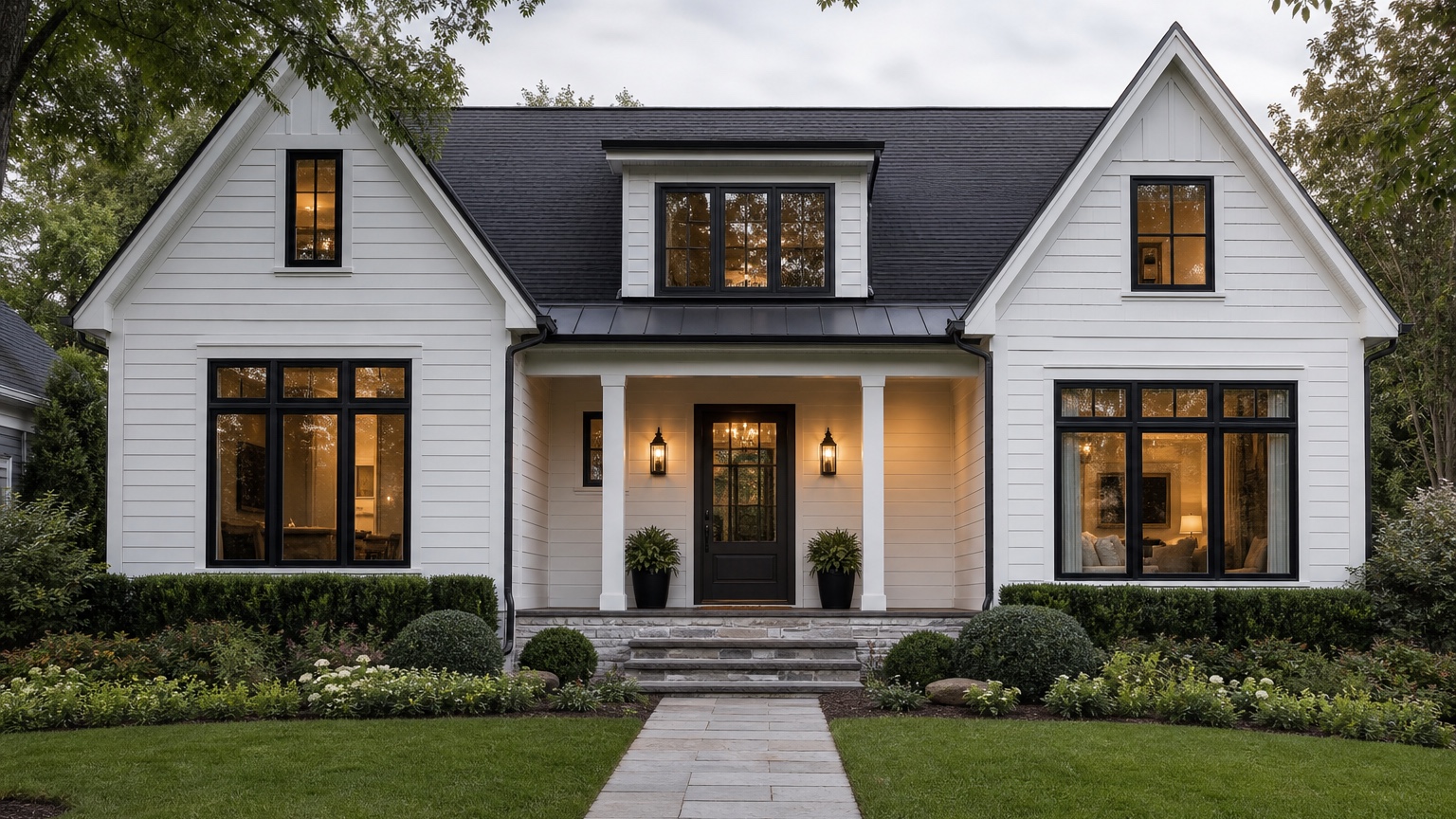
Black windows can make a home exterior look sharper, more modern, and more intentional. They can also make the wrong house feel too contrasty, flatten the trim, fight the roof color, or expose proportions that were less obvious with white or beige frames. That is why an AI black windows exterior preview is useful before a homeowner commits to replacement windows or a contractor prepares a final proposal.
The real decision is not “are black windows trendy?” The useful decision is whether black window frames work on this actual house with its siding, trim, roof, masonry, garage, porch, shutters, and landscape context. A product brochure can show a beautiful black window. It cannot show how black frames will affect a specific ranch, colonial, Craftsman, split-level, brick home, or modern farmhouse from the street.
RedesAIgn can help with that early visual step. Upload a clear home exterior photo, use the Exterior Editor, and generate controlled black window concepts that keep the house recognizable. If you want to see black windows on your own exterior, start free with RedesAIgn and use 5 free AI credits with no credit card required.
What an AI black windows exterior preview should help you decide
For window contractors, the practical problem is expectation setting. A homeowner may ask for black windows because they saw them on a new build, a modern farmhouse, or a luxury renovation. The contractor still has to explain frame style, grille patterns, trim interaction, product limitations, cost, install scope, and how the finished exterior will look once the old windows are removed.
For homeowners, the problem is confidence. Replacement windows are expensive, and exterior frame color is visible for a long time. Black can look clean and architectural, but it may also make light siding feel stark, make small windows look smaller, or clash with brown roofing and warm brick. A photo-based preview helps the homeowner compare the look before turning an inspiration image into an order.
The useful output is a concrete next step. It might be “black frames work if the trim is simplified,” “keep white windows on the rear elevation,” “quote black exterior frames with no shutters,” “test bronze instead of pure black,” or “coordinate window replacement with paint and siding.” The AI image is not a window specification, but it can become a clear visual reference for a sales conversation, family decision, or contractor brief.
Use black windows as a decision workflow, not a one-click style
A reliable workflow starts by deciding what the image needs to answer. Are you replacing all windows or only the front elevation? Are the existing trim boards staying? Will shutters be removed? Is the siding being painted? Is the roof color fixed? The preview should match the real project scope.
Start with a conservative version. Keep the current siding, roof, masonry, and landscaping unchanged, and change only the visible window frames to black. This shows the pure effect of the frame color. Then create a second version that adjusts related details such as trim color, shutters, gutters, or front door color. Finally, create a broader curb appeal version only if paint, siding, or entry updates are truly on the table.
This sequencing matters because black windows often look best in inspiration photos where many other details were designed around them. If the AI also changes the siding to white, removes shutters, adds a black roof, and redesigns the porch, the homeowner may be reacting to the full remodel rather than the windows. Controlled variations make the comparison fair.
Start with a photo that shows openings and trim clearly
A believable black window preview depends on a strong source photo. Use a front elevation or three-quarter view that shows window openings, trim, shutters, siding, brick or stone, roofline, porch, garage, doors, gutters, and nearby landscaping. If the house has important side windows, bay windows, dormers, or a visible second elevation, take additional photos after you establish the main direction.
Keep the camera level and avoid extreme angles. Window proportions are easy to misjudge when a photo is tilted or too close. If the camera points sharply upward, upper-story windows may look taller and the eaves may distort. If shrubs block lower windows, the preview may invent frame edges or miss trim details.
Daylight matters. Soft daylight or overcast conditions often make the window frames and surrounding materials easier to evaluate. Harsh sun can make black frames disappear into shadow, while deep shade can make the whole facade look cooler and darker than it will in person.
Before generating, decide what must stay recognizable. If the roof, siding, masonry, porch, garage, front door, and landscaping are not changing, say that clearly. If the contractor is quoting window replacement only, keep the first prompt limited to window frames and grille pattern. If trim, paint, or shutters are part of the project, name those changes separately.
Compare black frames with siding, trim, roof, and masonry
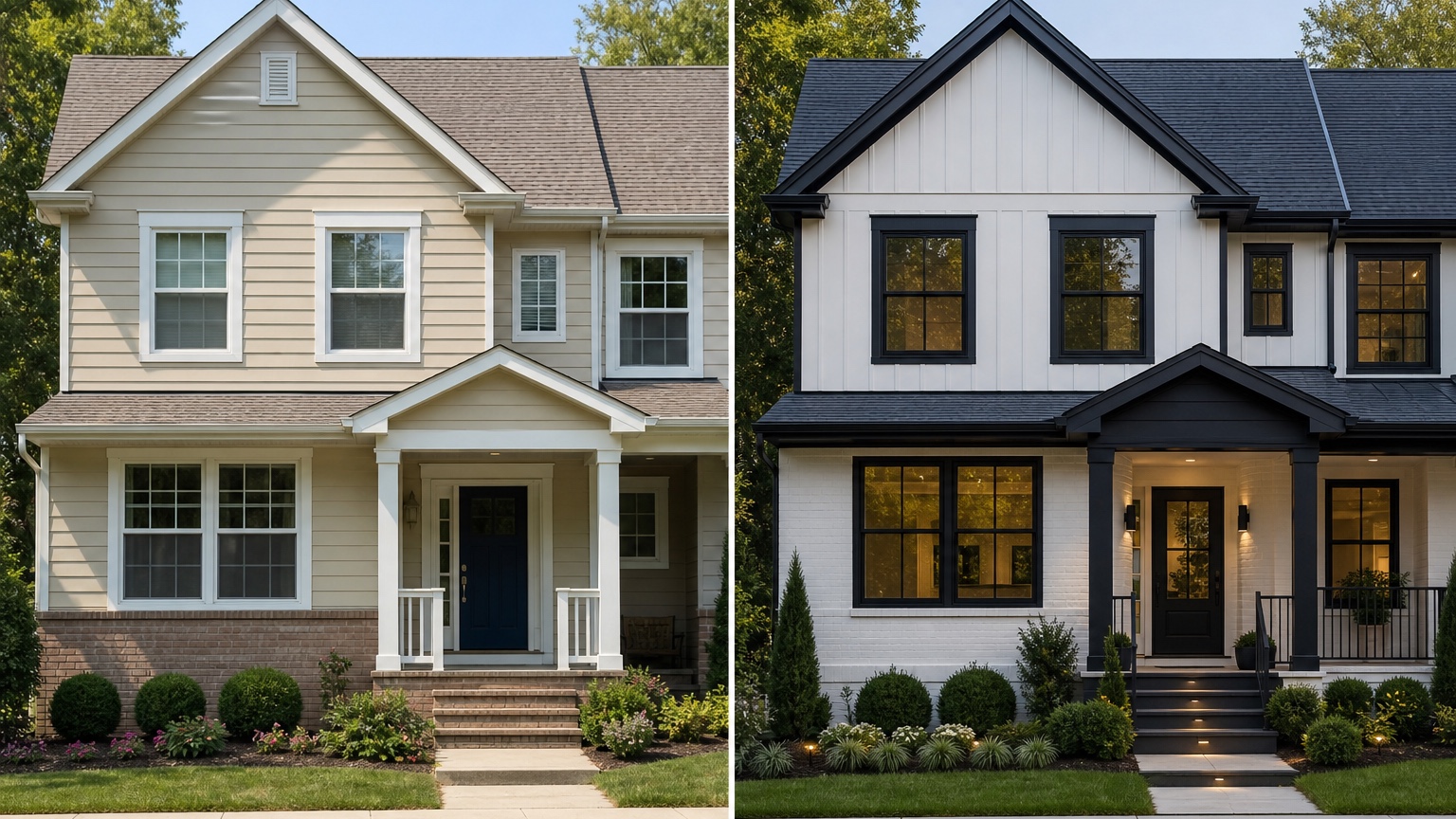
Black windows are not isolated objects. They are dark lines placed inside a larger exterior composition. On a white or light gray home, they can create crisp contrast and define the window rhythm. On a tan, cream, or warm stone home, they can feel more dramatic and may need softer trim or a warmer accent elsewhere. On red brick, black can look classic, but grille pattern and trim width become especially important.
Siding color should be checked first. Black frames against very light siding are bold. Black against dark siding can look quiet and high-end, but the windows may lose definition unless trim, depth, and lighting are strong. Mid-tone siding can be the hardest because black may either sharpen the facade or feel disconnected from the roof and door.
Trim is the next decision. Some homes look better when black frames sit inside white or light trim because the opening remains bright and dimensional. Others look better with darker trim so the window reads as one clean unit. If the preview makes trim too thick, removes trim entirely, or changes window size, treat that version as inspiration rather than a replacement reference.
Roof color and gutters also matter. A black roof, black gutters, and black windows can feel cohesive, but too many dark lines may make a small home feel heavy. A brown roof may work better with bronze or dark espresso frames than pure black. An AI preview helps you see those relationships before the contractor translates the idea into real product options.
What a window contractor still needs to confirm in person
An AI black windows exterior preview can show curb appeal direction, but it cannot inspect existing windows or specify installation. A window contractor still needs to confirm measurements, frame type, rough openings, water management, flashing, trim condition, siding cutbacks, interior finish impacts, egress requirements, tempered glass locations, product series, energy performance, lead-safe practices where relevant, and local code requirements.
It also cannot guarantee that a generated frame profile matches a specific product. Real windows vary in frame width, grille style, exterior color availability, glass reflectivity, screen visibility, hardware, warranty, and installation method. Use the preview to decide whether black windows are visually worth pursuing, then confirm details with real product samples and contractor guidance.
This distinction makes the preview more useful, not less. Homeowners can explore the look without assuming every generated detail is buildable. Contractors can use the image to clarify preferences and scope before investing time in a detailed quote.
Prompt brief for stronger black window results
A good prompt starts with the outcome: a realistic exterior preview of black window frames on this home. It names the surfaces to change, what must stay fixed, and how controlled the result should be.
Try a window-only prompt:
“Create a realistic black window exterior preview for this home. Preserve the existing roofline, siding, brick, stone, porch, garage, driveway, landscaping, front door, and window openings. Change only the visible exterior window frames to matte black. Keep the current window sizes and proportions, and make the result believable for a replacement window consultation.”
For a contractor preparing options, try:
“Show three controlled versions on the same house photo: black windows with existing trim, black windows with simplified light trim, and black windows with shutters removed. Do not change the roof, siding layout, masonry, porch footprint, garage, driveway, or landscaping. Focus on frame color, grille pattern, trim relationship, and curb appeal.”
If HOA rules, historic district requirements, budget, product availability, or energy performance matters, include those constraints. If the homeowner is not sure about pure black, generate a comparison with bronze, dark brown, charcoal, or black exterior frames with softer trim. The best prompt keeps the house real and the decision narrow.
Review the output before anyone trusts the image
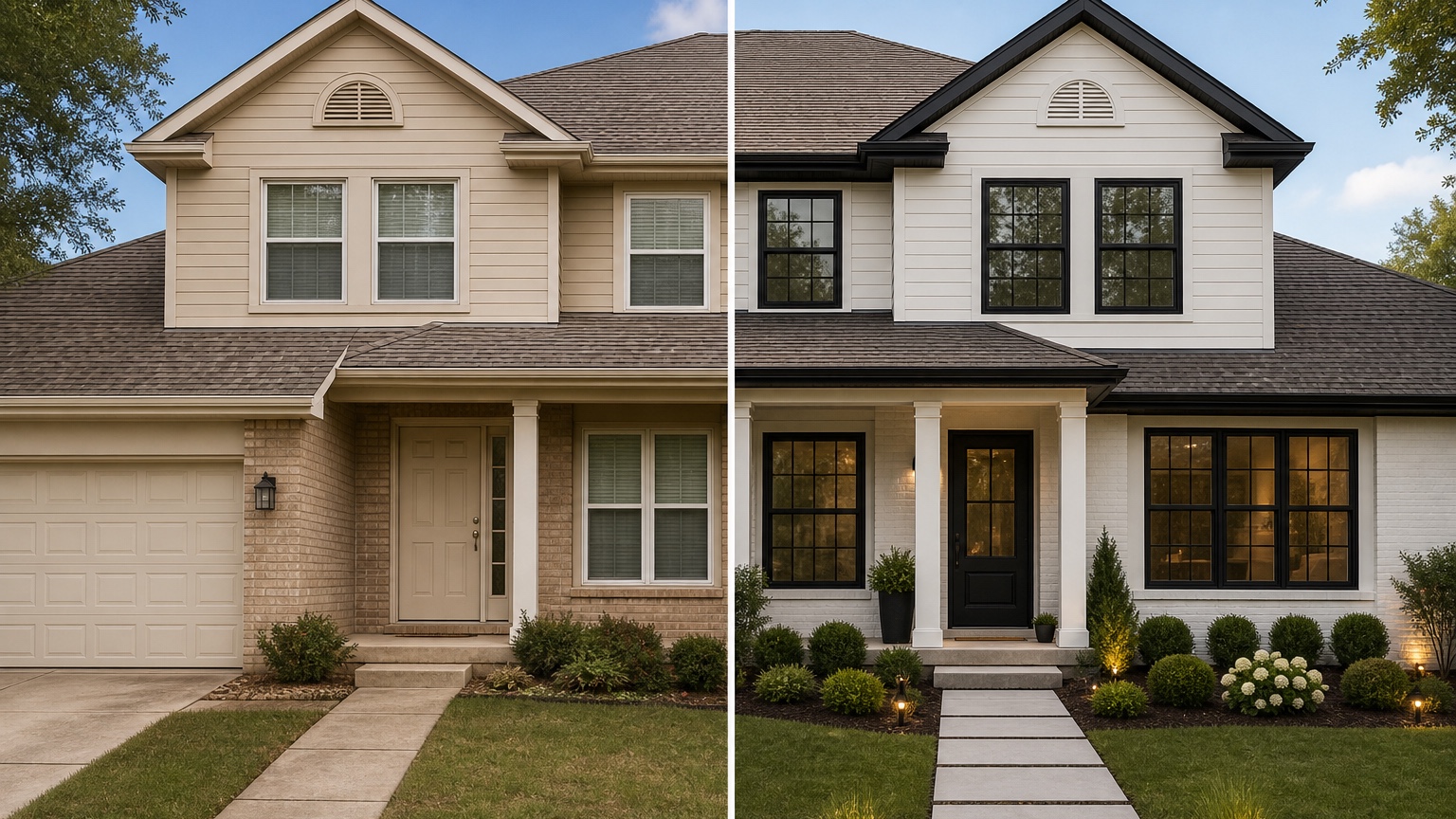
AI previews can make black windows look convincing while getting important details wrong. Start with window size and placement. The openings should match the original house. If the AI enlarges windows, adds panes, removes a bay window, changes the grille pattern without permission, or moves an opening, it may be attractive but not useful for a replacement decision.
Check edges next. Black frames should sit inside the existing openings and relate cleanly to trim, shutters, siding, brick, and stone. Look for black color bleeding onto trim, missing mullions, warped shutters, inconsistent frame thickness, or windows that no longer align across the facade.
Then judge lighting and reflectivity. Real black frames absorb light and cast stronger lines. Glass reflectivity, screens, shadow under eaves, and porch darkness can change the effect. If the generated black looks flat or painted over the entire window area, revise the prompt or use the result only as a broad mood direction.
Finally, compare the concept against practical constraints: HOA rules, product colors, existing trim condition, water management, budget, installation method, and quote accuracy. Save the strongest version as a facade before-and-after, then add notes about frame color, trim approach, grille pattern, shutter decision, and what the contractor still needs to confirm.
Common mistakes that make black window previews generic
The first mistake is using a weak photo. Cropped windows, heavy shrubs, strong reflections, deep shade, and tilted camera angles can make the AI invent details. Retake the photo before judging a major window decision.
The second mistake is changing too much at once. A prompt that asks for black windows, white siding, new stone, bigger porch, black roof, and modern landscaping may produce an impressive image, but it does not prove that black windows alone work.
The third mistake is ignoring trim. Black window frames can look unfinished if trim color, trim width, shutters, and surrounding siding are not considered. The same black frame can read traditional, modern, farmhouse, or commercial depending on those details.
The fourth mistake is treating the preview as a product order. A generated frame is not a manufacturer specification. Before ordering, confirm frame material, exterior color, grille style, glass package, measurements, and installation details with the contractor.
How to use RedesAIgn for black window exterior planning
In RedesAIgn, upload the clearest exterior photo and choose the Exterior Editor. Begin with a restrained prompt that preserves the home’s architecture and changes only visible window frame color. Generate the simplest black-window version first. Then revise the prompt for trim, shutter, door, or siding changes only if those items are actually being considered.
Use saved prompts and history to compare versions. If a result gets the right black frame color but changes the window proportions, revise the prompt and restate that all openings must remain unchanged. If a reference image captures the black window style you want, use it to clarify mood or frame treatment, not to replace the real house with a different architecture.
If black windows are part of a larger exterior refresh, compare the window concept with the AI siding visualizer and AI exterior paint visualizer workflows. For broader facade planning, see AI exterior design from photo. Those related decisions matter because black frames often look best when siding, trim, roof color, and entry details support them.
When you are ready to preview black windows on your own home photo, try RedesAIgn for free with 5 free AI credits and no credit card required. If you need more generations after the free credits, one-time credit packs are available, and generated images can be used commercially where relevant.
FAQ: AI black windows exterior
What is an AI black windows exterior preview?
It is a photo-based AI concept that shows how black exterior window frames may look on a real house, including their relationship to siding, trim, roof color, masonry, and curb appeal.
Are black windows a good idea for every house?
No. They can look excellent on many homes, but the result depends on window proportions, siding color, roof color, trim, masonry, architecture, neighborhood context, and product options.
Can window contractors use these previews with clients?
Yes. Contractors can use black window previews as discussion references to clarify style, trim approach, grille pattern, and scope before preparing or finalizing a quote.
Should I preview trim changes too?
Yes, but do it in a controlled way. Generate one version with only black frames, then test trim, shutter, and paint changes separately so you know which change creates the improvement.
Can an AI preview replace window measurements or product samples?
No. It helps choose a visual direction, but a contractor still needs to measure, inspect openings, confirm installation details, and match the concept to real window products.
Try these prompts in redesAIgn
Refresh this house exterior with modern paint, black trim, and updated front door lighting.
Improve curb appeal with new siding color, shutters, and a clearer entry path.
Keep the roofline, but modernize windows, porch posts, and exterior finishes.
Related guides
- AI Exterior Design App for Homeowners and Remodelers
Use RedesAIgn as an exterior design app to preview paint, trim, roof, and curb appeal ideas from real house photos before you renovate.
- AI Exterior Before and After: Generate Home Makeover Concepts
Create AI exterior before and after previews from real home photos to compare curb appeal concepts, renovation scope, materials, and client options.
- AI Exterior Remodel Visualizer for Siding, Paint, Doors, and Windows
Use an AI exterior remodel visualizer to compare siding, paint, doors, windows, trim, garage updates, and curb appeal ideas on a real house photo.
- AI House Color Visualizer: Test Exterior Color Palettes From a Photo
Use an AI house color visualizer to compare exterior paint palettes, trim contrast, undertones, and curb appeal from a real home photo before painting.
- AI Exterior Design Online: Redesign a House Photo in Minutes
Use AI exterior design online to preview siding, paint, trim, doors, windows, and curb appeal ideas from a real house photo before renovating.