Best AI House Exterior Design Generator for Curb Appeal Planning
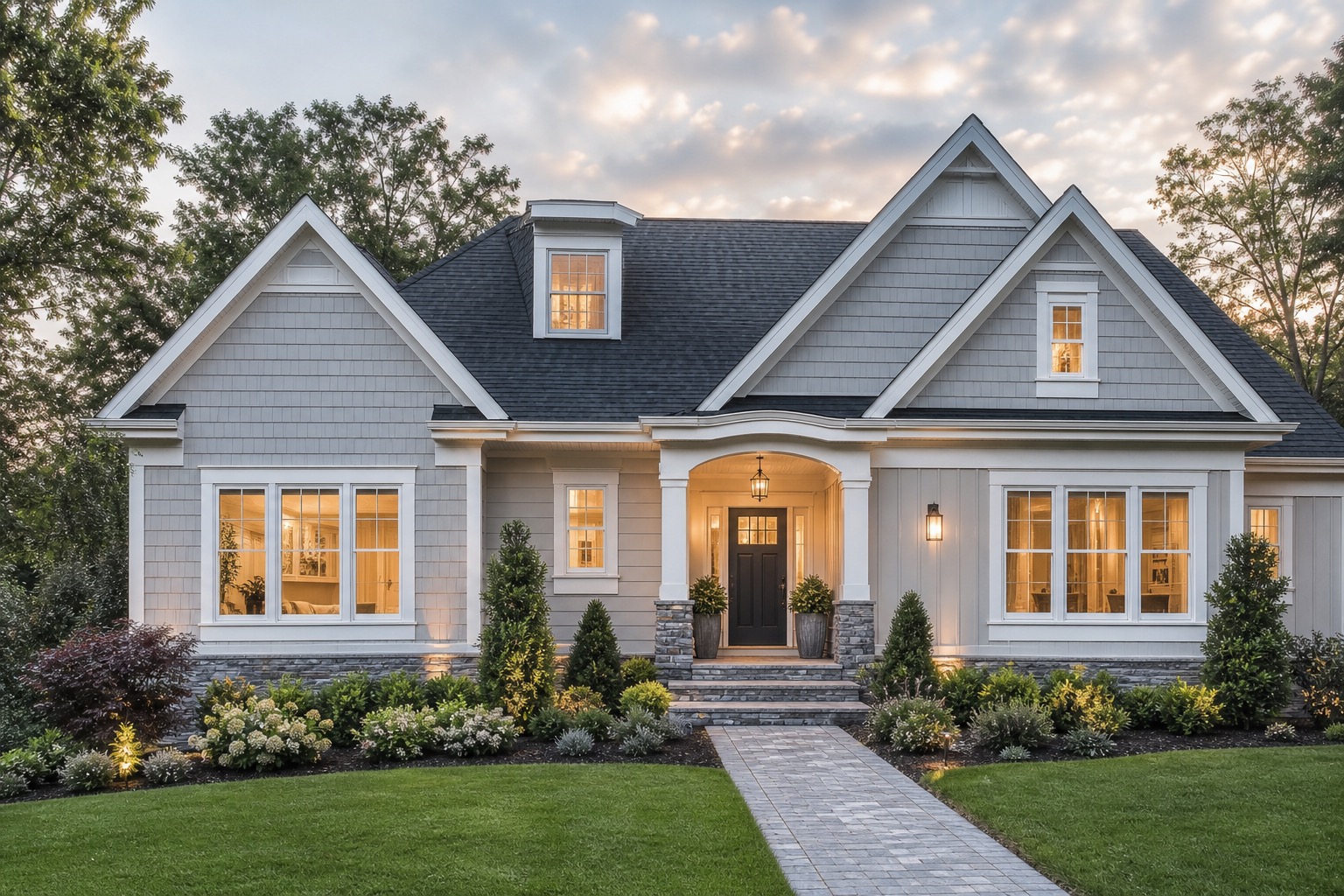
An AI house exterior design generator is most useful when you need to compare renovation directions before requesting quotes. Homeowners and flippers rarely need one more pretty facade idea. They need a way to decide whether a house should get a simple paint refresh, a siding update, a new entry sequence, sharper landscaping, or a larger curb appeal plan worth pricing with contractors.
That distinction matters. A beautiful AI image can still be a bad renovation brief if it changes the roofline, invents expensive masonry, hides drainage problems, or ignores the materials already on the home. The best output is not the most dramatic one. It is the option that looks realistic, improves the property, and can be translated into a quote.
If you want to test your own exterior before spending on samples or estimates, start free with RedesAIgn and use the first 5 AI credits to compare curb appeal directions. No credit card is required.
What an AI house exterior design generator should help you decide
The main job is decision reduction. Before AI, many owners went from inspiration photos straight to painter, siding, roofing, or landscaping quotes. That creates confusion because “modern farmhouse,” “warmer,” “more upscale,” and “better curb appeal” can mean very different things depending on the home.
A photo-based generator gives you a planning layer between inspiration and estimates. Upload a current exterior photo, then test controlled changes: siding color, trim contrast, garage door style, front door material, porch columns, shutters, lighting, walkway, foundation planting, and overall facade style. The output does not replace professional review, but it can help you remove weak directions before you ask anyone to price them.
For homeowners, this reduces indecision. For flippers, it helps separate cosmetic changes that support resale from ambitious upgrades that may not return enough value. For both groups, the generator should make the next conversation easier: “Quote this siding color, trim direction, garage door style, and level of landscaping,” instead of “Make it look nicer.”
Start with the quote, not the fantasy image
The fastest way to get a useless exterior concept is to ask for a dream house with no limits. A generator may add a taller roof, replace every window, rebuild the porch, change the driveway, add stone veneer, and create mature landscaping in one image. That can be inspiring, but it is hard to price and often far outside the project scope.
Start by deciding what quote you may request. A paint quote needs accurate walls, trim, shutters, doors, and garage surfaces. A siding quote needs material direction, reveal scale, color, and trim treatment. A landscaping quote needs bed shapes, plant density, walkway edges, and sightlines to the entry. A broader design-build conversation can include porch additions, window changes, roofline details, and structural questions.
Then prompt for that scope. Instead of “make this house modern,” try: “Refresh this home for stronger curb appeal while keeping the roofline, window locations, driveway, and porch footprint unchanged. Test warm white siding, charcoal trim, a natural wood front door, black exterior lights, and simple low-maintenance foundation planting.” That gives future contractors a clearer visual target.
Use an evaluator’s framework before choosing a winner
A generator can produce many strong-looking images, so homeowners need a way to judge them. Use five filters: realism, quoteability, curb appeal, resale fit, and constraint fit. If an output fails two or more filters, keep it as inspiration.
Realism comes first. The house should still look like the same property. The roof shape, window rhythm, garage size, steps, porch, and main massing should remain recognizable unless you are intentionally exploring a structural remodel. Watch for AI shortcuts such as floating columns, mismatched shadows, impossible window reflections, strange roof edges, warped siding lines, or landscaping that covers unresolved facade issues.
Quoteability is the second filter. A contractor should be able to look at the image and understand what work is being discussed. If the output mixes five siding materials, an invented balcony, a new driveway, custom stonework, and mature trees, it may be too vague for a first estimate. If it clearly shows paint, trim, garage door, front door, fixtures, shutters, and planting beds, it is more useful.
Curb appeal is the third filter. The concept should improve the first impression from the street: cleaner entry focus, stronger color balance, better proportions, visible front door, less visual clutter, and landscaping that frames rather than hides the house. Compare this with a dedicated AI curb appeal generator workflow if your main goal is resale presentation or listing preparation.
Resale fit is the fourth filter. Flippers should avoid designs that appeal only to a narrow taste unless the local buyer profile supports it. A dramatic black facade, ornate Mediterranean treatment, or ultra-minimal exterior may photograph well but reduce buyer confidence in some neighborhoods. The winning concept should feel fresh without fighting the architecture or surrounding homes.
Constraint fit is the final filter. Keep climate, HOA rules, existing roof color, lot grade, maintenance, budget, and material availability in view. AI can suggest cedar, stone, steel, or large windows, but it does not know your exact code requirements, product lead times, drainage, or installation costs. Treat the image as a visual brief, not a permit drawing.
Compare exterior styles in controlled rounds
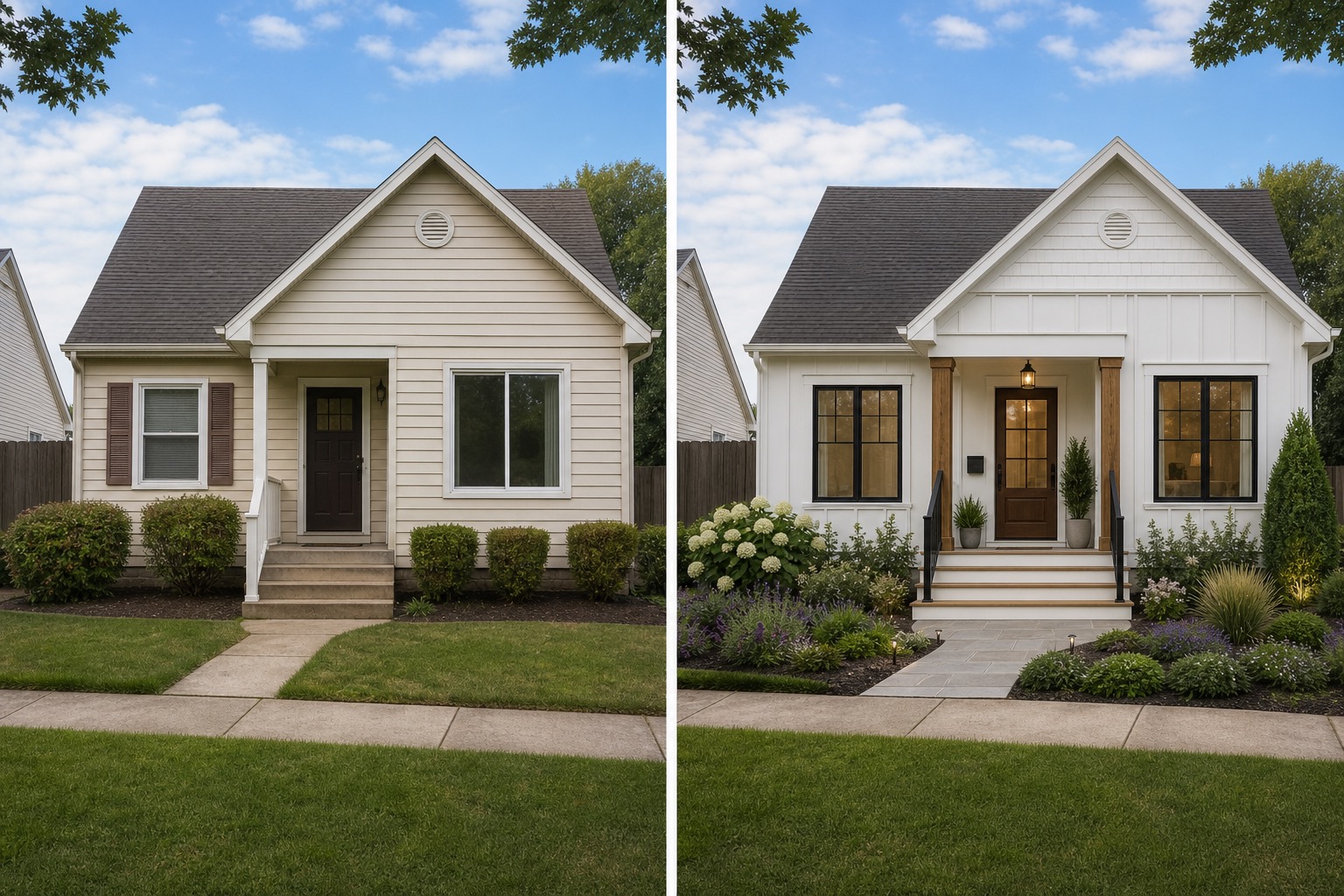
Do not generate ten unrelated styles and pick the prettiest one. Work in rounds so each set answers a clear question. Round one can compare broad style directions: updated traditional, modern farmhouse, warm contemporary, coastal, craftsman-inspired, or clean transitional. Keep the same photo and request the same scope so the comparison is fair.
Round two should narrow the winning style into material choices. Test light siding with dark trim, medium greige with white trim, dark siding with warm wood accents, or a brick-and-siding mix if the house supports it. Keep the roof color in mind. Many exterior concepts fail because the new facade palette clashes with an existing brown, red, or weathered roof that the owner does not plan to replace.
Round three should focus on entry and landscape. A modest house can gain a lot from a clearer front door, better porch lighting, cleaner steps, a defined walkway, and edited foundation planting. Ask the AI to keep planting realistic and low maintenance. For more detailed planning around the photo upload process, the related guide on AI exterior design from photo explains how source image quality affects the result.
What homeowners should look for before requesting quotes
Before you send an AI concept to contractors, mark what should stay and what should change. Write a short note under the image: keep existing roof, keep window openings, replace shutters, paint brick, new garage door, new front door, black sconces, new house numbers, remove overgrown shrubs, add simple planting bed. This turns the image into a brief.
Separate cosmetic items from construction items. Paint, shutters, house numbers, lighting, and some landscaping are usually easier to quote. Siding replacement, porch columns, railings, windows, roof changes, masonry, drainage, and hardscape can involve more trades, permits, and site review. If the generator shows all of these at once, ask for a simpler version that matches the phase you can actually fund.
What flippers should look for before choosing a curb appeal plan
Flippers need curb appeal that supports buyer confidence, not just social media appeal. A good concept should make the property look cared for, current, and easy to understand from the street. It should not imply custom work unless that work fits the acquisition price, timeline, and after-repair value.
Use the generator to compare three budgets: a cosmetic refresh, a midrange update, and a higher-scope exterior plan. Then choose the version that improves perceived value without over-improving the house for the neighborhood. The strongest flip concept often looks clean, bright, and move-in ready rather than extreme. If you need broader planning beyond generator selection, use the AI exterior home design guide to think through style, scope, and photo-based renovation planning.
How to use RedesAIgn’s Exterior Editor for this workflow
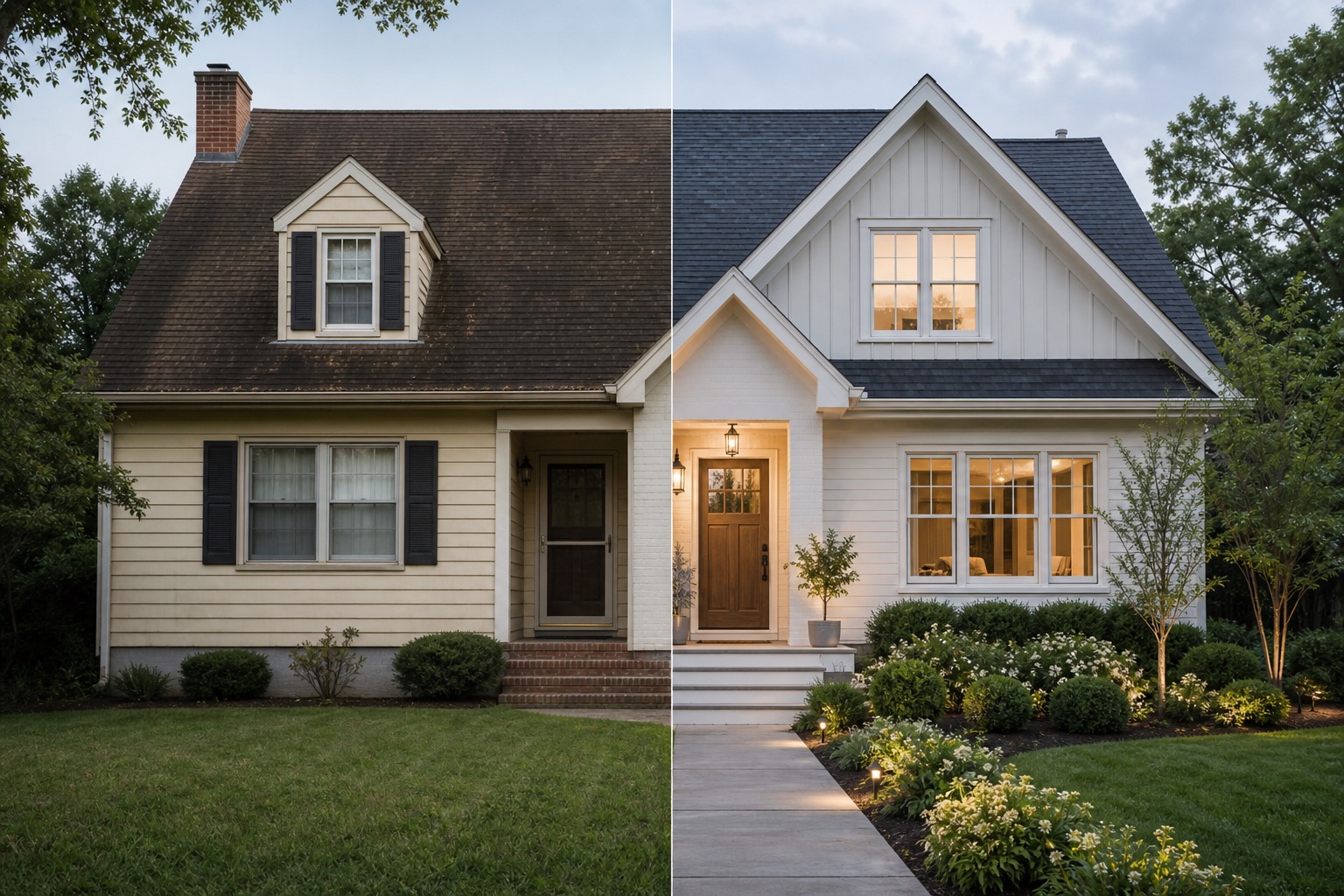
RedesAIgn works well for this problem because it supports photo-based editing, prompts, remixing, reference images, saved prompts, and history across specialized editors. For this use case, choose the Exterior Editor, upload a clean photo of the house, and write a prompt tied to a real quote category. Keep the first run practical, then remix the strongest output.
A useful first prompt might be: “Create a quote-ready curb appeal concept for this house. Keep the roofline, window locations, driveway, and porch footprint. Update siding color, trim, garage door, front door, exterior lighting, walkway edge, and simple low-maintenance landscaping. Make the result realistic for a homeowner requesting exterior renovation quotes.”
After the first set, save the best prompt and record what changed. If the AI altered something that should remain, add that constraint in the next run. If the house looks too expensive for the project, ask for a simpler cosmetic refresh. If the style is right but the palette is wrong, remix for color only. This is where history and saved prompts are helpful: you can refine a direction instead of restarting from a vague idea each time.
When you are ready to compare your own house, try RedesAIgn free with 5 free AI generations and no credit card required. Use the results to choose a direction before requesting exterior quotes.
Mistakes that make AI exterior outputs hard to use
The first mistake is uploading a poor source photo. A dark, crooked, cropped, or cluttered image makes the generator guess. Use a daylight front or three-quarter view that shows the facade, roofline, windows, doors, garage, walkway, driveway edge, and landscaping context.
The second mistake is asking for too much change in one run. If you need a painter, do not request a full architectural remodel. If you need a landscaping quote, do not let the AI redesign the roof and windows. Match the prompt to the next real decision.
FAQ: AI house exterior design generator
Can an AI house exterior design generator replace a contractor?
No. It can help you compare visual directions and prepare a clearer renovation brief, but contractors and design professionals still confirm feasibility, materials, scope, code, cost, and installation.
What photo should I upload for the best exterior result?
Use a sharp daylight photo that shows the full front or three-quarter view of the house. Include the roofline, windows, doors, garage, porch, trim, siding, steps, walkway, driveway edge, and landscaping context.
How many AI exterior versions should I create?
Start with three: a low-cost cosmetic refresh, a realistic renovation version, and a more ambitious concept. Then refine the version that best matches your budget and quote needs.
How do I know which AI exterior design is worth quoting?
Use the five-part evaluator’s framework: realism, quoteability, curb appeal, resale fit, and constraint fit. The best image is the one a contractor can understand and a buyer or homeowner can believe.
Can flippers use AI exterior concepts commercially?
RedesAIgn states that commercial use is allowed. Still, concept images should be presented honestly as design concepts, not as completed renovation work.
Before you price paint, siding, garage doors, entry updates, or landscaping, sign up on RedesAIgn and compare your best ideas visually. You get 5 free AI credits with no credit card required.
Try these prompts in redesAIgn
Refresh this house exterior with modern paint, black trim, and updated front door lighting.
Improve curb appeal with new siding color, shutters, and a clearer entry path.
Keep the roofline, but modernize windows, porch posts, and exterior finishes.
Related guides
- AI Exterior Design App for Homeowners and Remodelers
Use RedesAIgn as an exterior design app to preview paint, trim, roof, and curb appeal ideas from real house photos before you renovate.
- AI Exterior Before and After: Generate Home Makeover Concepts
Create AI exterior before and after previews from real home photos to compare curb appeal concepts, renovation scope, materials, and client options.
- AI Black Windows Exterior Ideas: See the Look on Your House
Use AI black windows exterior previews to see black frames, trim contrast, siding, roof color, and curb appeal on a real home photo before replacement.
- AI Exterior Remodel Visualizer for Siding, Paint, Doors, and Windows
Use an AI exterior remodel visualizer to compare siding, paint, doors, windows, trim, garage updates, and curb appeal ideas on a real house photo.
- AI House Color Visualizer: Test Exterior Color Palettes From a Photo
Use an AI house color visualizer to compare exterior paint palettes, trim contrast, undertones, and curb appeal from a real home photo before painting.