AI Minimalist Room Design: Create Clean Modern Interiors From a Photo
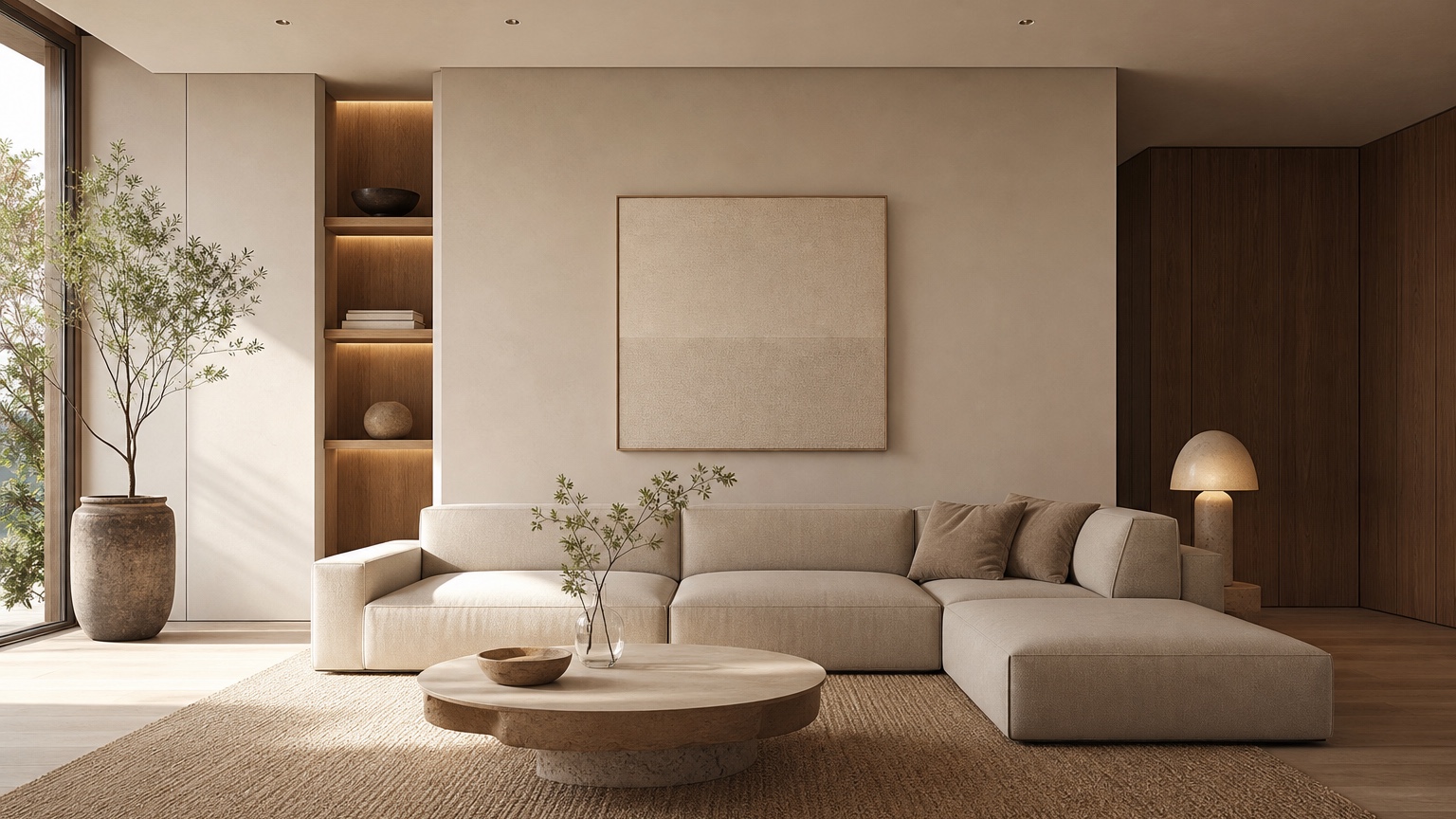
AI minimalist room design is not a command to turn every home into an empty white box. The strongest minimalist rooms are edited, not erased. They keep what supports daily life, remove what competes for attention, and replace visual clutter with better proportion, calmer storage, stronger materials, and enough negative space for the room to feel deliberate. A photo-based workflow is useful because it lets you see what should disappear, what should stay, and what needs a better version before you donate, paint, reorder furniture, or buy storage.
For homeowners and renters, minimalism is attractive because it promises speed: upload a photo, ask for clean modern interiors, and compare a calmer direction in minutes. The danger is that a vague prompt can produce a cold hotel room, a beige showroom, or a space with no signs of real use. A better prompt defines the discipline: reduce duplicates, simplify surfaces, hide practical items, preserve warmth, respect existing architecture, and keep the room livable.
RedesAIgn can help with that controlled edit through 10 AI editors, prompts, remix, reference images, saved prompts, and history. You can begin with 5 free AI credits and no credit card. If you want to compare more material palettes or storage options, one-time credit packs are available. Generated images can support commercial design, staging, and client presentation work when you still verify measurements, products, installation, and real-world constraints separately.
Begin with subtraction, not a shopping list
The first minimalist pass should ask what to remove. Many rooms feel busy because too many small decisions are visible at once: extra side tables, several baskets, cords, mixed frames, small rugs, open shelves packed with unrelated objects, pillows from different palettes, and furniture that almost matches but not quite. Buying a new sofa may not solve that. Removing three unnecessary pieces may do more.
Take a straight, wide photo of the room in its normal state. Do not over-clean before the first generation. The everyday mess is information. It shows where storage fails, which surfaces attract clutter, and what objects need a home. Then prompt the AI to edit before replacing: “Use this room photo to create a realistic minimalist room design. Preserve the windows, floors, doors, ceiling, and major furniture that can remain. Remove visual clutter, reduce small accessories, simplify surfaces, improve storage, keep warm materials, and create calm negative space. Do not make the room sterile or empty.”
After the first result, separate the changes into three groups: remove, replace, and conceal. Remove might include duplicate lamps, undersized art, excess pillows, tangled decor, or a rug that breaks the room into pieces. Replace might include a bulky media stand, dated curtains, a busy coffee table, or mismatched storage. Conceal might include cords, toys, documents, pet supplies, remotes, shoes, or exercise equipment. Minimalism becomes realistic when every ordinary object has a destination.
If you are starting from a broader redesign, compare this with AI room design generator. For decisions based on an existing room photo, AI interior design from photo gives a wider workflow before you narrow into a minimalist edit.
Protect negative space like it is furniture
Negative space is not leftover emptiness. It is the clear area that lets the important pieces read. A blank wall around one large artwork can look more confident than a gallery wall squeezed around a television. A coffee table with one tray and one sculptural object can feel calmer than a surface filled with candles, books, remotes, and plants. A clear walkway beside a bed can make a small bedroom feel more expensive than another storage unit would.
When prompting, name the negative space you want to protect. In a living room, ask for open floor around the main seating group, uncluttered wall area around art, and a media wall with concealed storage. In a bedroom, ask for clear bedside surfaces, a calm bed wall, and no unnecessary chair if it only becomes laundry storage. In a dining area, ask for a quiet table setting, simple lighting, and breathing room around the chairs.
A useful prompt variation is: “Create a warm minimalist version of this room with intentional negative space. Keep one main focal point, reduce visible objects, use fewer larger pieces instead of many small ones, and leave clear walking paths. Preserve the room’s architecture and avoid adding extra decor to fill blank areas.”
Review the image by squinting. If the room still looks broken into many small shapes, ask for larger calmer planes: one bigger rug instead of several small mats, closed cabinet doors instead of open cubbies, one large artwork instead of many tiny frames, curtains in a single fabric, and lighting with repeated finishes. Minimalist design often succeeds because the eye has fewer interruptions.
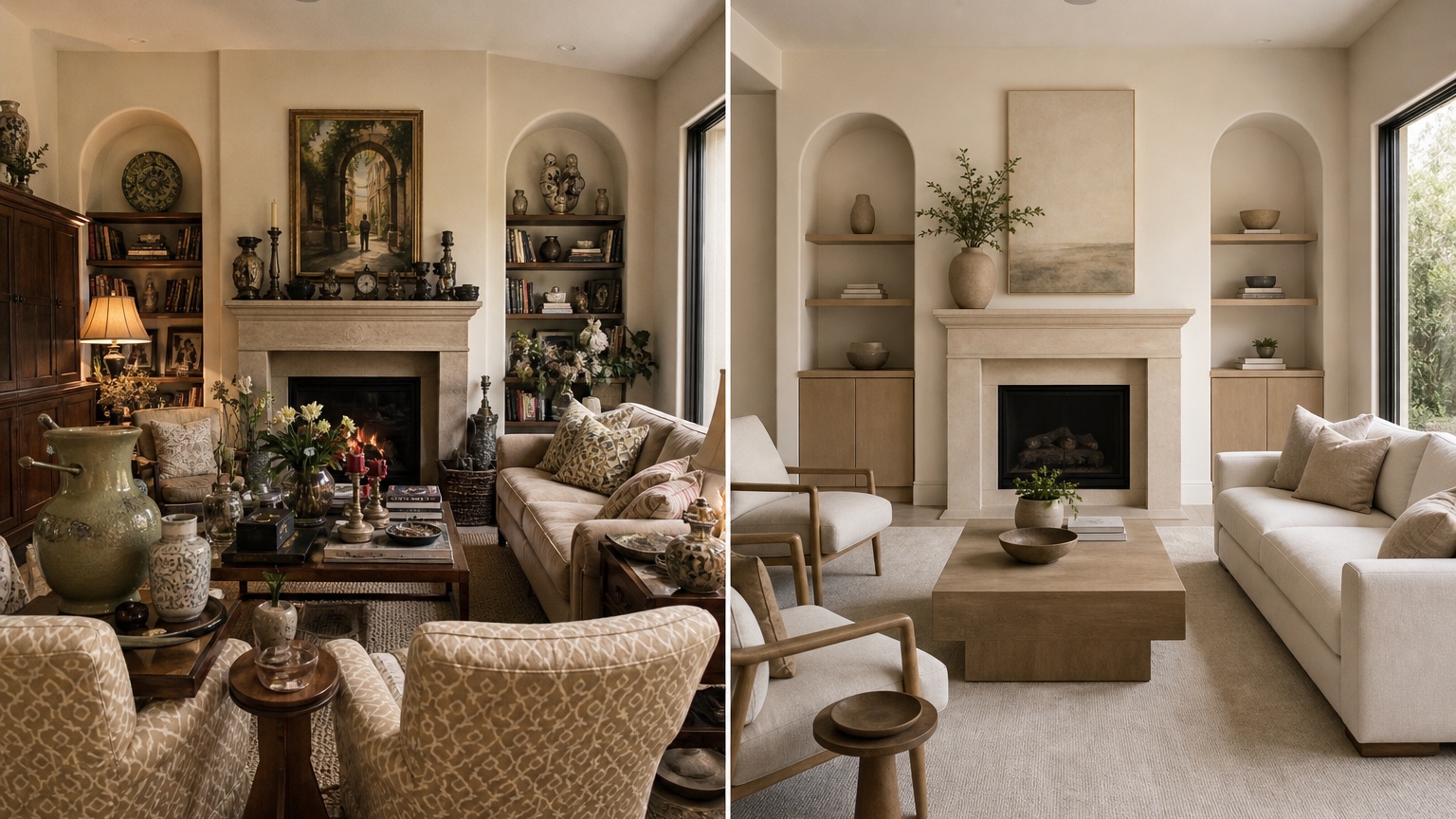
Use texture so clean does not become cold
Minimalist rooms need material depth. Without texture, a clean space can feel flat or temporary. Warm woods, linen curtains, wool rugs, plaster-like walls, ceramic lamps, leather, boucle, stone, and matte metal can carry interest without adding clutter. The goal is fewer objects with better tactile quality.
Ask the AI to show texture in large surfaces instead of many accessories. A warm oak cabinet may reduce the need for decorative objects on top. A thick woven rug can soften a simple sofa. Linen curtains can add movement without a pattern. A travertine or ceramic side table can act as a quiet sculptural element. If the room is a rental and you cannot change floors or walls, material upgrades through rugs, curtains, lamps, bedding, and freestanding furniture can still shift the mood.
Use style references carefully. A reference image can communicate “warm minimalist,” “Japandi-inspired,” “soft modern,” or “gallery-like but livable,” but it should not override the real room. In RedesAIgn, reference images are helpful when you want the palette, texture, and restraint from an inspiration photo while preserving your windows, floor, layout, and ceiling height.
Avoid asking only for “minimalist white room.” That often removes the human warmth. Try: “Create a warm minimalist room with off-white walls, natural wood, linen, one low-contrast rug, hidden storage, soft indirect lighting, and no clutter. Keep the existing room proportions and avoid a cold showroom look.” This prompt gives the AI a richer design target than a blank style label.
Replace visual clutter with hidden storage
Minimalist design fails when it removes visible clutter without adding a storage plan. The room looks calm in the image, then life returns: mail lands on the console, chargers sprawl across the floor, children’s items spread across the sofa, shoes collect by the door, and the coffee table becomes an office. Hidden storage is what lets the style survive Tuesday.
Look for the clutter source in the photo. Entry clutter needs a shoe cabinet, hooks, drawer, tray, or bench with storage. Media clutter needs cord management and closed cabinets. Bedroom clutter needs nightstand drawers, under-bed storage, wardrobe organization, or fewer open surfaces. Kitchen-adjacent living rooms may need a sideboard for overflow. Home offices need document storage, not just a prettier desk.
Prompt for storage by category: “Create a minimalist living room that hides remotes, cables, books, blankets, games, and pet items. Use closed storage, one simple open display area, and furniture scaled to the room. Keep surfaces mostly clear and avoid open shelving packed with decor.” That is more useful than asking for “less clutter” because it tells the image where the clutter should go.
If you need to compare specific pieces, AI furniture visualizer can help test a closed media console, storage coffee table, narrow cabinet, or bed with drawers before you redesign the whole room around it.
Decide what must stay personal
A minimalist room should not erase identity. The edit should leave room for the objects that matter: one piece of art, a small group of books, a handmade ceramic bowl, a plant, a family photo, a textile, or a record collection. The difference is that meaningful items are given space instead of buried among filler.
Before generating, choose three to five items that should remain visible. Name them in the prompt. For example: “Keep the vintage wood chair, the large landscape artwork, and two plants. Remove or reduce other small accessories.” This helps the AI preserve character while simplifying the scene. If you do not name what matters, the model may replace everything with generic decor.
Minimalism also needs lifestyle honesty. If you cook daily, keep useful kitchen tools within reach but reduce duplicates. If you read, keep books in an organized shelf or closed cabinet with one display section. If you have children, design lower closed storage and soft materials instead of pretending toys do not exist. If you work from home, hide cables and papers but keep the desk functional.
For a bedroom, this balance is especially important. You can borrow room-specific ideas from AI bedroom design generator: quiet bedding, clear nightstands, concealed storage, fewer colors, and soft lighting. The aim is not to remove comfort; it is to remove the things that make rest feel visually noisy.
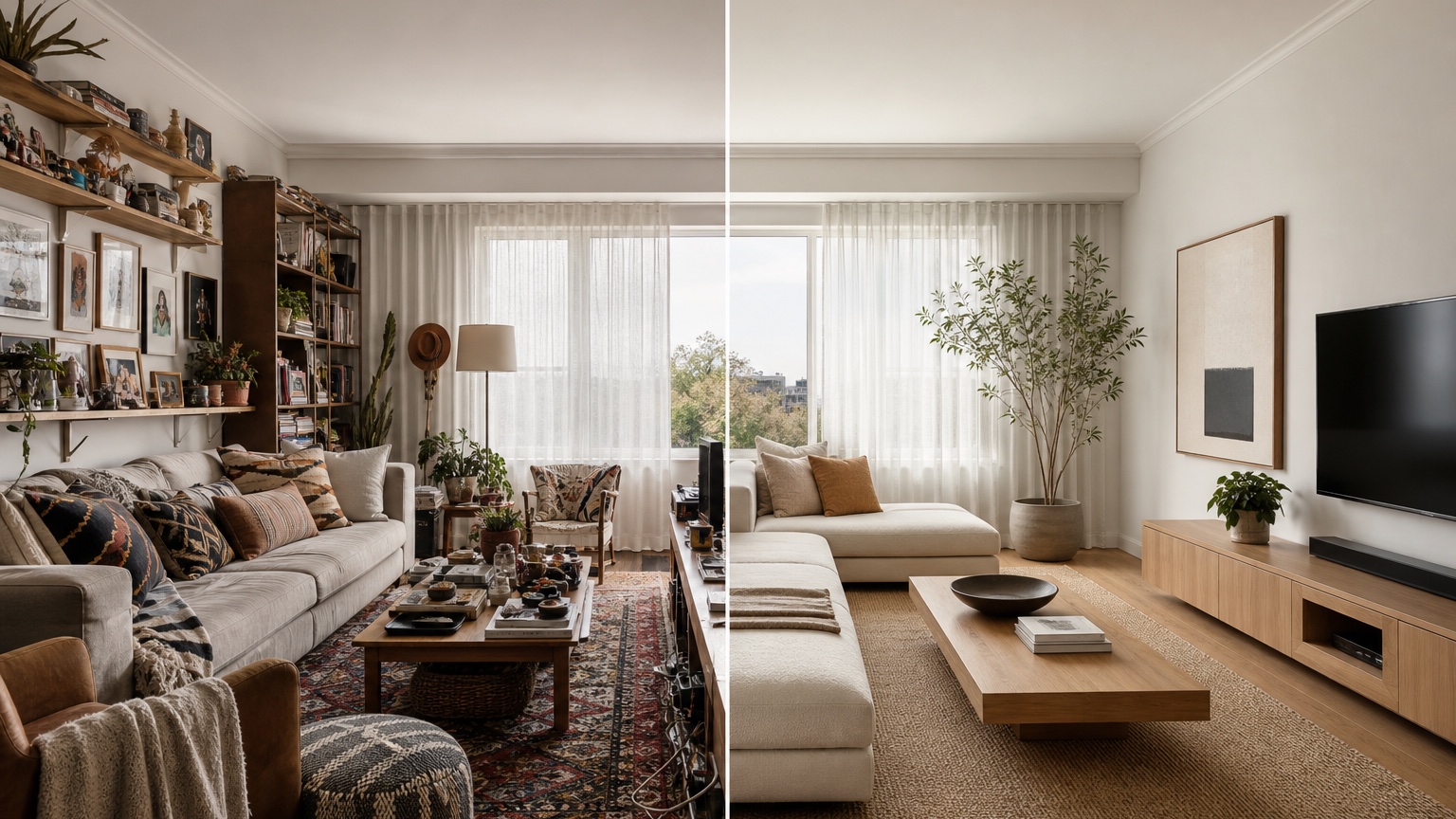
Remix one variable at a time
Minimalist design is sensitive to small changes. A rug that is too patterned can break the calm. A chair with too many lines can make the room busy. A black fixture can be perfect in one room and too harsh in another. Use remix to isolate each decision instead of reinventing the entire room every time.
Start with layout and clutter reduction. Save the prompt that best preserves the room and creates useful storage. Then run controlled variations: warmer wood versus painted storage; linen curtains versus roman shades; cream rug versus muted taupe rug; one large artwork versus no artwork; low sofa versus slipcovered sofa. Keep the room angle, layout, and main pieces stable so you can judge the variable honestly.
Saved prompts and history matter here. If a later generation introduces a fake window, changes the floor, or removes a door, return to the earlier saved version and revise the wording. Minimalist concepts can drift toward fantasy because the style looks best when everything is perfectly built in. Remind the tool to keep rental limits, existing flooring, current windows, and freestanding furniture when those constraints apply.
When comparing versions, ask three questions. Does the room look calmer from the doorway? Does every visible object have a reason to be there? Does the design still support normal life after the photo is taken? If the answer to any question is no, the room may be styled as minimal but not designed as minimal.
Turn the image into an editing checklist
The final image should become a practical checklist, not just inspiration. Walk through the room with the generated concept open and tag each change: remove now, store elsewhere, donate, replace later, buy, measure, or ignore. Many improvements cost nothing: clearing a surface, removing a duplicate table, grouping books by size, lowering visual clutter on shelves, hiding cords, or moving art so one wall has breathing room.
Next, plan purchases in order. Storage comes before decor. Large textiles come before small accessories. Lighting comes before styling. If the room needs a closed media unit, a correctly sized rug, and curtains, do not spend the budget first on sculptural objects. Minimalism looks expensive when the big planes are right; it looks unfinished when only the decorative pieces change.
For renters, focus on reversible warmth: rugs, lamps, curtains, freestanding cabinets, bedding, art, plug-in sconces, and removable hooks where allowed. For homeowners, you may also test built-ins, wall finishes, or fixture changes, but verify costs and installation before committing. A generated wall of seamless cabinets may be a useful direction even if the final answer is a simpler freestanding sideboard.
Save the best prompt in RedesAIgn so you can return to the discipline later. Minimalist rooms need maintenance, and the saved prompt can become a house rule: fewer visible objects, stronger storage, warmer texture, clear paths, and personal items displayed with space around them.
FAQ: AI minimalist room design
What is AI minimalist room design?
AI minimalist room design uses a real room photo and a prompt to create cleaner, calmer interior concepts. It helps show what to remove, replace, conceal, or simplify while preserving useful furniture, warmth, and daily function.
Will AI minimalist design make my room look empty?
It can if the prompt is vague. Ask for warm minimalism, hidden storage, material texture, personal items that should stay, and practical furniture. The goal is an edited room, not an empty one.
What should I remove first for a minimalist room?
Start with duplicates, undersized decor, cluttered surfaces, visible cords, mismatched storage, extra small furniture, and objects that do not support the room’s use. Then decide what needs better hidden storage.
Can renters create a minimalist room without renovating?
Yes. Renters can use rugs, curtains, lamps, bedding, art, freestanding storage, cord management, removable hooks, and furniture editing. The prompt should preserve permanent features and request lease-safe changes.
Is RedesAIgn free to try for minimalist room ideas?
Yes. RedesAIgn includes 5 free AI credits with no credit card required. One-time credit packs are available if you want more remixes, reference-image tests, or storage variations.
Try these prompts in redesAIgn
Redesign this room with warm neutrals, layered lighting, and a functional seating layout.
Keep the architecture, but update furniture, rug, and wall color for a calm modern look.
Show a before-to-after concept with better traffic flow and fewer bulky pieces.
Related guides
- AI Bathroom Remodel Visualizer for Tile, Vanity, and Lighting Ideas
Visualize bathroom remodel ideas from a real photo with RedesAIgn. Compare finishes, fixtures, and layout limits before ordering materials.
- AI Bedroom Design Generator for Layout and Decor Ideas
Generate bedroom design concepts from your room photo with RedesAIgn. Compare layout and furniture directions before you buy or remodel.
- AI Dining Room Design Ideas From a Photo
Use AI dining room design to plan table size, chair clearance, chandelier alignment, rugs, storage, and lighting from a real room photo.
- AI Furniture Visualizer: Preview Furniture in Your Room Photo
Use an AI furniture visualizer to preview scale, placement, color, material, and fit in your room photo before buying or presenting furniture.
- AI Interior Design From Photo: Redesign Any Room Visually
Use AI interior design from photo workflows to preview room styles, furniture layouts, finishes, and decor ideas before buying anything.