AI Brick House Makeover Ideas From a Photo
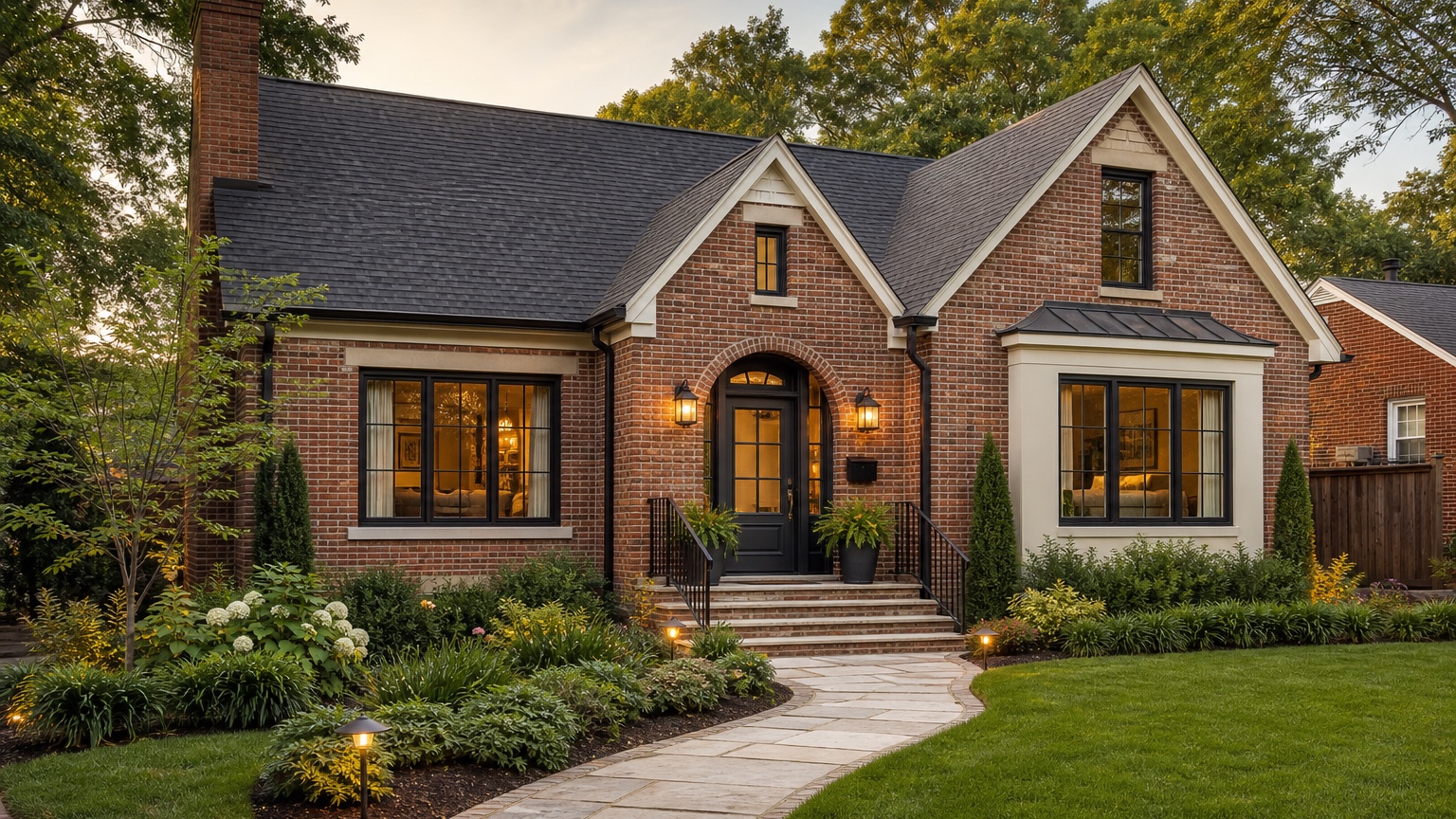
An AI brick house makeover is most useful when you are trying to modernize a real brick exterior without guessing from paint chips, Pinterest boards, or another house that has different proportions. Brick is expensive to undo once it is painted, stained, limewashed, covered, or paired with the wrong trim color. A visual preview cannot replace samples and contractor judgment, but it can help homeowners and flippers narrow the decision before money is spent.
The practical question is not whether AI can make a brick house look trendy. The better question is: can it show a curb-appeal direction that still fits this house, this roofline, this window layout, this entry, and this budget? A good preview should keep the original home recognizable while testing the parts that actually change the first impression: brick color, trim contrast, front door, shutters, porch details, garage door, lighting, landscaping, and any siding or accent materials.
RedesAIgn is built for that photo-based planning step. Upload a house photo, use the Exterior Editor, write a clear prompt, and compare controlled versions before you request quotes or start ordering materials. If you want to try ideas on your own brick exterior, start free with RedesAIgn and use 5 free AI credits with no credit card required.
Start with the real brick decision
Most brick makeovers begin with a broad wish: make it modern, brighten it up, improve resale appeal, or make it less dated. Those are valid goals, but they are too vague for a useful AI result. Before generating images, define the decision you need the preview to answer.
For a homeowner, the decision might be whether to keep natural brick and update everything around it, use a light limewash, paint the brick a solid color, add black windows visually, replace the front door, or remove shutters. For a flipper, the decision is often sharper: which exterior package will photograph well, feel current, and avoid over-improving the property for the neighborhood?
Brick also carries more emotional weight than many exterior materials. Some buyers love original red brick. Others see it as dated, heavy, or too traditional. Once brick is painted, returning it to the original look can be difficult and costly. Treat the preview as a decision tool, not a decoration toy.
A helpful starting prompt is simple: “Create a realistic curb-appeal makeover for this brick house while preserving the roofline, window locations, main facade shape, driveway, and entry layout. Test a modern but believable exterior palette with updated trim, front door, lighting, landscaping, and optional brick finish.”
Use the right photo before you test brick ideas
The input photo controls how believable the result can be. Use a clear daylight image that shows the front elevation or a three-quarter view of the brick facade. The brick surface, roof, trim, windows, front door, porch, garage, walkway, and landscaping should all be visible. If the house has important side brick, a side-entry garage, or a wraparound porch, start with the main street view first and use extra angles after you choose a direction.
Avoid photos taken at night, in heavy shade, after rain, or with strong color casts from sunset. Brick has texture and color variation, so poor lighting can make AI results muddy or unrealistic. Move cars, trash bins, seasonal decor, and temporary objects if possible. Keep the camera level instead of shooting from a low dramatic angle. A realistic makeover should preserve proportions, and a distorted source photo makes that harder.
For flippers, take the same kind of photo you would use in a listing: clean, straight, bright, and honest. The goal is to understand which updates create the strongest visible improvement from the actual street-facing view.
Decide which surfaces should change first
Brick houses can be modernized in many ways, but not every surface should change at once. Start by separating fixed elements, semi-fixed elements, and easy updates.
Fixed elements include the roofline, massing, window openings, foundation height, chimney, major porch structure, and garage placement. Unless you are planning a major remodel, these should stay recognizable in the AI preview. Semi-fixed elements include window color, shutters, trim, columns, railings, gutters, garage door, and entry door. These can change, but they affect cost and contractor scope. Easy updates include lighting, house numbers, planters, mulch, shrubs, walkway edges, and front door color.
When the brick itself is the question, generate separate versions for each brick strategy. One version should preserve the natural brick and modernize the surrounding details. Another can test limewash or a softened wash that lets some texture show through. A third can test painted brick in a specific color family. If you combine all of those into one prompt, you may get a beautiful image that does not answer which path is best.
Preserving natural brick is often the lowest-risk option if the brick is in good condition. It can look much more current with cleaner trim, a stronger door color, updated lighting, simplified landscaping, and better contrast around windows. Limewash or whitewash can soften high-contrast red or orange brick while keeping texture. Painted brick can create a dramatic transformation, but it raises maintenance, moisture, and reversibility questions that should be reviewed with a qualified pro.
Keep trim, openings, and roofline believable
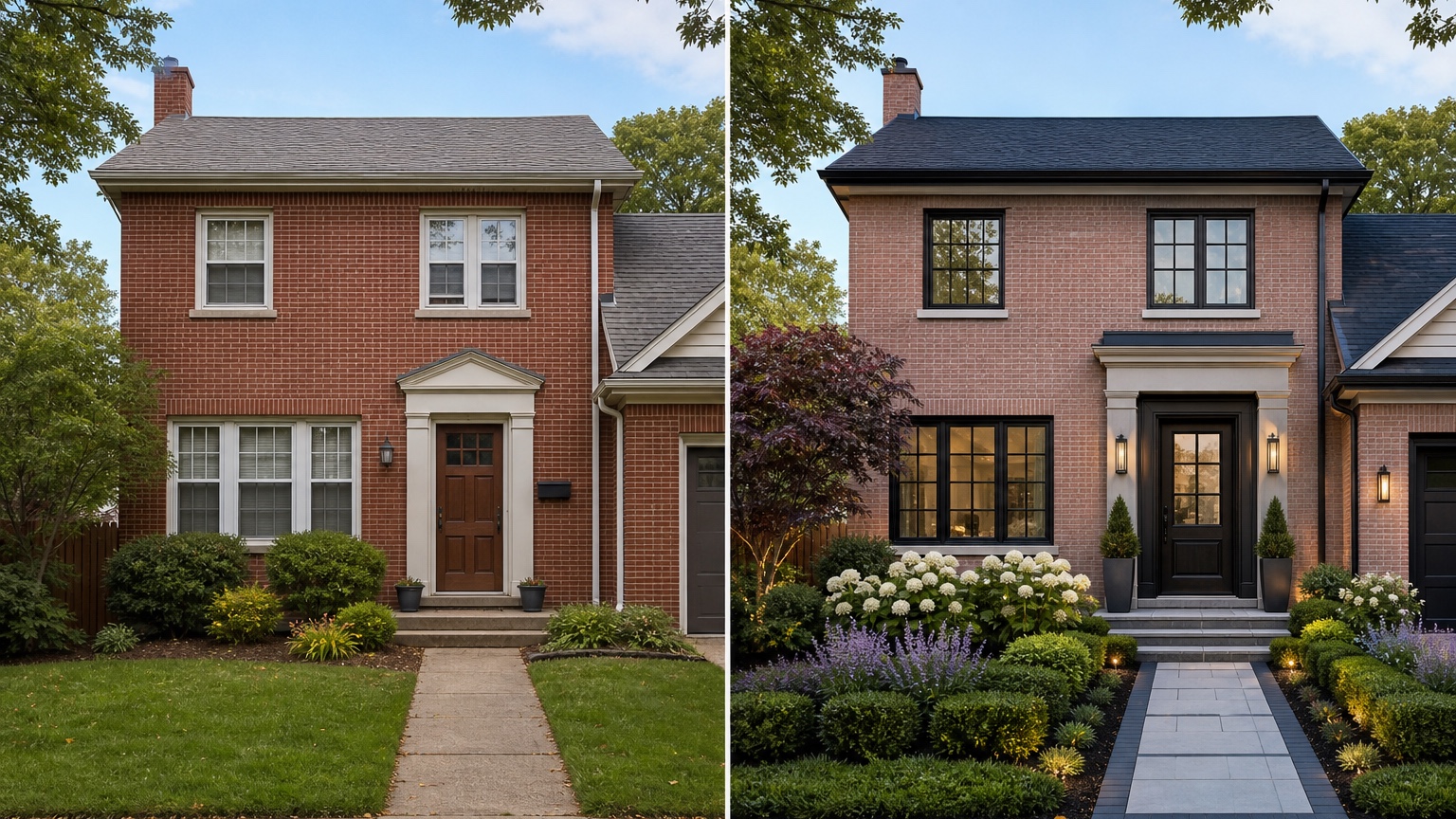
A brick makeover succeeds or fails in the details around the brick. Trim that is too bright can make older brick look harsher. Black windows can look sharp on the right home, but they can also overpower small windows or clash with a warm roof. Removing shutters can modernize the facade, but it may expose awkward window proportions. Adding wood accents can warm up the exterior, but the tone should repeat somewhere else, such as the door, porch ceiling, or landscape edging.
Use AI to test these relationships visually. Ask it to preserve window openings and door placement. If it changes the size of the windows, moves the entry, or invents a new roof pitch, treat that output as inspiration only. Real brick openings are not casual design elements; resizing them can involve masonry work, lintels, structure, interior finishes, and significant cost.
Roof color matters too. A cool white painted brick concept may look clean under a charcoal roof but feel disconnected under a brown, weathered, or warm red roof. A beige limewash may work beautifully with a tan roof but look flat with gray trim. Include roof constraints in the prompt if the roof is staying: “Keep the existing warm brown roof and create a brick makeover palette that works with it.”
Prompt safe, practical, and bold brick makeover versions
A single AI result can create false confidence. Instead, build a small comparison set. Start with a safe refresh, then a practical upgrade, then a bold concept.
A safe refresh prompt might be: “Modernize this brick house while keeping the original brick unpainted. Preserve the roofline, window openings, front door location, garage, walkway, and main landscaping beds. Update trim color, front door, lighting, house numbers, shutters if needed, and simple low-maintenance landscaping for better curb appeal.”
A practical upgrade can test a stronger material direction: “Create a realistic brick house makeover with a soft limewash finish, warm off-white trim, updated dark front door, simple black exterior lights, cleaned-up landscaping, and a cohesive garage door color. Preserve the existing roof, windows, brick texture, porch structure, and driveway.”
A bold concept can go further without pretending it is construction-ready: “Show an ambitious but believable painted brick makeover in a modern neutral palette with crisp trim, upgraded entry presence, refined landscaping, and tasteful exterior lighting. Keep the same house massing, roofline, window placement, and front walkway. Do not add unrealistic second-story changes or move the front door.”
These categories help homeowners and flippers compare risk: what can improve quickly, what could become a quote package, and what deserves deeper professional review.
Review the output before trusting the image
AI brick makeover images can look convincing while still being wrong. First, check material realism. Does the brick still have texture if the prompt requested limewash? Does painted brick look like paint over masonry rather than flat plastic siding? Are mortar lines consistent? Do edges around trim, windows, and the garage door look clean?
Second, check scale and continuity. The front door should fit the opening. Windows should stay aligned. Shutters, if used, should be sized plausibly. Gutters, downspouts, columns, railings, steps, and roof edges should connect naturally. If lighting or landscaping appears to float, revise the prompt or generate another version.
Third, compare the image against constraints. HOA rules, historic district requirements, masonry condition, moisture behavior, product specifications, roof age, weather exposure, and quote accuracy still matter. AI can show what a painted or limewashed brick house might look like; it cannot inspect the brick, test adhesion, verify drainage, or tell you whether a coating is appropriate for your climate.
For flippers, also evaluate resale logic. Will the makeover appeal to the likely buyer pool? Does the cost fit the after-repair value? Does the exterior photo improve without creating a maintenance concern buyers may question?
Avoid generic brick house makeover mistakes
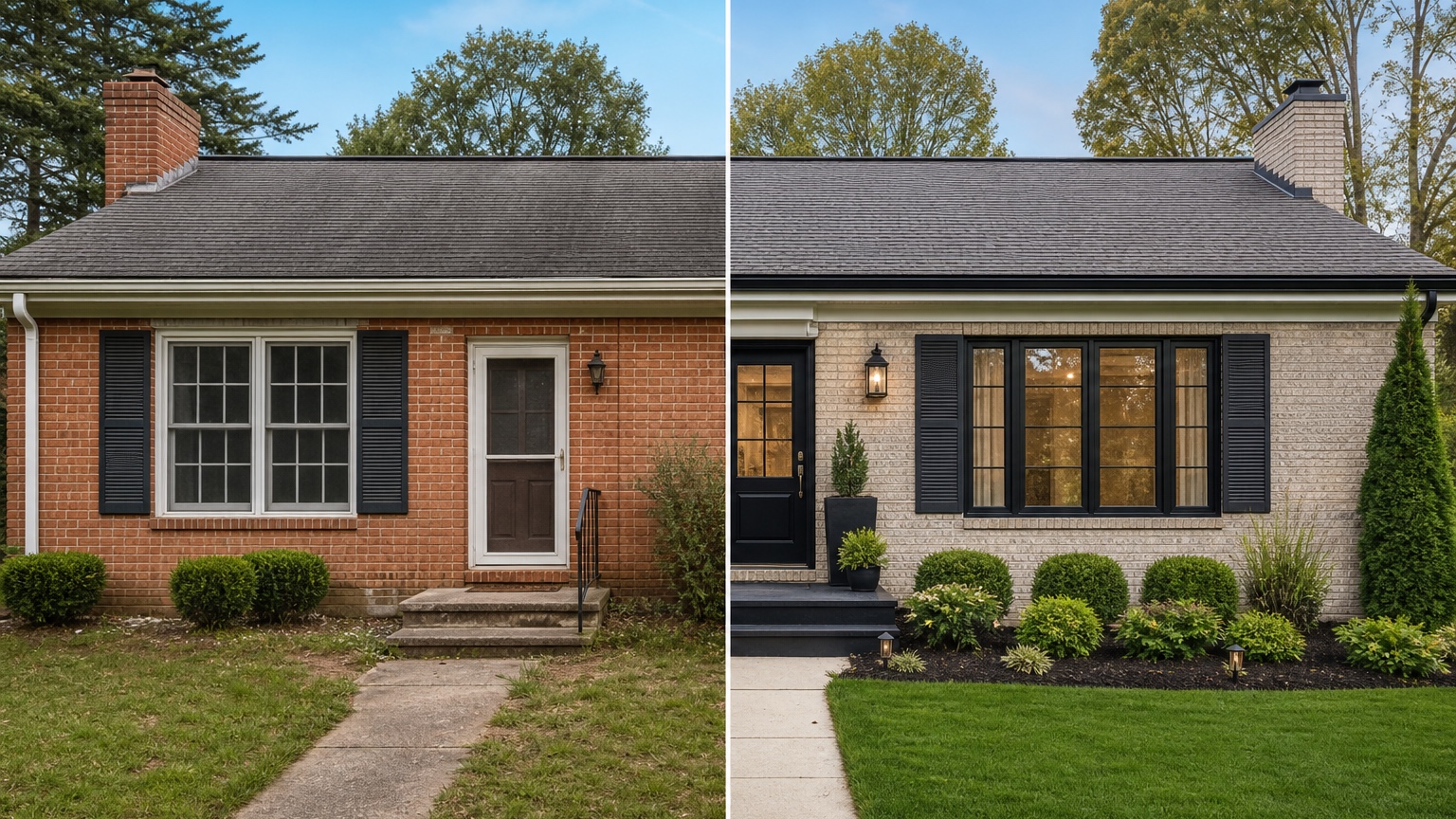
The first mistake is asking for a total exterior transformation when the real decision is the brick. If your prompt asks for new roof, new windows, new siding, new driveway, new porch, new landscaping, and painted brick all at once, the result may be dramatic but useless for budgeting. Change fewer variables so you can see what matters.
The second mistake is ignoring the existing brick color. Red brick, orange brick, brown brick, tan brick, and variegated brick all respond differently to trim and door colors. A palette that looks elegant on muted brown brick may fight with bright orange brick. If you want to keep the brick natural, tell the AI that clearly: “Preserve the existing brick color and texture.”
The third mistake is treating the image as proof that a product will work. Real samples are still necessary. Test paint, stain, limewash, mortar repair, trim color, and door color on site. View samples in morning, afternoon, and cloudy light. Use the AI preview to narrow the candidates, then use physical samples to confirm.
If you are comparing a brick-specific concept with a broader exterior plan, it can help to review related workflows such as AI exterior design from photo, AI exterior paint visualizer, and AI curb appeal generator. The brick makeover should fit the larger exterior, not compete with it.
How to use RedesAIgn for an AI brick house makeover
In RedesAIgn, open the Exterior Editor and upload the clearest street-facing photo of the brick house. Write a prompt that names the makeover goal, the surfaces you want to test, and the elements that must stay unchanged. Generate a few versions, then refine one variable at a time: natural brick with new trim, limewash with the same trim, painted brick with a different door, or landscaping-only improvements around the existing brick.
Use reference images only when they clarify a specific material, color, or mood. A reference for a limewashed brick finish or a modern door style can help. A folder of unrelated dream homes can confuse the result because those homes may have different rooflines, window proportions, and brick patterns. Save prompts that work so you can repeat the same direction on another angle or revisit it later.
RedesAIgn features such as prompts, remix images, saved prompts, and history are useful because brick makeovers are rarely decided in one image. You can keep a promising version, adjust the prompt, and compare revisions without losing the planning thread.
When you have a strong concept, turn it into a practical brief. Save the before/after, note what changed, list the likely materials, and write down what a contractor, painter, mason, or realtor needs to confirm. For homeowners, that may mean samples, product compatibility, moisture concerns, HOA approval, and quotes. For flippers, it may mean a scope list, budget range, resale fit, and listing-photo impact.
FAQ: AI brick house makeover
Can AI show what my brick house would look like painted?
AI can create a visual concept of painted brick from your home photo, including trim, door, lighting, and landscaping changes. Use it to compare directions, then confirm paint products, masonry condition, moisture risks, samples, and prep requirements with qualified professionals.
Should I paint, limewash, or keep my brick natural?
Use AI to compare all three options before deciding. Keeping brick natural is often lower risk if the brick is attractive and in good condition. Limewash can soften the look while preserving texture. Painted brick can be dramatic, but it is less reversible and needs careful product and maintenance review.
What should stay the same in a realistic brick makeover preview?
For most planning previews, preserve the roofline, window openings, door location, driveway, walkway, garage placement, chimney, and main house shape. Change the brick finish, trim, doors, shutters, lighting, and landscaping only as needed to answer the design question.
Can a flipper use an AI brick makeover for resale planning?
Yes, as a concept and budgeting aid. A flipper can compare safe, practical, and bold exterior packages before committing. The image should not replace bids, inspections, material samples, local buyer research, or professional review.
How many brick makeover versions should I create?
Start with three to five: natural brick refresh, limewash, painted brick, trim-and-door update, and landscaping-focused curb appeal. Compare them by realism, cost, maintenance, buyer appeal, and fit with the roof and neighborhood.
Before you paint, limewash, replace trim, or quote a brick exterior package, try RedesAIgn for free. Use your 5 free AI credits with no credit card required to compare brick makeover ideas from your own photo.
Try these prompts in redesAIgn
Refresh this house exterior with modern paint, black trim, and updated front door lighting.
Improve curb appeal with new siding color, shutters, and a clearer entry path.
Keep the roofline, but modernize windows, porch posts, and exterior finishes.
Related guides
- AI Exterior Design App for Homeowners and Remodelers
Use RedesAIgn as an exterior design app to preview paint, trim, roof, and curb appeal ideas from real house photos before you renovate.
- AI Exterior Before and After: Generate Home Makeover Concepts
Create AI exterior before and after previews from real home photos to compare curb appeal concepts, renovation scope, materials, and client options.
- AI Black Windows Exterior Ideas: See the Look on Your House
Use AI black windows exterior previews to see black frames, trim contrast, siding, roof color, and curb appeal on a real home photo before replacement.
- AI Exterior Remodel Visualizer for Siding, Paint, Doors, and Windows
Use an AI exterior remodel visualizer to compare siding, paint, doors, windows, trim, garage updates, and curb appeal ideas on a real house photo.
- AI House Color Visualizer: Test Exterior Color Palettes From a Photo
Use an AI house color visualizer to compare exterior paint palettes, trim contrast, undertones, and curb appeal from a real home photo before painting.