AI Apartment Interior Design Ideas for Small Spaces
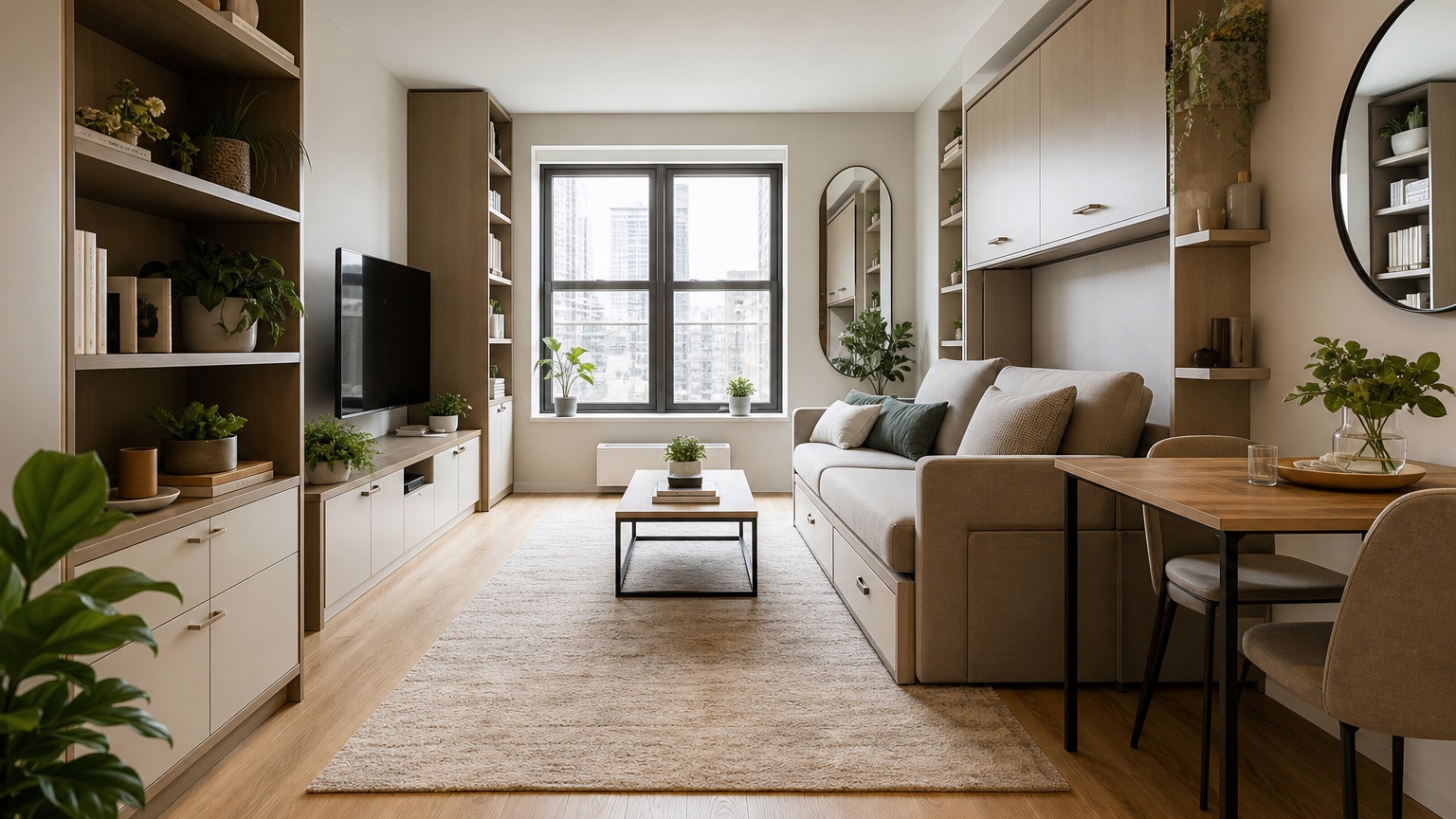
AI apartment interior design works best when you treat a small home like a tradeoff lab. Every square foot is already working hard, so the question is rarely “what style looks nice?” The better question is “what can this apartment gain without losing light, walking space, storage, lease compliance, or the feeling of breathing room?” A studio or one-bedroom can become more comfortable quickly when you test the sofa wall, bed zone, dining nook, vertical storage, color balance, curtains, lighting, and clutter control from a real photo before buying anything.
Renters and apartment owners also face different limits than someone renovating a house. You may not be able to move walls, replace floors, hardwire fixtures, drill heavily into tile, paint every room, or install permanent built-ins. That does not make design impossible. It means the prompt needs to name the limits clearly, then ask the AI to improve what can change: furniture scale, removable storage, visual zones, rugs, lighting layers, peel-and-stick finishes, freestanding pieces, and layout.
RedesAIgn supports that early planning process with 10 AI editors, prompts, remix, reference images, saved prompts, and history. You can start with 5 free AI credits with no credit card, then buy one-time credit packs if you want more versions. Designers, stagers, and landlords can use outputs commercially, while still checking measurements, lease rules, installation safety, and product specs before making decisions.
Run the first pass like a constraint test
Start by listing what cannot change. In an apartment, fixed features may include the floor, ceiling, kitchen cabinets, bathroom tile, window locations, baseboard heaters, radiators, sprinkler heads, intercoms, exposed pipes, closet doors, and lease restrictions. If your prompt ignores those items, the image may solve the room by inventing a different apartment. That can be pretty, but it will not help you choose a sofa or storage unit.
A useful first prompt is direct: “Use this apartment photo to create a realistic small-space interior design. Preserve the floors, windows, kitchen layout, doors, radiators, ceiling height, and all permanent features. Improve furniture scale, storage, lighting, rugs, curtains, wall decor, and visual zones. Keep the layout renter-friendly and do not add built-ins, new walls, or structural changes.”
Then make one version for comfort and one for capacity. Comfort may mean fewer pieces, better lighting, and calmer sightlines. Capacity may mean a sleeper sofa, drop-leaf table, entry storage, taller bookcases, under-bed drawers, or a desk that folds away. Comparing those two versions helps you see the cost of each choice. In small rooms, every addition has a shadow: a bigger sectional can erase a dining nook; a large desk can make the bed feel trapped; too much open shelving can turn storage into visual noise.
For a broader room-photo workflow, see AI interior design from photo. If the apartment is still unfurnished, the blank-room planning approach in AI empty room design is a useful companion before you commit to a layout.
Use sightlines as your hidden square footage
Small apartments feel larger when the eye can travel. That does not mean every wall must be white or every surface must be empty. It means the main views from the entry, sofa, bed, and kitchen should not stop immediately at a bulky object, messy shelf, or dark furniture block. AI apartment interior design is helpful because you can test how a room reads from the same camera angle with different heights, colors, and furniture depths.
Take the photo from the apartment’s most honest viewpoint: the front door, the kitchen threshold, the bedroom doorway, or the corner where guests first see the room. Include the floor line, window, main wall, and any zone transitions. If the apartment is a studio, take one image that shows the living area and sleeping area together. The goal is to judge whether the whole home feels connected, not only whether one vignette looks styled.
Prompt for low visual weight where you need openness. Sofas with legs, narrow arms, glass or slim metal tables, wall-mounted shelves, and lighter rugs can help the room feel less packed. Use taller elements at the edges, not in the middle of the view. A bookcase beside a doorway or on the far wall may add storage without blocking the room; the same bookcase floating between the bed and sofa may feel like a wall.
Divide a studio without building fake rooms
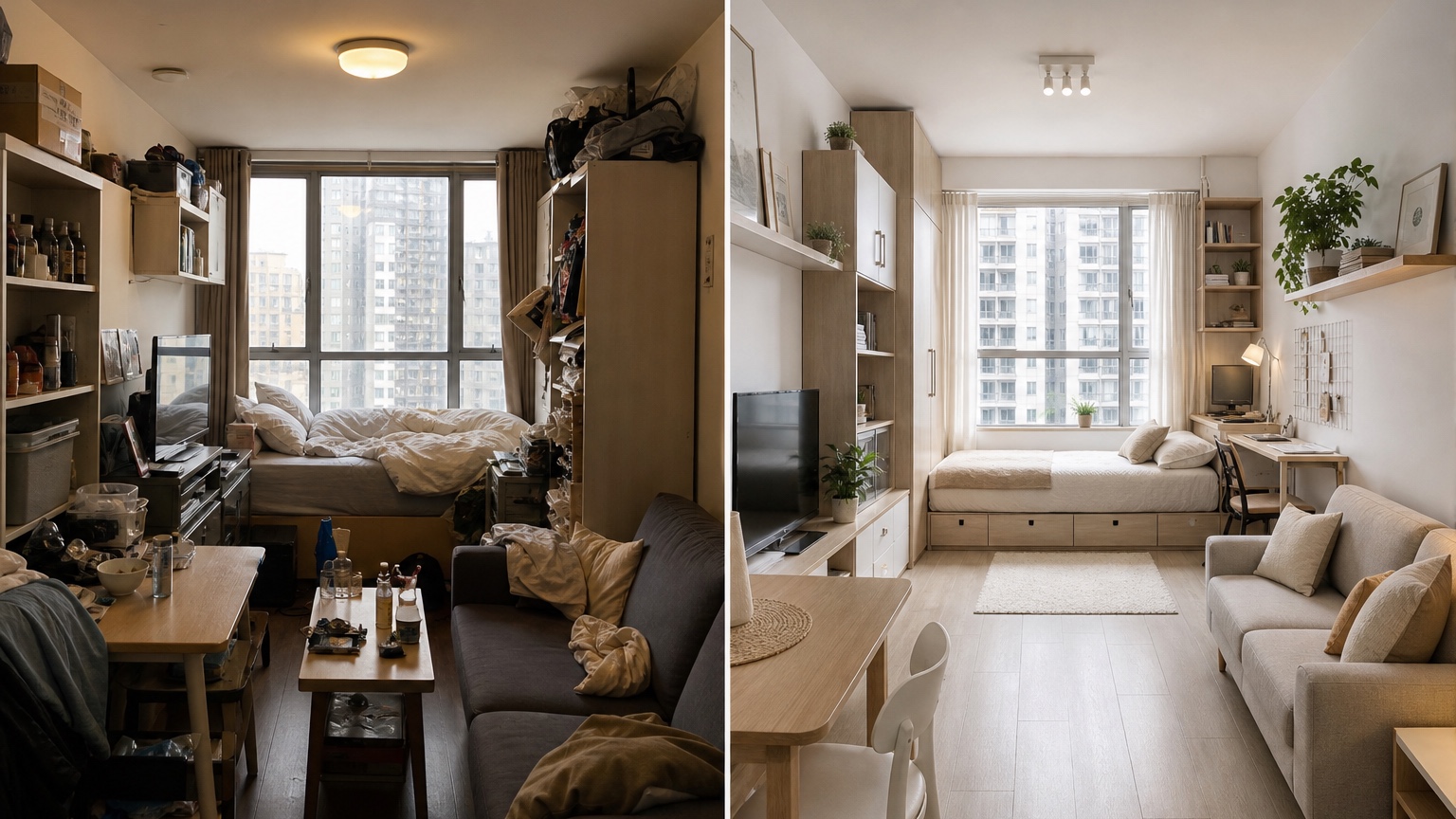
A studio needs zones, but heavy separation can backfire. A tall divider may hide the bed, yet it can also block light and make the living area feel like a corridor. Instead of asking for a full bedroom wall, test softer boundaries: a rug under the seating area, curtains around the bed, a low storage piece at the foot of the bed, a bookcase that stays open on both sides, a different lamp temperature, or art that gives each zone its own identity.
Use prompts that explain the behavior of each zone. For example: “Create a studio apartment layout with a sleeping area, small sofa zone, two-person dining or work surface, and entry storage. Keep daylight from the window moving across the room. Use rugs, lighting, curtains, and low storage to separate zones without closing the apartment in.”
In a one-bedroom, the challenge is often the opposite. The bedroom becomes the overflow zone for work, laundry, exercise gear, and storage. Ask for the bedroom to stay calm while still holding real life: under-bed bins, closed nightstands, wall hooks behind the door, a narrow dresser, and a small desk only if it does not crowd the bed. If the living room must include a work corner, borrow ideas from AI office design generator but scale the setup down for apartment circulation.
Make vertical storage look intentional
When floor area is limited, walls become storage territory. The danger is that vertical storage can either look efficient or oppressive. AI previews help you test the difference before mounting shelves or buying tall cabinets. Ask for closed storage on the lower half, lighter display above, and breathing room around the tallest pieces. Do not let every wall become a storage wall.
In an entry, try a narrow shoe cabinet, wall hooks, a mirror, and a small tray shelf instead of a deep console. In the kitchen, use a rolling cart only if it does not block the oven, fridge, or walkway. In the living room, consider tall closed cabinets flanking a media unit, but keep the center visually open. In the bedroom, use under-bed storage and a wardrobe with doors rather than exposed racks if the room already feels busy.
A strong storage prompt might read: “Add renter-friendly storage that uses height without making the apartment feel crowded. Include a slim entry solution, closed living-room storage, under-bed storage, and a small amount of open display. Preserve windows, doors, floor, and existing kitchen cabinets. Keep walking paths clear.”
Review generated shelves carefully. If the AI fills them with dozens of objects, ask for fewer visible items and more closed doors. In small apartments, storage should reduce clutter, not become a decorated version of it.
Choose multifunction furniture by daily use, not novelty
Multifunction furniture sounds efficient, but not every convertible piece earns its footprint. A lift-top coffee table helps if you often eat or work from the sofa. A storage ottoman helps if blankets, games, or pet supplies need a home. A sleeper sofa helps if guests actually stay overnight. A drop-leaf table helps if you fold it down most days. If a piece is hard to convert, uncomfortable, or always left halfway open, it becomes clutter with hinges.
Use AI to compare realistic routines. Ask for one layout with a compact sofa and separate desk, one with a dining table that doubles as a desk, and one with a sleeper sofa plus nesting tables. Keep the color palette and decor similar so the comparison is about function. If each version has different art, lighting, and wall color, you may choose the mood rather than the layout.
For dining in apartments, table shape matters. A round pedestal table can soften a tight corner and seat two to four without sharp corners. A narrow rectangular table can work behind a sofa if it also serves as a desk. A wall-mounted drop-leaf table can be useful in a kitchen, but only if it does not block cabinet doors when open. If your main issue is meals and hosting, compare the advice in AI dining room design with an apartment-size lens.
Keep lease-safe changes from looking temporary
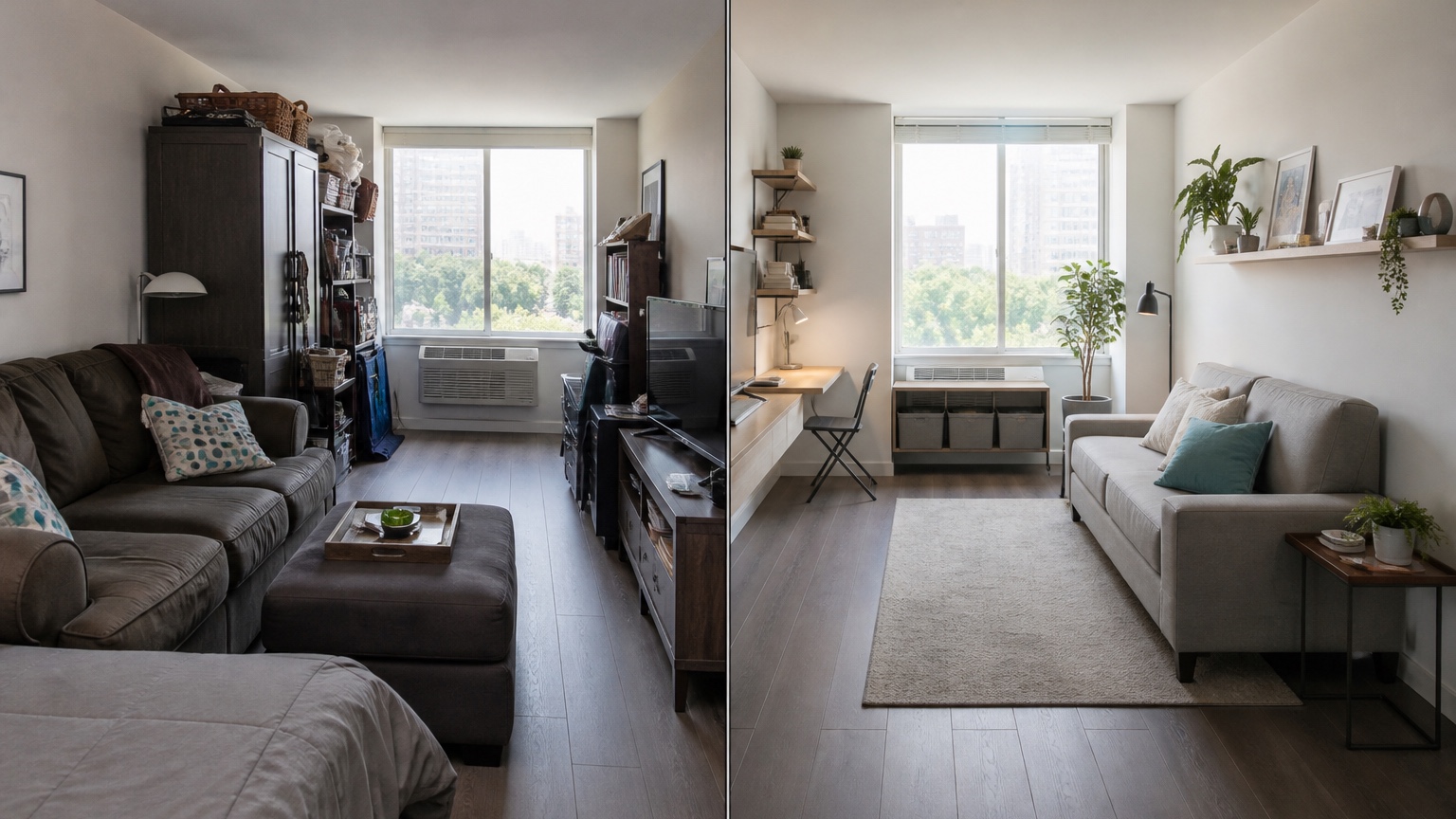
Renter-friendly design does not have to look unfinished. The trick is to choose reversible changes that still have scale and intention. Curtains hung high with tension or approved hardware can make windows feel taller. Large rugs can cover unattractive flooring and define zones. Plug-in sconces, floor lamps, and table lamps can create layers without electrical work. Peel-and-stick backsplash or removable wallpaper can help, but only where the surface and lease allow it.
Prompts should state that upgrades are removable. Try: “Use lease-safe changes only: rugs, curtains, freestanding furniture, removable wallpaper, peel-and-stick backsplash where appropriate, plug-in lighting, art, mirrors, plants, and storage that can move. Do not replace flooring, cabinets, counters, windows, or permanent fixtures.”
Also ask for restraint. Too many temporary fixes can make an apartment look like a showroom of hacks. One strong rug, one proper curtain treatment, one good lighting plan, and one storage system often do more than ten small gadgets. If the AI suggests a dramatic wall treatment, remix with “subtle, removable, and realistic for a rental” rather than accepting a solution that would risk the deposit.
Convert the best version into an apartment action list
Once you have a promising image, save the prompt and version history. In RedesAIgn, saved prompts and history help you return to the layout that respected the apartment instead of chasing later variations that altered the windows or floor. Use remix for controlled tests: keep the sofa and rug, change storage; keep the bed zone, change curtains; keep the furniture layout, test a warmer palette.
Turn the chosen design into a list with four columns: keep, buy, measure, confirm. Keep might include the existing floor, kitchen, bed, sofa, or curtains. Buy might include a narrow entry cabinet, washable rug, plug-in wall lights, under-bed storage, compact table, or closed media unit. Measure should include sofa depth, table clearance, rug size, bed walkway, door swings, outlet reach, and elevator or stair access for delivery. Confirm should include lease rules, wall mounting permissions, fire safety around heaters, and return policies.
Before ordering, tape the largest footprints on the floor. Walk from the entry to the kitchen, from the sofa to the window, and around the bed with drawers open. If the route feels tight, reduce depth before changing style. A small apartment becomes easier to live in when the design protects movement first and decor second.
FAQ: AI apartment interior design
What is AI apartment interior design?
AI apartment interior design uses a real apartment photo and a written prompt to create visual ideas for layout, storage, furniture scale, lighting, decor, and zones. It is most useful when the prompt includes lease limits, fixed features, and small-space circulation needs.
Can renters use AI apartment design without making permanent changes?
Yes. Ask for lease-safe ideas such as rugs, curtains, freestanding storage, plug-in lighting, removable wallpaper, art, mirrors, plants, and furniture layout changes. Always check your lease before mounting, painting, or applying removable products.
How do I make a studio apartment feel divided but open?
Use rugs, curtains, lighting, low storage, and furniture orientation to define the sleeping, living, dining, and work zones. Avoid tall solid dividers unless the room has enough light and circulation to support them.
What should I include in an apartment design prompt?
Include the room type, fixed features, lease restrictions, what must stay, furniture you own, storage problems, desired zones, walking paths, and whether the space is a studio, one-bedroom, or shared apartment.
Is RedesAIgn free to try for apartment ideas?
RedesAIgn starts with 5 free AI credits and no credit card is required. If you want more layout, storage, or style variations, one-time credit packs are available.
Try these prompts in redesAIgn
Redesign this room with warm neutrals, layered lighting, and a functional seating layout.
Keep the architecture, but update furniture, rug, and wall color for a calm modern look.
Show a before-to-after concept with better traffic flow and fewer bulky pieces.
Related guides
- AI Bathroom Remodel Visualizer for Tile, Vanity, and Lighting Ideas
Visualize bathroom remodel ideas from a real photo with RedesAIgn. Compare finishes, fixtures, and layout limits before ordering materials.
- AI Bedroom Design Generator for Layout and Decor Ideas
Generate bedroom design concepts from your room photo with RedesAIgn. Compare layout and furniture directions before you buy or remodel.
- AI Dining Room Design Ideas From a Photo
Use AI dining room design to plan table size, chair clearance, chandelier alignment, rugs, storage, and lighting from a real room photo.
- AI Furniture Visualizer: Preview Furniture in Your Room Photo
Use an AI furniture visualizer to preview scale, placement, color, material, and fit in your room photo before buying or presenting furniture.
- AI Interior Design From Photo: Redesign Any Room Visually
Use AI interior design from photo workflows to preview room styles, furniture layouts, finishes, and decor ideas before buying anything.