AI Ecommerce Clothing Photos for Small Fashion Stores
Last updated: March 19, 2026.
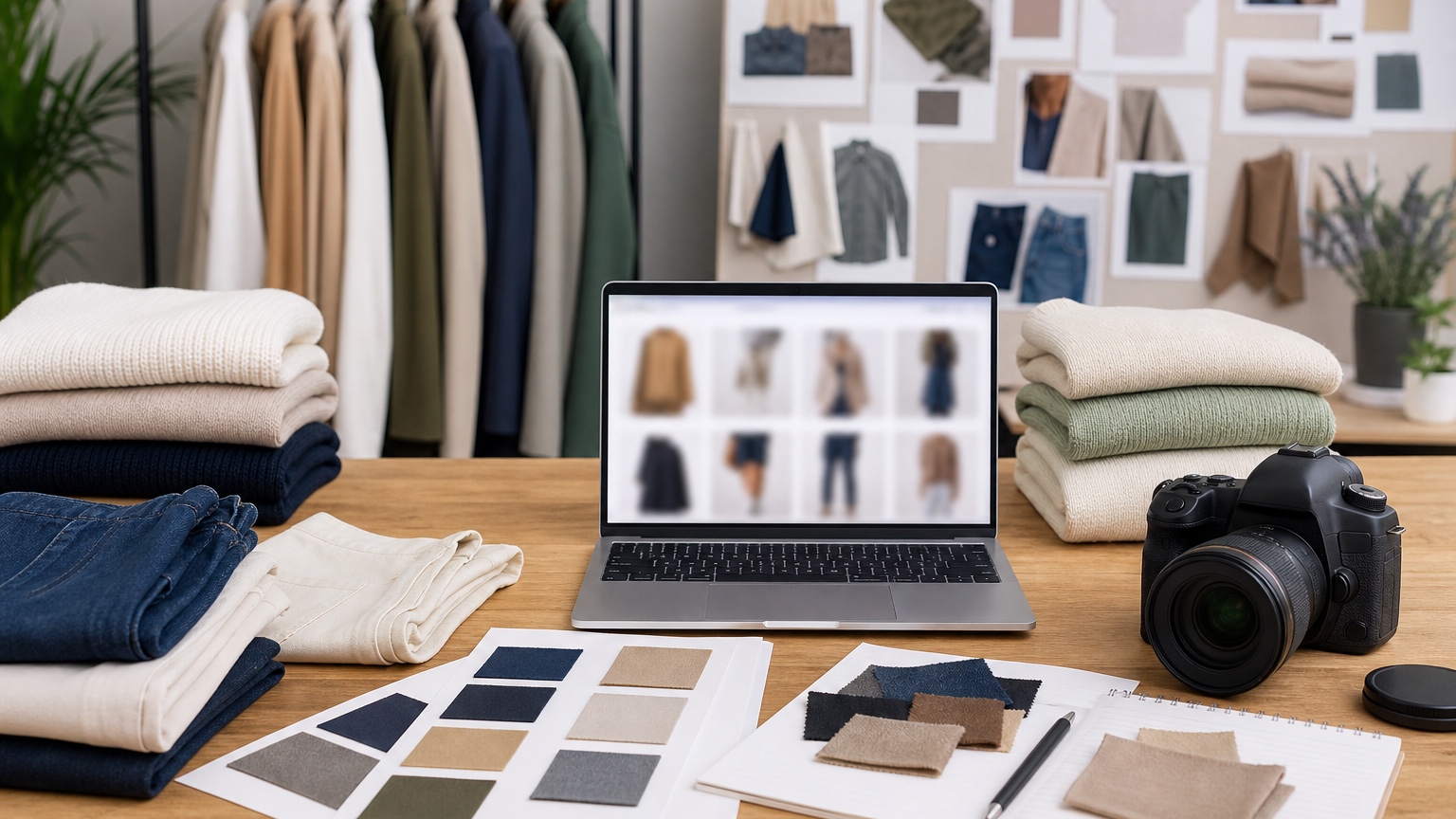
Ai Ecommerce Clothing Photos is useful only when it helps small fashion stores and Shopify teams make a concrete visual decision. The article below uses the catalog refresh audit frame, which asks whether whether existing product photos can support a sharper collection page before a paid shoot. For this store-focused article, the practical loop is source image, controlled product-photo variation, comparison notes, and a listing or shot-list decision a boutique can use.
RedesAIgn gives ecommerce teams an AI photo editing workspace with specialized editors, prompt control, remix/reference inputs, saved prompts, and a history trail for comparing catalog concepts. For product pages, those visuals are planning evidence, not verification of exact fabric, inventory, sizing, construction, or production photography quality. Use the preview to narrow the merchandising conversation before booking the costly shoot.
collection page decisions
The ecommerce angle is not about making every image glossy. It is about helping a small team decide where limited photography budget will matter most. In the catalog refresh audit frame, start by naming the one business or style decision the image must answer: whether existing product photos can support a sharper collection page before a paid shoot. Write that decision beside the original photo before opening RedesAIgn, because a clear brief prevents the tool from turning AI ecommerce clothing photos into unrelated styling noise. The first generation should preserve the source identity, garment category, and usable camera angle while changing only the variables that matter for SKU list and brand color rules.
A stronger prompt for AI Ecommerce Clothing Photos for Small Fashion Stores usually works in three layers. First, lock the product input: garment category, base angle, lighting style, background, and the details that must stay recognizable for the SKU. Second, define the listing outcome with specific material, color, proportion, and collection-page context. Third, add review criteria tied to hero product angle and marketplace crop needs. That discipline makes store variations comparable because each round changes one catalog variable rather than rebuilding the whole scene.
Treat every generation as a merchandising note, not as a finished catalog promise. Review the output like a merchandiser deciding whether a product image belongs on a paid listing. Inspect seams, hems, shadows, product scale, background cleanliness, and whether the garment still reads as the same item. Save the useful result even when it is not the most dramatic image, because the job of AI ecommerce clothing photos is to reduce uncertainty before money or production time is committed. If the image invents logos, text labels, impossible fabric, or a misleading product shape, revise the brief and compare the correction through RedesAIgn history.
Prompt structure for store-ready concepts
A stronger prompt for AI Ecommerce Clothing Photos for Small Fashion Stores usually works in three layers. First, lock the product input: garment category, base angle, lighting style, background, and the details that must stay recognizable for the SKU. Second, define the listing outcome with specific material, color, proportion, and collection-page context. Third, add review criteria tied to hero product angle and marketplace crop needs. That discipline makes store variations comparable because each round changes one catalog variable rather than rebuilding the whole scene.
Treat every generation as a merchandising note, not as a finished catalog promise. Review the output like a merchandiser deciding whether a product image belongs on a paid listing. Inspect seams, hems, shadows, product scale, background cleanliness, and whether the garment still reads as the same item. Save the useful result even when it is not the most dramatic image, because the job of AI ecommerce clothing photos is to reduce uncertainty before money or production time is committed. If the image invents logos, text labels, impossible fabric, or a misleading product shape, revise the brief and compare the correction through RedesAIgn history.
The ecommerce angle is not about making every image glossy. It is about helping a small team decide where limited photography budget will matter most. In the catalog refresh audit frame, start by naming the one business or style decision the image must answer: whether existing product photos can support a sharper collection page before a paid shoot. Write that decision beside the original photo before opening RedesAIgn, because a clear brief prevents the tool from turning AI ecommerce clothing photos into unrelated styling noise. The first generation should preserve the source identity, garment category, and usable camera angle while changing only the variables that matter for SKU list and brand color rules.
Reviewing AI product imagery before it reaches a listing
Treat every generation as a merchandising note, not as a finished catalog promise. Review the output like a merchandiser deciding whether a product image belongs on a paid listing. Inspect seams, hems, shadows, product scale, background cleanliness, and whether the garment still reads as the same item. Save the useful result even when it is not the most dramatic image, because the job of AI ecommerce clothing photos is to reduce uncertainty before money or production time is committed. If the image invents logos, text labels, impossible fabric, or a misleading product shape, revise the brief and compare the correction through RedesAIgn history.
The ecommerce angle is not about making every image glossy. It is about helping a small team decide where limited photography budget will matter most. In the catalog refresh audit frame, start by naming the one business or style decision the image must answer: whether existing product photos can support a sharper collection page before a paid shoot. Write that decision beside the original photo before opening RedesAIgn, because a clear brief prevents the tool from turning AI ecommerce clothing photos into unrelated styling noise. The first generation should preserve the source identity, garment category, and usable camera angle while changing only the variables that matter for SKU list and brand color rules.
A stronger prompt for AI Ecommerce Clothing Photos for Small Fashion Stores usually works in three layers. First, lock the product input: garment category, base angle, lighting style, background, and the details that must stay recognizable for the SKU. Second, define the listing outcome with specific material, color, proportion, and collection-page context. Third, add review criteria tied to hero product angle and marketplace crop needs. That discipline makes store variations comparable because each round changes one catalog variable rather than rebuilding the whole scene.
Mistakes that make boutique visuals feel fake
The ecommerce angle is not about making every image glossy. It is about helping a small team decide where limited photography budget will matter most. In the catalog refresh audit frame, start by naming the one business or style decision the image must answer: whether existing product photos can support a sharper collection page before a paid shoot. Write that decision beside the original photo before opening RedesAIgn, because a clear brief prevents the tool from turning AI ecommerce clothing photos into unrelated styling noise. The first generation should preserve the source identity, garment category, and usable camera angle while changing only the variables that matter for SKU list and brand color rules.
A stronger prompt for AI Ecommerce Clothing Photos for Small Fashion Stores usually works in three layers. First, lock the product input: garment category, base angle, lighting style, background, and the details that must stay recognizable for the SKU. Second, define the listing outcome with specific material, color, proportion, and collection-page context. Third, add review criteria tied to hero product angle and marketplace crop needs. That discipline makes store variations comparable because each round changes one catalog variable rather than rebuilding the whole scene.
Treat every generation as a merchandising note, not as a finished catalog promise. Review the output like a merchandiser deciding whether a product image belongs on a paid listing. Inspect seams, hems, shadows, product scale, background cleanliness, and whether the garment still reads as the same item. Save the useful result even when it is not the most dramatic image, because the job of AI ecommerce clothing photos is to reduce uncertainty before money or production time is committed. If the image invents logos, text labels, impossible fabric, or a misleading product shape, revise the brief and compare the correction through RedesAIgn history.
RedesAIgn workflow for ecommerce clothing teams
A stronger prompt for AI Ecommerce Clothing Photos for Small Fashion Stores usually works in three layers. First, lock the product input: garment category, base angle, lighting style, background, and the details that must stay recognizable for the SKU. Second, define the listing outcome with specific material, color, proportion, and collection-page context. Third, add review criteria tied to hero product angle and marketplace crop needs. That discipline makes store variations comparable because each round changes one catalog variable rather than rebuilding the whole scene.
Treat every generation as a merchandising note, not as a finished catalog promise. Review the output like a merchandiser deciding whether a product image belongs on a paid listing. Inspect seams, hems, shadows, product scale, background cleanliness, and whether the garment still reads as the same item. Save the useful result even when it is not the most dramatic image, because the job of AI ecommerce clothing photos is to reduce uncertainty before money or production time is committed. If the image invents logos, text labels, impossible fabric, or a misleading product shape, revise the brief and compare the correction through RedesAIgn history.
The ecommerce angle is not about making every image glossy. It is about helping a small team decide where limited photography budget will matter most. In the catalog refresh audit frame, start by naming the one business or style decision the image must answer: whether existing product photos can support a sharper collection page before a paid shoot. Write that decision beside the original photo before opening RedesAIgn, because a clear brief prevents the tool from turning AI ecommerce clothing photos into unrelated styling noise. The first generation should preserve the source identity, garment category, and usable camera angle while changing only the variables that matter for SKU list and brand color rules.
What AI cannot verify for product photos
Treat every generation as a merchandising note, not as a finished catalog promise. Review the output like a merchandiser deciding whether a product image belongs on a paid listing. Inspect seams, hems, shadows, product scale, background cleanliness, and whether the garment still reads as the same item. Save the useful result even when it is not the most dramatic image, because the job of AI ecommerce clothing photos is to reduce uncertainty before money or production time is committed. If the image invents logos, text labels, impossible fabric, or a misleading product shape, revise the brief and compare the correction through RedesAIgn history.
The ecommerce angle is not about making every image glossy. It is about helping a small team decide where limited photography budget will matter most. In the catalog refresh audit frame, start by naming the one business or style decision the image must answer: whether existing product photos can support a sharper collection page before a paid shoot. Write that decision beside the original photo before opening RedesAIgn, because a clear brief prevents the tool from turning AI ecommerce clothing photos into unrelated styling noise. The first generation should preserve the source identity, garment category, and usable camera angle while changing only the variables that matter for SKU list and brand color rules.
A stronger prompt for AI Ecommerce Clothing Photos for Small Fashion Stores usually works in three layers. First, lock the product input: garment category, base angle, lighting style, background, and the details that must stay recognizable for the SKU. Second, define the listing outcome with specific material, color, proportion, and collection-page context. Third, add review criteria tied to hero product angle and marketplace crop needs. That discipline makes store variations comparable because each round changes one catalog variable rather than rebuilding the whole scene.
Turning the preview into a shot list
The ecommerce angle is not about making every image glossy. It is about helping a small team decide where limited photography budget will matter most. In the catalog refresh audit frame, start by naming the one business or style decision the image must answer: whether existing product photos can support a sharper collection page before a paid shoot. Write that decision beside the original photo before opening RedesAIgn, because a clear brief prevents the tool from turning AI ecommerce clothing photos into unrelated styling noise. The first generation should preserve the source identity, garment category, and usable camera angle while changing only the variables that matter for SKU list and brand color rules.
A stronger prompt for AI Ecommerce Clothing Photos for Small Fashion Stores usually works in three layers. First, lock the product input: garment category, base angle, lighting style, background, and the details that must stay recognizable for the SKU. Second, define the listing outcome with specific material, color, proportion, and collection-page context. Third, add review criteria tied to hero product angle and marketplace crop needs. That discipline makes store variations comparable because each round changes one catalog variable rather than rebuilding the whole scene.
Treat every generation as a merchandising note, not as a finished catalog promise. Review the output like a merchandiser deciding whether a product image belongs on a paid listing. Inspect seams, hems, shadows, product scale, background cleanliness, and whether the garment still reads as the same item. Save the useful result even when it is not the most dramatic image, because the job of AI ecommerce clothing photos is to reduce uncertainty before money or production time is committed. If the image invents logos, text labels, impossible fabric, or a misleading product shape, revise the brief and compare the correction through RedesAIgn history.
How to use the winning preview
When one ecommerce direction wins, turn it into a listing action list. A store owner might note the hero angle, secondary crop, styling prop, and product detail still needing a real photograph. The same preview can become a collection-page test, ad concept, or photographer brief. A lean team can also use it to plan props, background texture, and marketplace crop requirements. The AI image is not the final catalog asset; it is the cleanest brief for producing one.
Start with a low-risk RedesAIgn pass
A boutique can start in RedesAIgn with 5 free AI credits and no credit card required, then decide which product-photo directions deserve a photographer or listing update. Commercial use is allowed for shop and client planning, and one-time credit packs help when a collection needs many comparison rounds.
Related RedesAIgn guides: AI clothes try on, AI outfit generator from photo, and AI fashion model generator.
Try these prompts in redesAIgn
Try this outfit on the person in the photo with a tailored fit and natural lighting.
Restyle the look with a different color palette while keeping the same pose.
Show a polished full-outfit preview suitable for content or shopping decisions.
Related guides
- AI Fashion Photoshoot Ideas Without a Studio
Plan fashion photoshoot concepts with RedesAIgn. Preview styling directions for catalogs, lookbooks, or campaigns before the shoot day.
- AI Outfit Ideas for Photoshoots: Plan Looks Before You Shoot
Plan outfit ideas for photoshoots with RedesAIgn. Compare looks from your photo before shopping, fittings, or locking the final shot list.
- AI Try-On Jacket: See Outerwear Styles Before Buying
Use AI try on jacket workflows in RedesAIgn to compare realistic fashion visuals, product-photo directions, and photoshoot styling before committing.
- AI Try-On Shirt: Preview Shirts on Your Photo
Use AI try on shirt workflows in RedesAIgn to compare realistic fashion visuals, product-photo directions, and photoshoot styling before committing budget.
- AI Capsule Wardrobe Generator: Visualize Mix-and-Match Outfits
Use AI capsule wardrobe generator in RedesAIgn to compare realistic fashion options before shopping, booking, styling, or sharing a brief.