AI Selfie Editor for Profiles, Posts, and Personal Branding
Searching for AI selfie editor usually means a real content decision is waiting on better visuals. The goal is not to decorate a feed with generic AI art for identity-safe profile planning. The useful goal is to turn an existing brand, product, creator, or profile photo into a direction that can be reviewed, compared, and used by a person responsible for publishing for identity-safe profile planning. This guide treats AI selfie editor as a personal-image polishing workflow where recognizability and trust matter more than dramatic transformation. RedesAIgn supports that loop with photo uploads, precise prompts, remix/reference images, saved prompts, generation history, 10 specialized editors, and one-time credit packs when the first tests prove useful for identity-safe profile planning.
For consumers, creators, the practical problem is simple: polish or restyle selfies. A social image can fail even when it looks polished if the crop is wrong, the subject no longer feels honest, the product promise is exaggerated, or the mood does not match the caption for identity-safe profile planning. RedesAIgn starts with 5 free AI credits and no credit card, so the first pass can be a low-risk visual decision exercise instead of a production commitment for identity-safe profile planning.
AI Selfie Editor for Profiles, Posts, and Personal Branding: define the publishing decision first
Write the publishing decision before writing the prompt. Are you trying to test a new offer, make a profile more trustworthy, create a thumbnail hook, stretch a limited product gallery, or give a stakeholder three campaign directions for identity-safe profile planning? That answer controls the background, lighting, crop, and amount of transformation the image should allow for identity-safe profile planning.
A strong brief includes the source-photo reality, the audience, the platform, and the next action for identity-safe profile planning. A small ecommerce shop may need a product image that makes a feature easier to understand for identity-safe profile planning. A creator may need a cover that reads quickly in a crowded feed for identity-safe profile planning. A social media manager may need enough variation to build a week of posts from one original asset for identity-safe profile planning.
Use RedesAIgn as a comparison tool, not a single-output button for identity-safe profile planning. Generate a conservative version, a practical upgrade, and a bolder campaign concept for identity-safe profile planning. The best result is the one that makes the next publishing decision faster while keeping the subject believable for identity-safe profile planning.
Input checklist for a believable AI selfie editor result
Start with the cleanest source image you have. Favor clear focus, natural lighting, visible subject edges, and enough negative space for platform crops for identity-safe profile planning. Avoid photos with heavy filters, tiny logos, unreadable embedded text, cluttered shelves, or reflections that could become artifacts for identity-safe profile planning.
List what must remain unchanged before you describe the style for identity-safe profile planning. Preserve product shape, package color, face identity, skin tone, brand palette, garment silhouette, or workspace details when they are part of the trust signal for identity-safe profile planning. Then add the creative layer: editorial lighting, polished background, campaign mood, or cleaner composition for identity-safe profile planning.
If the same asset may become a square post, vertical story, horizontal blog image, or thumbnail, ask for crop-safe composition and a clear focal point for identity-safe profile planning. Do not rely on the AI to guess platform needs; name them in the prompt and reject outputs that only work in one crop for identity-safe profile planning.
Prompt formula for controlled social-media variations
Use a six-part prompt: source subject, must-preserve details, platform use, desired mood, production treatment, and artifact exclusions for identity-safe profile planning. A practical example is: keep the product shape and label placement recognizable, create a premium studio social image, use warm realistic lighting, leave clean crop margins, no readable text, no watermark, no fake platform UI for identity-safe profile planning.
Separate strategic directions instead of overloading one prompt. For profile avatar, story intro, creator thumbnail, dating-style personal photo, community bio, and founder update, one version can prioritize clarity, another can prioritize emotion, and another can test a campaign angle. Controlled variation gives the team a useful board rather than a pile of unrelated images for identity-safe profile planning.
Save the prompt when a version works. RedesAIgn's saved prompts and generation history matter because social production is repetitive for identity-safe profile planning. A prompt that works for one product drop, creator series, or profile refresh can become a reusable recipe for the next batch for identity-safe profile planning.
Identity-Preserving Polish: the review lens for this use case
Review the output through identity-preserving polish, not through general aesthetics alone. Ask whether the image would actually help someone choose a caption, brief a designer, approve a shoot direction, or schedule a post for identity-safe profile planning. If the result looks impressive but cannot guide action, it is not the winner for identity-safe profile planning.
Check platform fit at small size. Does the subject remain clear after a square crop? Would the visual hook still read in a mobile feed for identity-safe profile planning? Is there enough room for a caption or overlay if a human designer adds it later for identity-safe profile planning? Social images are judged quickly, so the hierarchy must be obvious without a long explanation for identity-safe profile planning.
Keep the edit honest. AI should not invent product features, fake endorsements, change a person's identity beyond recognition, or imply performance results that are not real for identity-safe profile planning. Commercial use may be allowed, but credibility and policy review still belong in the workflow for identity-safe profile planning.
Quality control before publishing or handing off
Zoom in on edges, hands, hairlines, packaging, shadows, reflections, and backgrounds for identity-safe profile planning. Look for melted details, strange symbols, accidental readable text, warped logos, duplicated objects, and plastic skin for identity-safe profile planning. Reject anything that would make the brand look careless when a viewer pauses for identity-safe profile planning.
Compare the output against the original source image. The improvement should be clear, but the subject should still feel plausible for identity-safe profile planning. A product should keep its material and proportions. A personal photo should keep identity and natural skin. A thumbnail should increase focus without turning into fake platform artwork for identity-safe profile planning.
Write a one-line rejection reason for every discarded version: too glossy, wrong crop, confusing hook, off-brand color, unrealistic background, or unclear product message for identity-safe profile planning. Those notes make the next RedesAIgn prompt sharper and prevent repeated weak experiments for identity-safe profile planning.
Turn the selected result into a real content workflow
After choosing the strongest image, decide what it becomes: a post concept, thumbnail option, campaign variation board, photographer brief, or designer handoff for identity-safe profile planning. AI editing is most useful when the output shortens a real workflow, not when it creates another folder of experiments for identity-safe profile planning.
For adjacent workflows, compare this guide with AI selfie editor, AI thumbnail image generator, and AI social media content ideas. If the issue is hook testing, AI product social media posts gives a tighter review lens; if the issue is campaign ideation, AI brand photoshoot can anchor the calendar.
Keep source photos, prompts, chosen outputs, rejected variants, and final uses together for identity-safe profile planning. Over time, that record becomes a practical brand system: which backgrounds work, which crops fail, which product angles sell the story, and which RedesAIgn prompts deserve reuse for identity-safe profile planning.
Selfie-specific guardrails for natural results
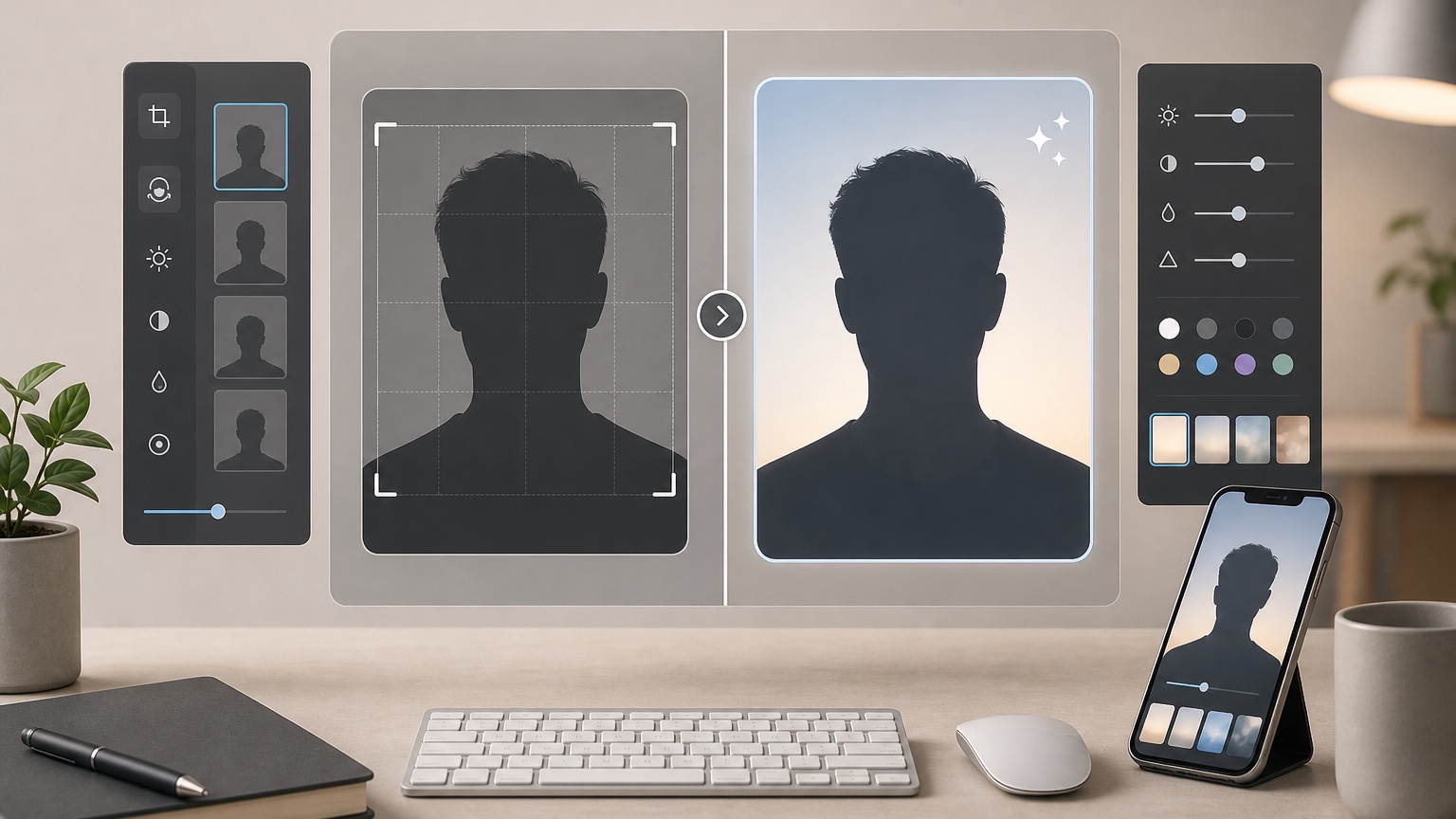
A selfie edit should not erase the reasons people recognize you. Keep face shape, skin tone, expression, and personal style intact unless the goal is an obvious creative concept. For profile use, a realistic clean background and better lighting usually beat a dramatic transformation.
Be cautious with beauty polish. Smooth skin, sharper eyes, and cleaner shadows can help, but plastic texture or changed facial structure can reduce trust. If the image will appear in a creator profile, coaching page, dating-style bio, or community account, believability is the quality bar.
Review how the image feels in the exact platform crop. A head-and-shoulders avatar needs different negative space than a story intro or creator thumbnail. Save each approved version with a note about where it belongs so the strongest selfie is not reused in the wrong context.
Handoff checklist after choosing a visual direction
A useful handoff includes the original selfie, the approved crop, the prompt, and a note about where the image should appear. Profile photos, creator covers, and casual social posts have different trust requirements. Keeping those notes prevents a polished but intimate image from being used in a business context, or a corporate-looking image from weakening a warmer personal brand.
Budget and credit planning for visual experiments
The last review step is budget discipline. If the concept only needs one or two exploratory generations, the free-start path may be enough to learn whether the direction has value for identity-safe profile planning. If the team needs a broader set of versions, compare the one-time credit packs against the cost of a reshoot, a rushed design round, or publishing weak assets for identity-safe profile planning. The point is not to generate endlessly. The point is to use a small number of intentional RedesAIgn tests to reduce creative uncertainty before real time, money, or reputation is on the line for identity-safe profile planning.
Keep the smallest winning test attached to a real publishing decision so the experiment stays practical for identity-safe profile planning.
Final takeaway for AI selfie editor
The best AI selfie editor workflow is a disciplined publishing loop: start with a real photo, name the social job, generate controlled variations, reject artifacts, and save the prompt that can support future content. RedesAIgn is useful because it combines photo upload, prompt editing, remix/reference workflows, saved prompts, generation history, commercial-use-friendly credit packs, and a free-start path with 5 credits and no credit card for identity-safe profile planning. Start with a clear selfie in RedesAIgn, generate one natural polish, one creator-ready background, and one profile-safe crop, then choose the most believable version.
Try these prompts in redesAIgn
Edit this photo into a clean social post with balanced crop and soft contrast.
Create a story-ready vertical version with natural skin tones and clear subject focus.
Produce a feed-ready look that feels polished but not over-filtered.
Related guides
- AI Aesthetic Photo Editor for Instagram-Ready Visual Styles
Compare AI aesthetic photo editor directions with consistent style rules, artifact checks, and RedesAIgn workflows for creators and social users.
- AI Before and After Social Posts for Visual Transformation Content
Plan AI before and after social posts with realistic transformation visuals, review checkpoints, and RedesAIgn prompt workflows for service businesses.
- AI Personal Brand Photos for Founders, Coaches, and Creators
Plan AI personal brand photos with realistic identity preservation, trust signals, crop checks, and RedesAIgn prompt workflows before a shoot or launch.
- AI Photo Remix: Reuse One Image in Multiple Social Styles
Use AI photo remix workflows to repurpose a strong source image into campaign variations, platform crops, and reusable RedesAIgn prompt recipes.
- AI Seasonal Social Media Posts for Promotions and Campaigns
Create AI seasonal social media post concepts from existing assets with campaign planning, crop-safe visuals, and practical RedesAIgn review steps.